
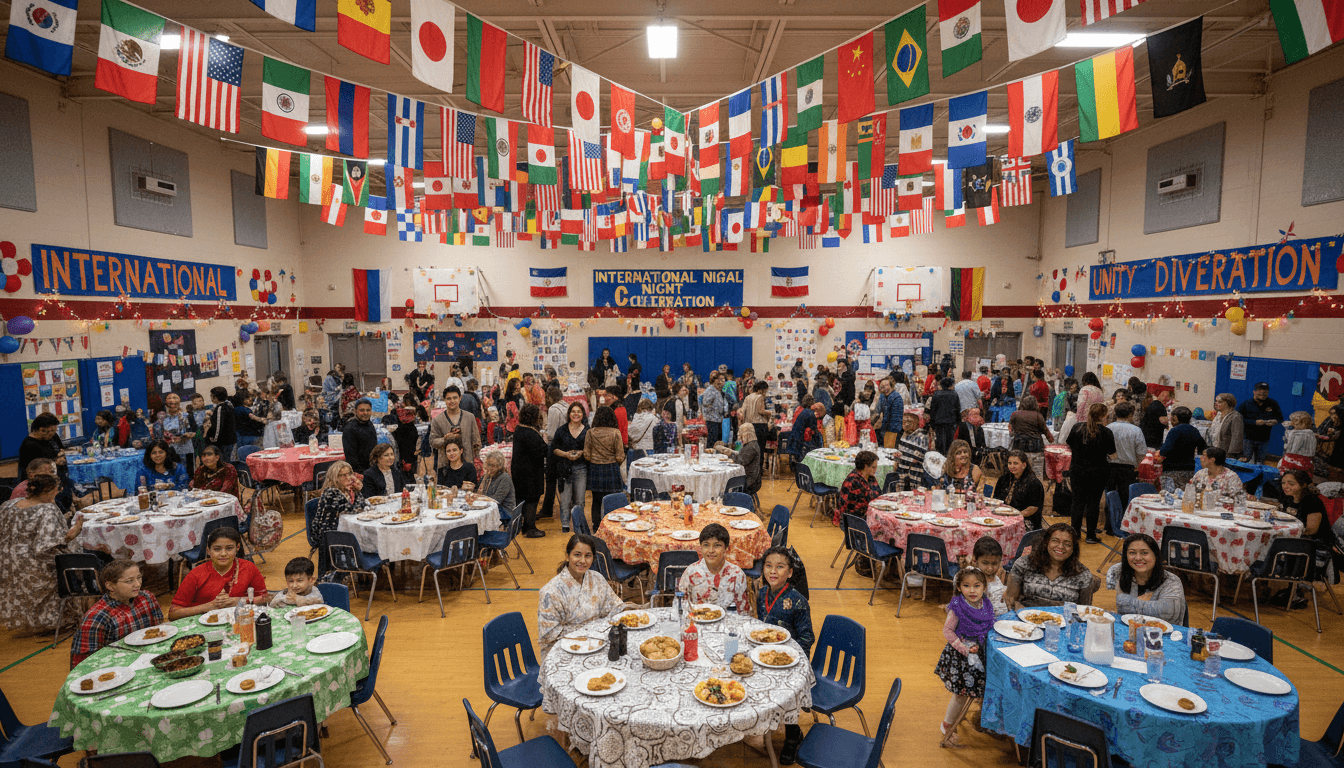
International Night Newsletter: Celebrating Diversity and Getting Families Involved
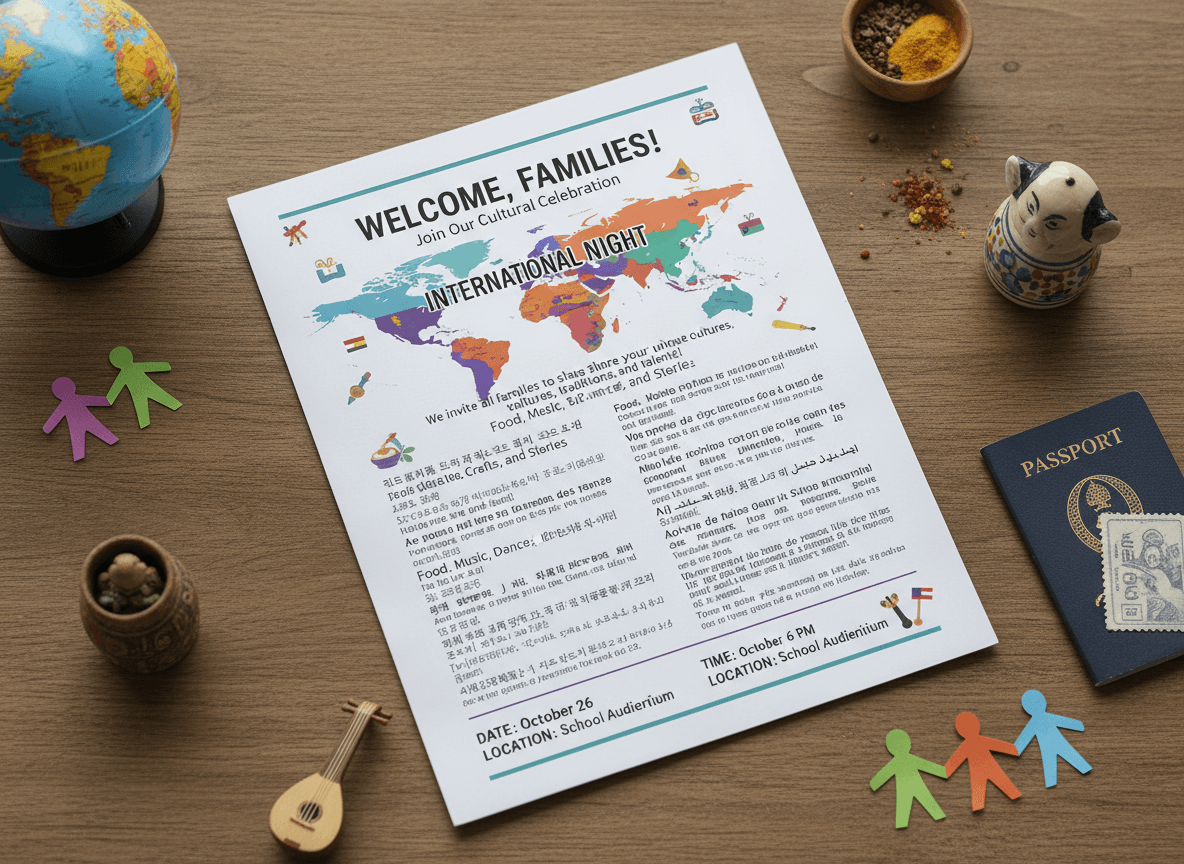
International night and multicultural night are among the most community- building events a school can organize. They are also among the most likely to go sideways in their communication if the newsletter does not approach the event with genuine thought about who is being asked to participate and why.
The families whose cultures are being celebrated and the families who are showing up to learn about those cultures are two different audiences. Both need to be reached by the same newsletter, but in ways that feel appropriate to each. Here is how to write international night communication that lands well with both groups.
The communication challenge with multicultural events
A newsletter that invites families from a particular culture to share their food, music, or traditions as a "learning experience" for others places those families in an uncomfortable position. They are being asked to represent their entire cultural background for an audience, often without full understanding of how the event will be structured or how their participation will be presented.
The newsletter that avoids this problem does two things differently: it frames the event as a celebration by and for the whole community, not a presentation of some cultures to others, and it invites every family to participate, not just families from non-majority backgrounds.
Framing the invitation
Open the international night newsletter with a framing that includes every family in the community, not just families from immigrant or international backgrounds. Every family has a cultural heritage, a regional food tradition, a language or dialect in their family history, or a story about where their family came from.
"We invite every family in our community to share something about where they come from" includes families who have lived in the same city for four generations and families who arrived last year from another country. "We invite families from diverse backgrounds to share their culture" implicitly divides the room into the people being celebrated and the people watching.
Food participation guidelines
Food is almost always the center of multicultural night. The newsletter needs to cover the participation guidelines clearly for families who want to bring a dish.
Include: the sign-up process for bringing food, how much to prepare (approximate number of servings or table portion), whether families should bring serving utensils, whether the school will provide labels for dishes (for allergen disclosure), how to handle dishes that require warming, and whether homemade and store-bought dishes are both welcome. Families who are uncertain about any of these details often opt out of contributing food, which reduces the richness of the event.
Display and exhibit logistics
For families who want to contribute beyond food (through a cultural display, traditional clothing, music, or storytelling), the newsletter should explain: how much table or floor space is available, setup time, whether the school provides any materials or whether families bring everything, and whether student-made projects are welcome alongside family-provided materials.
Involving families in communication design
One of the most meaningful things a school can do for an international night is involve families from the represented communities in designing the communication itself. If you have multilingual families in your community, ask whether they would be willing to review the newsletter for cultural sensitivity before it goes out. Families who have been invited into the process are more invested in the event and more likely to encourage their community networks to attend.
If your school community includes significant numbers of families who primarily read in a language other than English, translate the invitation newsletter. An international night newsletter that only exists in English is communicating something unintentional to the families whose participation makes the event possible.
Cultural sensitivity in language
Avoid phrases that frame cultural sharing as educational performance. Language like "come learn about other cultures" or "help us educate our community about diversity" places the burden of education on families from minority backgrounds. Language like "come celebrate the cultures that make our community what it is" is inclusive without assigning anyone an educational role they did not ask for.
Encouraging full participation
Some families will not want to participate in a display or contribute food but still want to attend. The newsletter should make clear that attending without contributing is not just acceptable but welcome. The audience is as important as the participants. International night works because families from all backgrounds show up and engage with each other, not just because enough families signed up to run a booth.
The post-event newsletter
After international night, send a brief celebration newsletter. Thank every family who contributed food, displays, or performance. Share a few photos from the evening if you have them. If you gathered any data on participation (number of countries represented, number of dishes contributed, attendance count), include it. The closing newsletter acknowledges what the community built together and plants the seed for next year's event.
In Daystage, you can build the international night newsletter with clear sections for food participation, display logistics, and the general invitation, making it easy to scan for families who want the full information and families who just need to know the date and whether they can come.
The newsletter sets the tone for the event
International night is one of the few school events where the communication itself signals something important about the school's values. A newsletter that is inclusive, warm, and culturally thoughtful creates the environment that makes the event what it is meant to be: a genuine celebration of the whole community, not a performance of some cultures for others.
Get one newsletter idea every week.
Free. For teachers. No spam.
Frequently asked questions
When should schools send a school international night newsletter?
Send the main international night newsletter three weeks before the event so families who want to participate with a food or display contribution have enough preparation time. A one-week reminder confirms logistics and a day-before note covers final details.
What should a school international night newsletter include?
Describe the event format, list how families can participate (food contributions, cultural displays, performances), provide food allergy and labeling guidelines, and include the activity schedule for the evening. Clarify which countries or regions will be represented and how exhibits will be organized.
How far in advance should schools send international night communications to families?
Three weeks is necessary for international night because families contributing food or cultural displays need time to prepare. Families from represented communities in particular need adequate lead time to feel invited as partners in the event rather than last-minute afterthoughts.
What are common mistakes in school international night newsletter communication?
Treating participating families as passive attendees rather than active contributors misses the core purpose of the event. Using vague language like 'share your culture' without specific instructions on food labeling, display size limits, or setup time creates confusion that discourages participation.
What is the best tool to send a school international night newsletter?
Daystage makes it easy to manage the three-touch international night communication sequence and segment messages for participating families versus general attendees. Scheduling the sequence in advance ensures your follow-up reminders go out on time even during a busy event preparation period.

Adi Ackerman
Author
Adi Ackerman is a former classroom teacher and curriculum writer with 8 years in K-8 schools. She writes about school communication, parent engagement, and what actually works in real classrooms.
More for School Events
Ready to send your first newsletter?
3 newsletters free. No credit card. First one ready in under 5 minutes.
Get started free