
School Carnival Newsletter: How to Communicate a Large Community Event
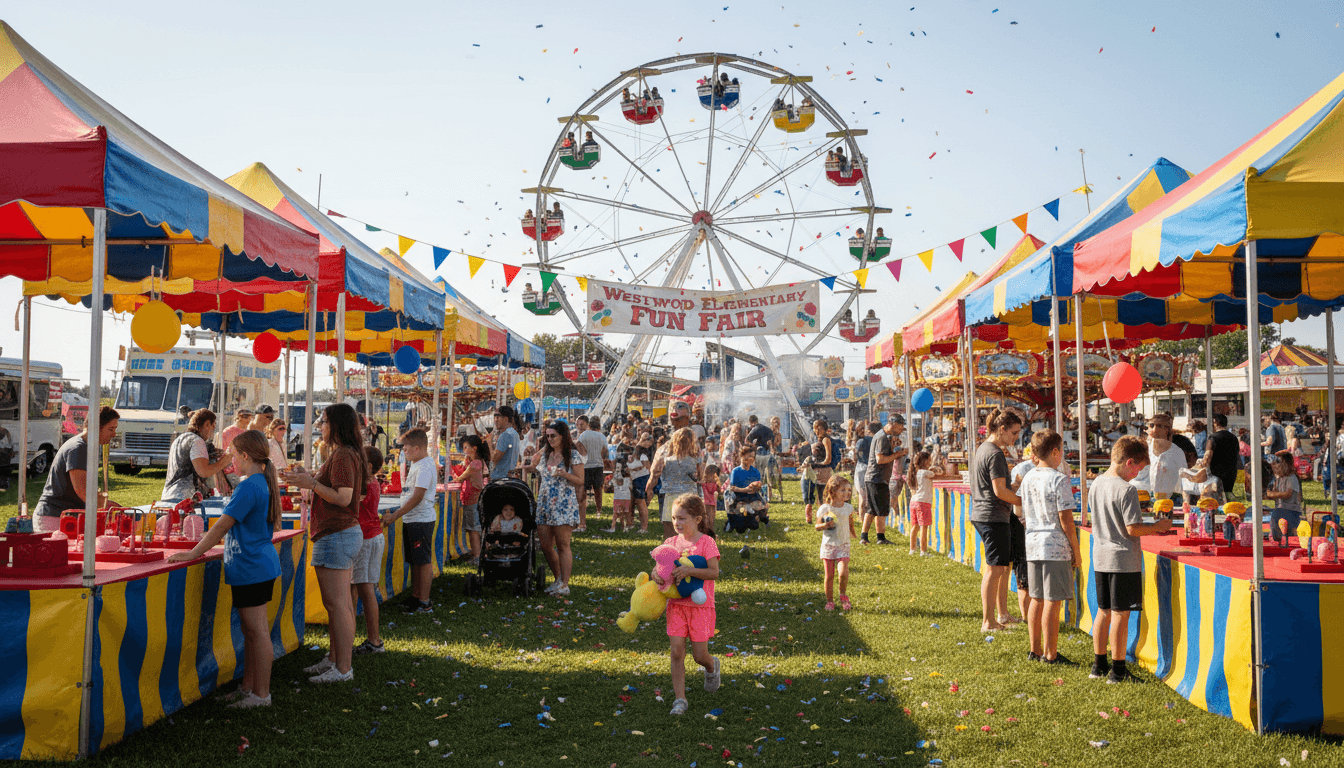
A school carnival is among the largest and most logistically complex events a school community organizes each year. It involves booths, food, tickets, volunteers, setup, cleanup, weather variables, and hundreds of families moving through the same space at the same time.
The communication challenge is proportional to the complexity. A carnival newsletter that covers logistics well can turn a chaotic event into a celebration that families look forward to every year. A newsletter that leaves families guessing about where to get tickets, where to park, or what their volunteer role involves creates frustration before the event begins.
Two weeks out: the full information newsletter
Two weeks before the carnival, send a comprehensive newsletter that gives families everything they need. This is the newsletter that answers every practical question before it is asked.
Two-week newsletter content:
- Date, time, and location: Include gates-open time, end time, and whether setup is visible from the parking lot so families know where to enter.
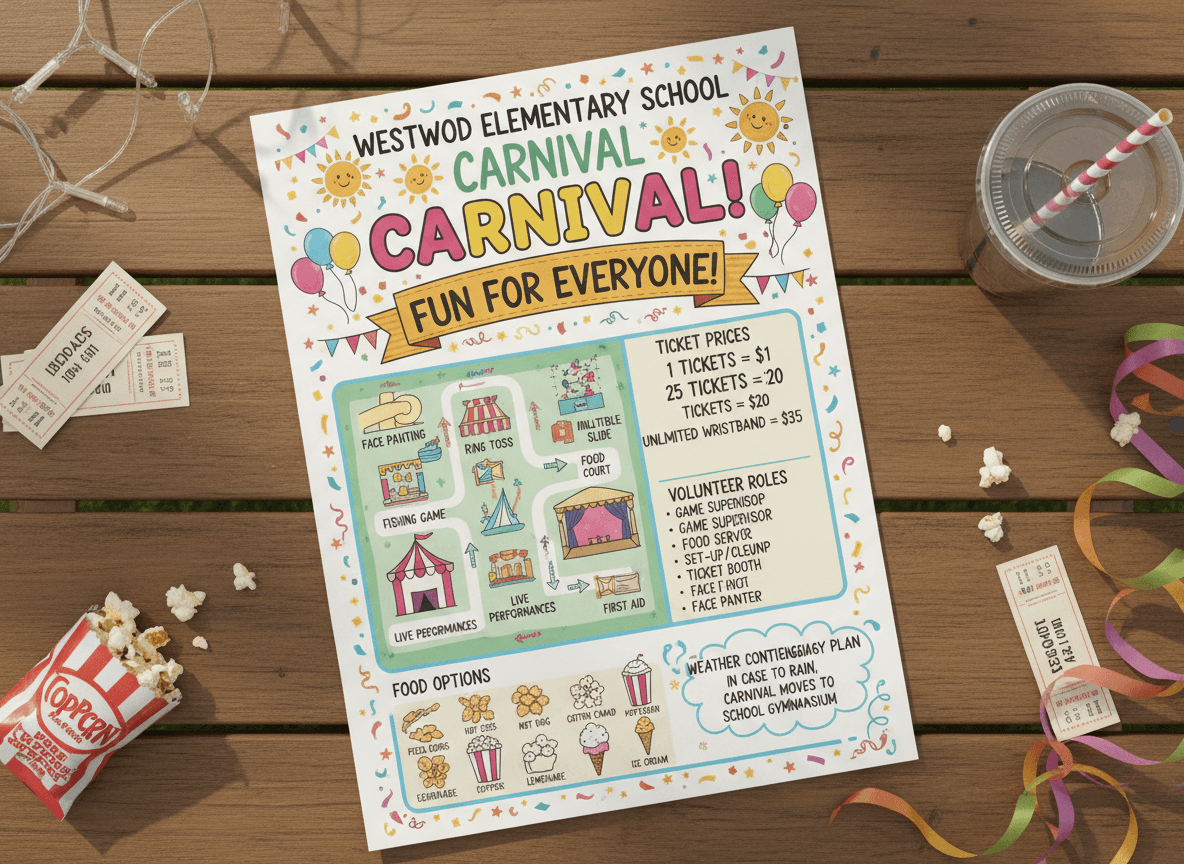
- Ticket or wristband system: Are there tickets for individual activities or a flat-price wristband? Where can families buy tickets in advance and is there a discount for doing so? Will tickets be sold at the event?
- What booths and activities will be there: A quick overview of what to expect. Bounce houses, game booths, food vendors, a raffle, a bake sale, a dunk tank. Families who know what to expect arrive more excited and more prepared for costs.
- Food options: What food will be available? Is it included in the ticket price or purchased separately? Are there options for families with dietary restrictions?
- Volunteer opportunities: Which time slots need coverage, what each role involves, and the sign-up link or process.
Sponsorship acknowledgment
If local businesses or community partners are sponsoring the carnival, the newsletter is the right place to acknowledge them. A brief "thank you to our sponsors" section with business names reinforces the community dimension of the event and demonstrates to sponsors that their contribution reaches the audience they care about. Keep it concise. One or two sentences is enough.
Weather contingency
State the weather contingency plan clearly in the two-week newsletter. Outdoor carnivals are weather-dependent, and families need to know: What weather triggers a cancellation or postponement? Who makes that decision and by what time? How will families be notified? What is the backup date if the event is postponed?
Do not leave this to the day-of communication. Families who know the contingency plan in advance are significantly less anxious when the forecast looks uncertain the week of the event.
Lost child procedure
Large community events with hundreds of families in a shared space create real potential for children to become separated from their adults. Include a brief, calm note about the lost child procedure: where the information booth or check-in point is located, what families should do if a child becomes separated, and how staff will handle a child who cannot locate their family.
This is not a warning or a source of anxiety. It is practical information that reassures families the event is organized. State it matter-of-factly in a single paragraph.
Volunteer coordination beyond the newsletter
The carnival newsletter reaches every family. Confirmed volunteers need a separate, specific communication the week of the event. What role are they assigned to? When should they arrive for setup? Who is their booth lead? Where do they check in?
Volunteers who do not receive this information often arrive uncertain of where to go, show up late, or assume their role was filled and do not show up at all. Send a dedicated volunteer briefing newsletter three days before the event.
Setup and cleanup communication
If families are invited to help with setup the day before or morning of the carnival, and cleanup afterward, include this in the volunteer section of the two-week newsletter. Specify the time commitment, what tasks are involved, and whether students can help with cleanup. Setup and cleanup volunteers are often harder to recruit than booth volunteers. Making the ask explicitly and early improves the turnout.
The post-event thank-you newsletter
After the carnival, send a closing newsletter within two days. Thank volunteers, sponsors, and families who attended. Share the total raised if it was a fundraising event and what the funds will support. Include two or three photos from the event if you have them and the proper photo release permissions.
In Daystage, managing the full carnival communication sequence is straightforward. The two-week newsletter, volunteer briefing, day-of reminder, and post-event thank-you are drafted and scheduled in one session. The subscriber list stays consistent across all four sends, and you can see at a glance which families opened the event information and which may need a personal follow-up if volunteer slots are still open.
A carnival is community. The newsletter should feel like it.
School carnivals work when the whole community shows up, not just the families who already knew the details from last year. A newsletter that is warm, complete, and practical is how you make sure the families who have never attended before know they are as welcome as the regulars.
Get one newsletter idea every week.
Free. For teachers. No spam.
Frequently asked questions
When should schools send a school carnival newsletter?
Send the full information carnival newsletter two weeks before the event and a logistics reminder three days out. For carnivals with volunteer sign-ups, open registration in the two-week newsletter so you have confirmed help before sending the reminder.
What should a school carnival newsletter include?
Cover the date, location, and hours, along with an activity and booth lineup, ticket pricing and purchase options, parking instructions, and any weather contingency plans. Include the lost child procedure and identify a clear central meeting point families can reference on the day.
How far in advance should schools send carnival communications to families?
Two weeks is the standard for a carnival because families may need to budget for tickets, arrange transportation, or coordinate with other families attending. Schools with large carnivals that require advance ticket purchase should add a save-the-date at four weeks.
What are common mistakes in school carnival newsletter communication?
Omitting weather contingency information is a frequent mistake that leads to confusion when conditions are marginal on the day. Not including the booth and activity lineup is another common problem, since a vague 'fun for all ages' description does not motivate families to attend over other weekend activities.
What is the best tool to send a school carnival newsletter?
Daystage lets you build and schedule the full carnival communication sequence, including the volunteer coordination newsletter and post-event thank-you. Managing a multi-touch campaign for a large community event is much easier when everything is in one place.

Adi Ackerman
Author
Adi Ackerman is a former classroom teacher and curriculum writer with 8 years in K-8 schools. She writes about school communication, parent engagement, and what actually works in real classrooms.
More for School Events
Spirit Week Newsletter: Building School Pride Through Clear Daily Communication
School Events · 7 min read
Community Service Day Newsletter: Mobilizing Families for School-Wide Giving
School Events · 6 min read
Readathon Newsletter: How to Run a School Reading Marathon That Families Actually Support
School Events · 7 min read
Ready to send your first newsletter?
3 newsletters free. No credit card. First one ready in under 5 minutes.
Get started free