
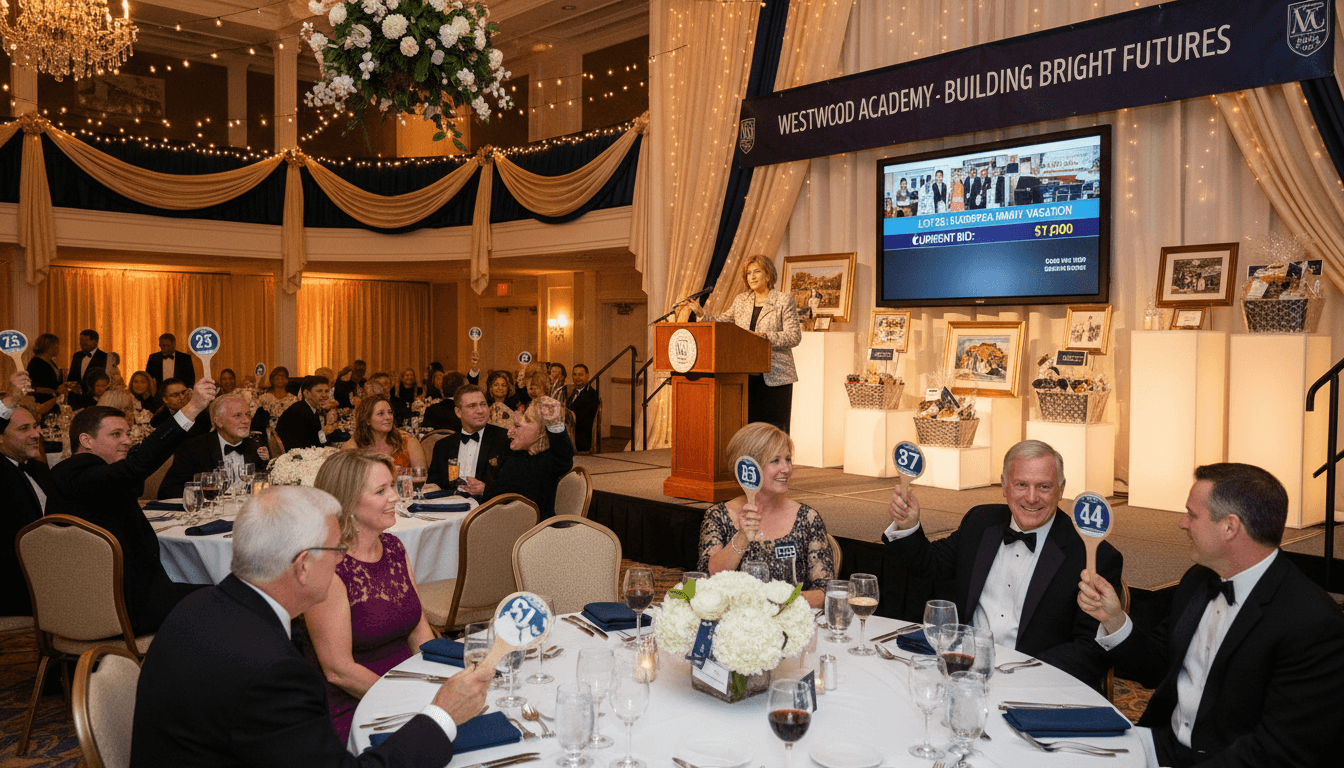
School Auction Newsletter: Communicating a Fundraising Event That Builds Community

The school auction or benefit gala is typically the highest-stakes fundraising event of the school year. It involves community relationships, significant financial expectations, complex event logistics, and a carefully managed donor experience. The newsletter communication around it needs to match that level of care.
Most school auction newsletters underperform because they treat the event like a simpler fundraiser: one announcement, a ticket purchase link, and a date on the calendar. An auction deserves a multi-newsletter sequence that builds anticipation, explains the format, thanks donors, and converts curious families into engaged bidders.
The multi-newsletter approach
An auction communication sequence typically has four moments: a save- the-date announcement four to six weeks out, a full event information newsletter two to three weeks out, a preview newsletter one week out, and a post-event thank-you and results newsletter. Each serves a different purpose and should not try to do the others' jobs.
Save-the-date communication
The first auction newsletter goes out four to six weeks before the event. Its job is to put the date on families' calendars before competing commitments fill that evening. Include: the date, time, and location, a one-sentence description of what the event involves, the ticket price or table cost, and where to purchase in advance.
Do not try to explain the auction format, preview items, or acknowledge sponsors in the save-the-date. All of that belongs in the newsletters that follow. The save-the-date has one goal: get the date on the calendar.
The full information newsletter
Two to three weeks before the auction, send the comprehensive newsletter that explains everything families need to know to participate fully in the event.
- Silent vs. live auction distinction: Many families have never attended a school auction. Explain the difference. A silent auction involves written bid sheets on displayed items. A live auction involves a live auctioneer and verbal bidding. Many events include both. Families who understand the format arrive prepared to participate rather than confused about what to do.
- How bidding works: Is bidding done on paper bid sheets, a mobile app, or both? Is there a minimum bid increment? Can families preview and bid on items before the event through an online platform? Are there "buy now" options for any items?
- Dress code: Auction galas range from cocktail attire to casual dinner. Be specific. Families who show up overdressed or underdressed feel out of place in a room they paid to attend.
- What the event includes: Is there dinner? Cocktails? Entertainment? A paddle raise in addition to the auction? What is the program order and approximate timing?
- What funds support: Every auction newsletter should explain specifically what the proceeds fund. Not "school improvements." A specific program, purchase, scholarship, or facility goal. Families who understand why they are bidding are more engaged bidders.
Item preview newsletter
One week before the auction, send a preview newsletter featuring a selection of auction items. This is the newsletter that builds anticipation and drives attendance from families who are on the fence.
Feature five to eight items with brief descriptions. Include items across price ranges so the preview does not feel like it is only for high- spending families. If there is an online preview platform or a catalog, link to it. The goal of this newsletter is to give families a reason to clear their schedule and show up.
Donor acknowledgment without confidentiality issues
Donors who contribute auction items, sponsorships, or financial contributions to the event deserve acknowledgment. The newsletter is a natural place to do this, but it requires care. Some donors prefer not to be named publicly. Others are contributing as businesses and expect visibility.
The safest approach is to thank donors by name only after confirming they are comfortable being listed. A general "thank you to our generous community donors" is appropriate for donors who prefer anonymity. Named acknowledgment belongs in the post-event newsletter, not the pre-event newsletters, unless a donor has specifically contributed a named sponsorship.
The post-auction newsletter
After the event, send a thank-you and results newsletter within two days. Share the total raised, what it will fund, and a warm acknowledgment of everyone who participated: bidders, donors, volunteers, and event organizers. If specific sponsors have agreed to be named, acknowledge them here.
If any items were not won or if there are unclaimed prizes, include a brief note about what happens to those items. The post-auction newsletter closes the community experience that the event opened.
Building the auction sequence in Daystage
An auction newsletter sequence spans four to six weeks and involves four separate communications. In Daystage, all four can be drafted before the campaign begins and scheduled to send automatically. The preview newsletter, which requires the most content curation, can be built in the same session as the others and refined as items are confirmed.
The auction is a community event. The newsletter should make families feel that.
Families who receive a thoughtful, well-sequenced auction newsletter sequence understand what the event is, why it matters, and how to participate before they walk through the door. That preparation turns a fundraising event into a community experience that families remember and look forward to repeating.
Get one newsletter idea every week.
Free. For teachers. No spam.
Frequently asked questions
When should schools send a school auction newsletter?
Send a save-the-date six weeks before the auction, a full information newsletter three weeks out, and an item preview newsletter one week before the event. The three-touch approach gives families time to plan attendance and builds the excitement that drives bidding.
What should a school auction newsletter include?
The full information newsletter should cover the date, time, venue, ticket purchase instructions, auction format (live, silent, or online), and a preview of high-interest items. Include childcare arrangements if offered, parking details, and the fundraising goal you are working toward.
How far in advance should schools communicate auction details to parents?
Six weeks is the minimum for an auction with a ticket purchase component, because families need time to budget and commit. For online-only auctions, four weeks is sufficient since there is no venue or childcare planning involved.
What are common mistakes in school auction newsletter communication?
Focusing only on logistics without building excitement around the items is a common problem that leads to low pre-registration. Another mistake is waiting until one week out to announce the event, which does not give families enough time to secure tickets or make childcare arrangements.
What is the best tool to send a school auction newsletter?
Daystage lets you build the full auction communication sequence and schedule each newsletter to go out automatically. The ability to manage a six-week multi-touch campaign without juggling individual send dates makes it easier to run a tighter fundraising communication strategy.

Adi Ackerman
Author
Adi Ackerman is a former classroom teacher and curriculum writer with 8 years in K-8 schools. She writes about school communication, parent engagement, and what actually works in real classrooms.
More for School Events
End of Year Awards Ceremony Newsletter: Celebrating Achievements Without Creating Anxiety
School Events · 7 min read
School Art Show Newsletter: How to Celebrate Student Work and Pack the Room
School Events · 7 min read
School Honor Society Induction Newsletter: Celebrating Academic Excellence
School Events · 5 min read
Ready to send your first newsletter?
3 newsletters free. No credit card. First one ready in under 5 minutes.
Get started free