
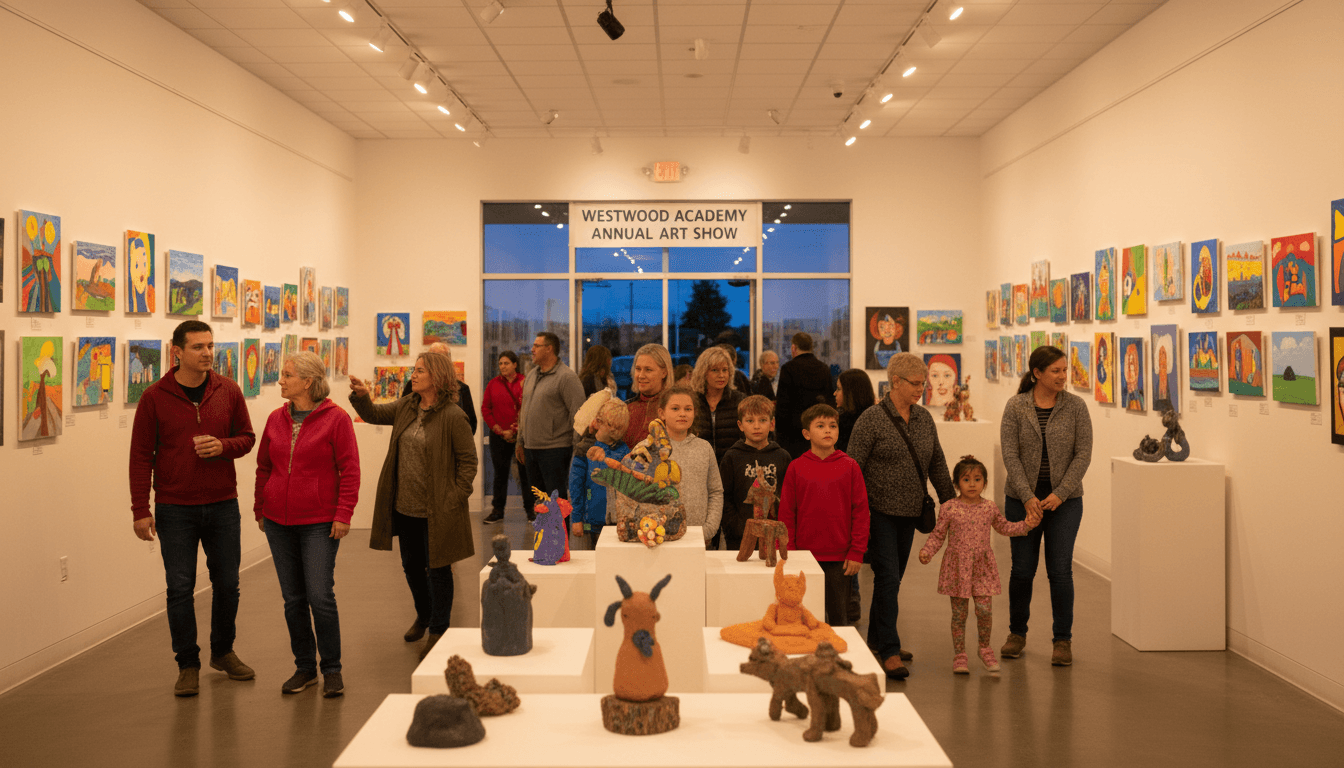
School Art Show Newsletter: How to Celebrate Student Work and Pack the Room
The school art show is one of the most underrated events on the school calendar. It is also one of the most poorly communicated. Schools put enormous effort into hanging student work, setting up the gallery space, and creating a genuine exhibition experience, then send a one-line announcement in the weekly newsletter and wonder why attendance is low.
Art show attendance is driven almost entirely by one thing: families knowing their child's work will be on display. The newsletter has one primary job. Make every family believe that their child's artwork is hanging in that room and that showing up to see it is worth the trip.
Two weeks out: building excitement
The first art show newsletter should go home two weeks before the event. This newsletter does not lead with logistics. It leads with the work.
Tell families what students have been creating. What projects were made, what medium students used, what themes or concepts the art teacher or class explored. Families who have a mental image of their child's work before they arrive are more excited to see it in person. A newsletter that says "come see the art show" gives families nothing to hold onto. A newsletter that says "your child has been working on a mixed-media self-portrait using watercolor and collage" gives them something to look forward to.
Core logistics the art show newsletter must cover
- Date, time, and location: Which rooms or spaces feature student work? If the show spans multiple areas of the building, note that so families do not miss sections.
- Format: Is this a drop-in event or a structured reception with a specific program? Is there an artist reception with student presenters? Is the work up for several days or only on the opening night?
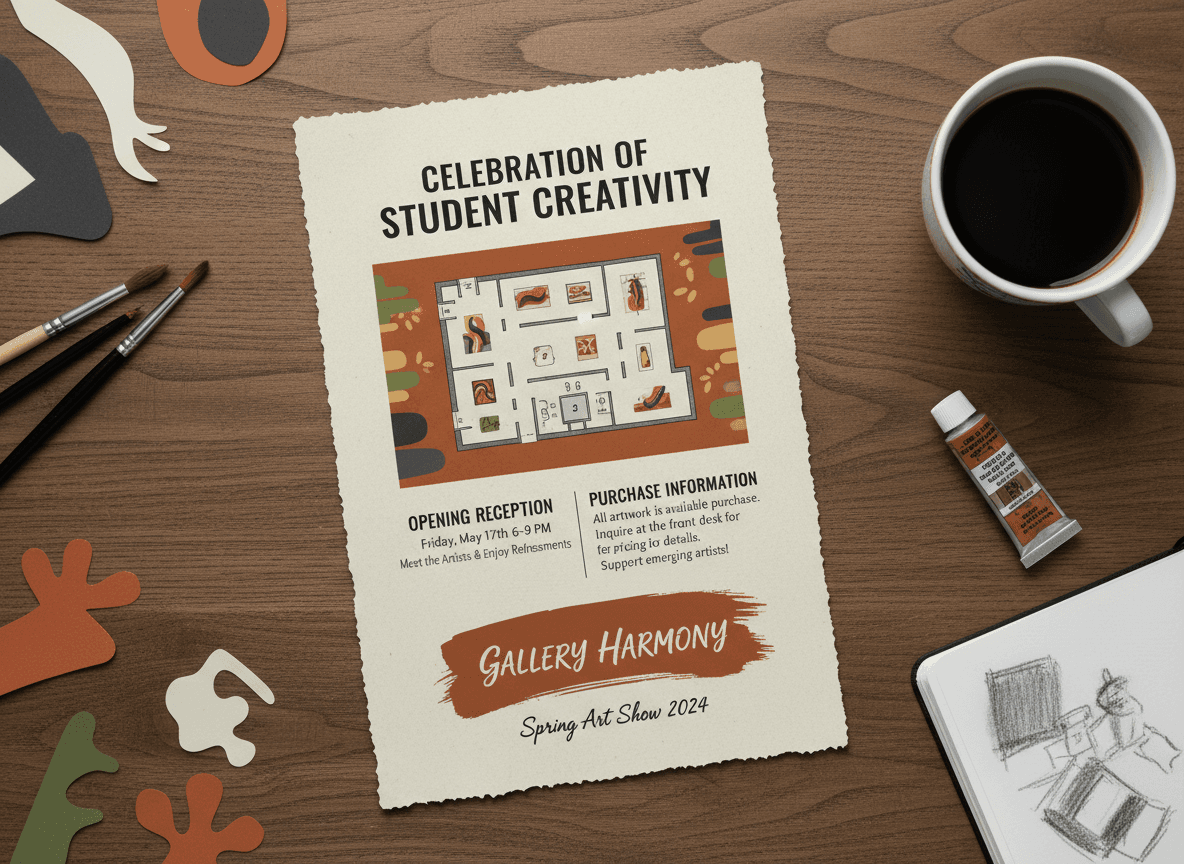
- How to find your child's artwork: If the show includes every student in the school, give families a way to locate their child's work specifically. A grade-level or room designation, a printed map at the entrance, or a note in the newsletter that says "third-grade work is displayed in the main hallway" prevents families from walking past their child's piece without realizing it.
- Purchase opportunities: If student artwork is available for sale at the end of the show, or if prints or art cards are being sold as a fundraiser, include that information. How does purchase work? Can families buy at the event or only through a presale?
Artist reception format
Some school art shows include an artist reception where students stand beside their work and speak to visitors about what they made and why. This format is powerful but requires specific communication. Families need to know: when does the reception portion happen, where should students be and by what time, and how long will students be expected to stay at their work before the event opens to general viewing.
If student artist statements are displayed beside the artwork, mention this in the newsletter. Families who know their child wrote about their artwork come to the show expecting to read it, which adds a dimension to the visit beyond simply looking.
Conversation starters for families
One of the most valuable things an art show newsletter can do is give families language for talking to their child about the work. Many parents feel uncertain about how to discuss art. A few specific questions in the newsletter removes that awkwardness.
Something like: "Ask your child what the hardest part of making this piece was. Ask them what they would do differently if they made it again." These prompts turn a passive viewing experience into a genuine conversation between the parent and the student about the creative process.
Handling artwork that does not make the show
If not every student's work is displayed (due to space constraints, curatorial choices, or the nature of the project), acknowledge this in the newsletter and explain why without framing it as a selection or rejection. Many art shows display a curated subset of work or rotate artwork across different display periods. Families whose child's work is not in this show should know that in advance, not as a surprise when they arrive.
The post-show newsletter
After the art show, send a brief closing newsletter. Thank the art teacher and any volunteers who helped set up the exhibition. Celebrate the participation of every student who contributed work. Include a couple of photos from the event if photo permissions allow. If artwork is being returned home on a specific date, include that logistics note.
Daystage's block editor works well for art show newsletters because the format is inherently visual. You can lead with a headline and a warm opening paragraph, then move into clear logistics sections, then close with the conversation starter prompts. The newsletter arrives in family inboxes looking organized and genuinely inviting, not like a calendar reminder.
The art show deserves better communication
Student artwork represents real creative work and real vulnerability. Students made something, put their name on it, and hung it on a wall for the school community to see. The newsletter that invites families to experience that work should honor the effort with genuine warmth, clear logistics, and enough specificity to make every family feel that coming to this show matters for their child in particular.
Get one newsletter idea every week.
Free. For teachers. No spam.
Frequently asked questions
When should schools send a school art show newsletter?
Send the art show newsletter two weeks before the event to build anticipation and give families time to plan attendance. A three-day reminder referencing specific student artwork keeps the excitement high and reinforces the personal connection families have to the show.
What should a school art show newsletter include?
Include the show dates and viewing hours, location within the school building, and how student work will be displayed. Let families know whether all students have work in the show, describe the artist reception if there is one, and share conversation starters for engaging with student artwork.
How far in advance should teachers send art show communications to families?
Two weeks out for the main newsletter, then a brief reminder three days before the opening. The two-week newsletter does the persuasive work. The reminder just brings the event back into focus for families who meant to attend but had not confirmed their plans.
What are common mistakes in art show newsletter communication?
Treating the art show like a logistical announcement rather than a celebration is the biggest mistake. Generic language like 'join us for an evening of student art' does nothing to motivate attendance. Families need to know their child's work is in the show and where to find it.
What is the best tool to send a school art show newsletter?
Daystage makes it easy to build a two-part art show sequence, schedule both newsletters in advance, and add student-specific details that make families feel personally invited. Schools using Daystage typically see higher attendance at optional events because the communication actually motivates families to show up.

Adi Ackerman
Author
Adi Ackerman is a former classroom teacher and curriculum writer with 8 years in K-8 schools. She writes about school communication, parent engagement, and what actually works in real classrooms.
More for School Events
New Family Orientation Newsletter: A Guide for Schools Welcoming Incoming Families
School Events · 6 min read
School Debate Competition Newsletter: What Families Need to Know
School Events · 5 min read
School Picture Day Newsletter: The Communication Checklist That Eliminates Confusion
School Events · 7 min read
Ready to send your first newsletter?
3 newsletters free. No credit card. First one ready in under 5 minutes.
Get started free