
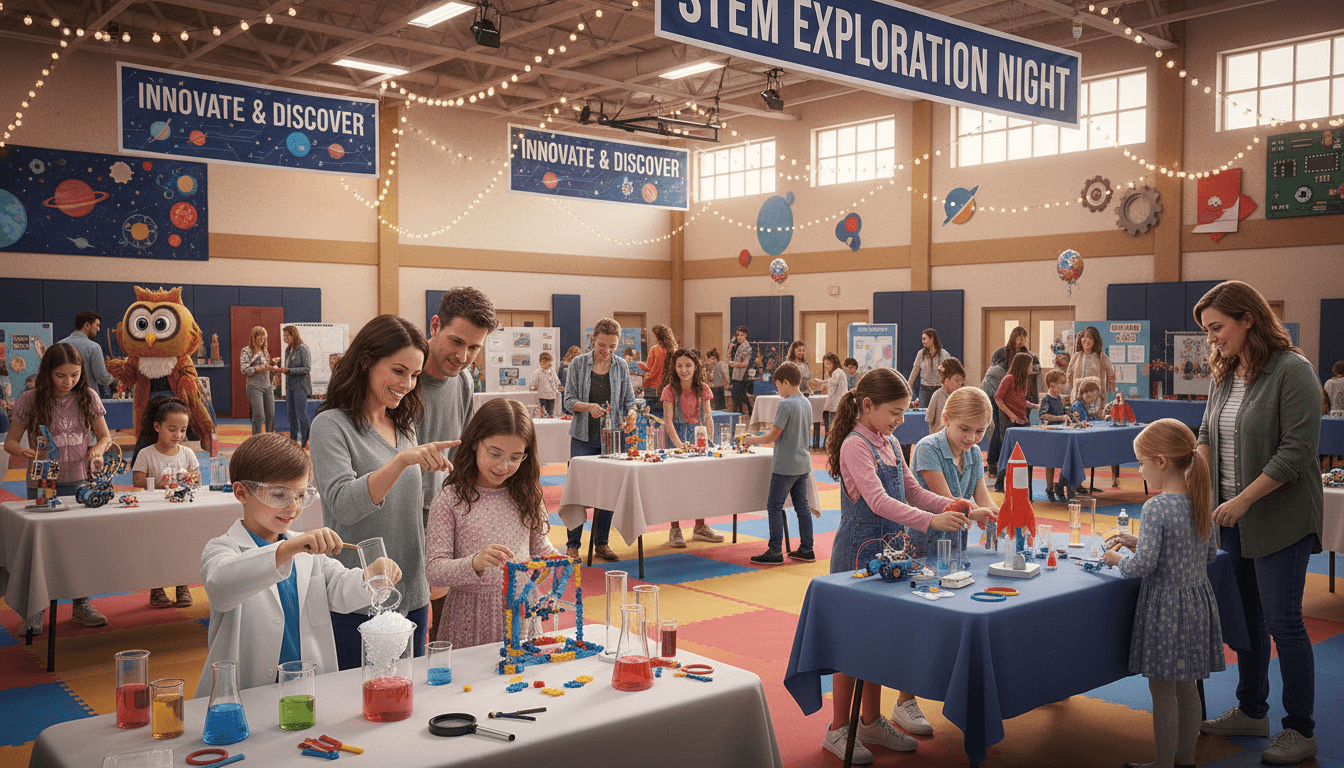
STEM Night Newsletter: How to Communicate a Hands-On Family Learning Event
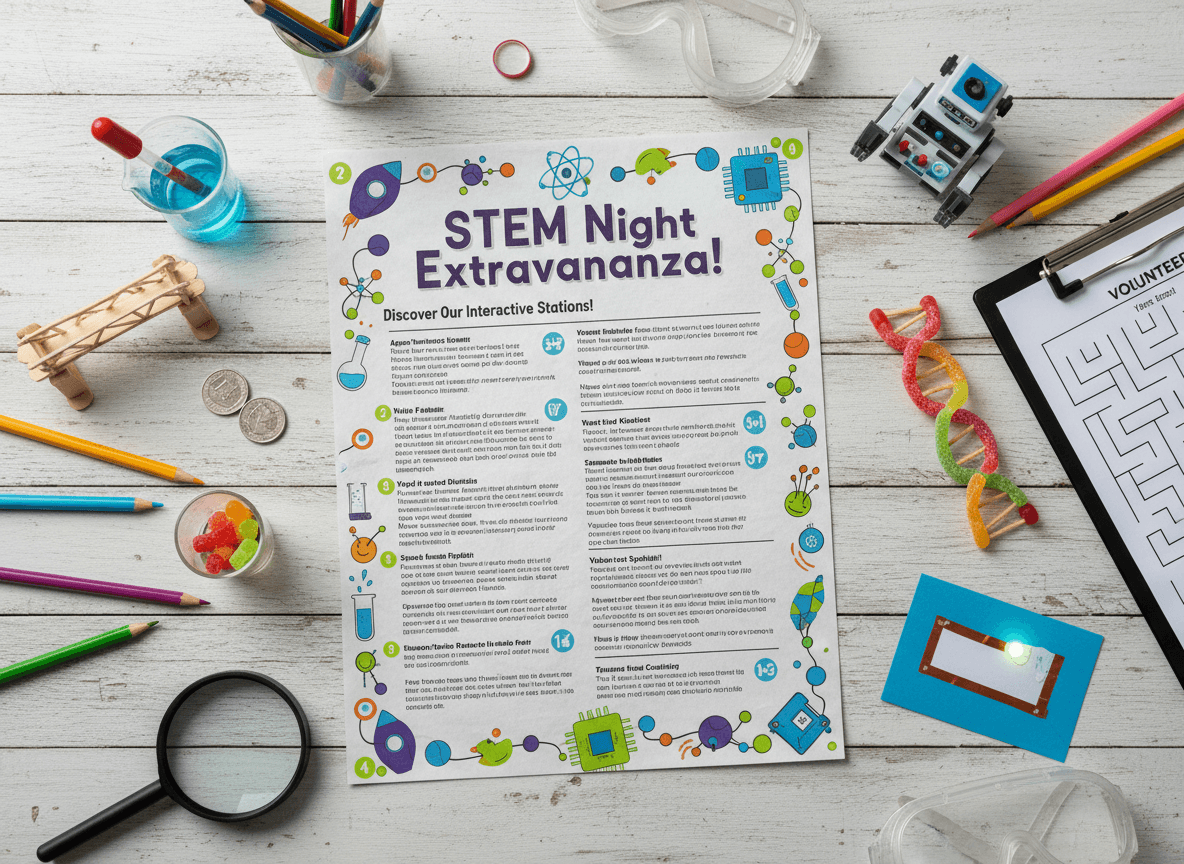
STEM night is a family engagement event with a specific promise: families and students explore science, technology, engineering, or math together through hands-on activities. The promise is good. But STEM night newsletters routinely fail to explain what "hands-on" actually means, what families will do when they arrive, or why the experience is worth a Tuesday evening.
A well-written STEM night newsletter converts a vague invitation into a specific event that families are genuinely excited to attend. Here is what it needs to include.
Lead with what families will actually do
The most effective opening for a STEM night newsletter is a description of the activities, not the concept of STEM education. Families do not attend STEM night because they want to support STEM. They attend because their child will be building something, experimenting with something, or solving something alongside them.
Lead with the activities. "This year's STEM Night includes a bridge- building challenge, a simple circuits station, a coding game, and a chemical reaction demonstration that you and your child will run yourselves." That is a specific, concrete invitation that creates a mental picture. It is far more motivating than "join us for an evening of STEM exploration."
Activity descriptions and age recommendations
STEM nights typically offer multiple stations with activities at different levels of complexity. The newsletter should give families a brief description of each station and note any age or grade-level recommendations.
Not every family will have time to visit every station. Families who know what each station involves can prioritize the ones that align with their child's interests and abilities. A family with a kindergartener and a fifth-grader needs to know which stations work for both ages and which are designed for older students.
Keep the descriptions short and accessible. This is not a lesson plan. It is a preview that tells families what to expect and builds their child's anticipation before the event.
What materials to bring, if anything
Some STEM night stations ask families to bring materials from home. Recycled materials for a building challenge, a device for a coding station, or specific household items for an experiment. If any stations have a "bring your own" requirement, state it clearly in the newsletter.
If everything is provided and families need to bring nothing, say that explicitly too. Families who are uncertain whether they need to prepare something often spend time worrying about it or decide not to come because they are not sure they are "ready."
Volunteer station assignments
STEM nights require volunteers to manage individual stations, explain activities, and help families who are stuck or confused. The general newsletter should include a volunteer sign-up section with specific station descriptions and time commitments.
Volunteers who are confirmed in advance need a separate, dedicated newsletter closer to the event. This communication should include: which station they are assigned to, when to arrive, what to expect at that station, and who to report to. Volunteers who arrive without role clarity often stand at the wrong station or help in ways that conflict with how the activity is supposed to run.
Communicating learning goals without academic jargon
STEM nights have genuine educational goals. Students practice scientific thinking, engineering design, mathematical reasoning, or computational logic. These goals matter, and families deserve to know them. But a newsletter full of academic standards language and curriculum jargon does not connect with families the way a plain-language description of what their child will experience does.
Instead of "students will develop spatial reasoning and design thinking skills," try "students will figure out how to build the strongest bridge using only popsicle sticks and tape. The challenge is in the constraints." That language conveys the same learning goal in terms families can understand and connect to.
After STEM night: the follow-through
The most valuable part of a STEM night is the conversation it starts between families and students on the way home. The post-event newsletter should include a few conversation starter questions that families can use in the car or at dinner the next day.
Something like: "Ask your child which station surprised them most. Ask them to explain how the circuit worked or what made their bridge strong. If they want to try a version at home, the materials list is below." This follow-through communication extends the learning beyond the event and gives families a practical way to continue the engagement.
Building STEM night newsletters in Daystage
STEM night newsletters benefit from clear visual organization because there is typically a lot of information to cover: multiple stations, volunteer logistics, age recommendations, and materials lists. In Daystage, you can structure the newsletter with distinct sections using the block editor so families can quickly find the station descriptions without reading through the volunteer coordination details, and volunteers can find their section without reading through the activity previews.
STEM night works when families know what they are walking into
Families who arrive at STEM night knowing what to expect stay longer, engage more deeply, and bring more enthusiasm to the activities. The newsletter is the first experience of the event. Make it specific, make it concrete, and make the activities feel as interesting in the description as they are in person.
Get one newsletter idea every week.
Free. For teachers. No spam.
Frequently asked questions
When should schools send a STEM night newsletter?
Send the main STEM night newsletter two weeks before the event so families can plan attendance and volunteer spots fill early. A three-to-five day reminder keeps the event visible without overwhelming inboxes.
What should a STEM night newsletter include?
Describe each activity station, note age recommendations for younger and older students, and list any materials families should bring. Include the event schedule, volunteer station assignments, and parking or entry logistics.
How far in advance should teachers send STEM night communications to families?
Two weeks gives families enough time to commit without the event feeling too distant to act on. For STEM nights where families sign up for specific activity stations, open registration in the same newsletter so slots do not fill after interest drops off.
What are common mistakes in STEM night newsletter communication?
Leading with educational objectives in academic language is one of the most common mistakes, because it sounds like school work rather than a family event. Another frequent problem is not describing what families will physically do, which makes the event feel abstract and optional.
What is the best tool to send a STEM night newsletter?
Daystage handles the full STEM night communication sequence, from the initial announcement to volunteer assignments to post-event follow-up. The scheduling feature means you set up all three newsletters at once and they go out automatically at the right time.

Adi Ackerman
Author
Adi Ackerman is a former classroom teacher and curriculum writer with 8 years in K-8 schools. She writes about school communication, parent engagement, and what actually works in real classrooms.
More for School Events
School Honor Society Induction Newsletter: Celebrating Academic Excellence
School Events · 5 min read
School Staff Appreciation Celebration Newsletter: Involving Families in Honoring Educators
School Events · 5 min read
Curriculum Night Newsletter: What to Send Before and After
School Events · 6 min read
Ready to send your first newsletter?
3 newsletters free. No credit card. First one ready in under 5 minutes.
Get started free