

Literacy Night Newsletter Template for Elementary Families
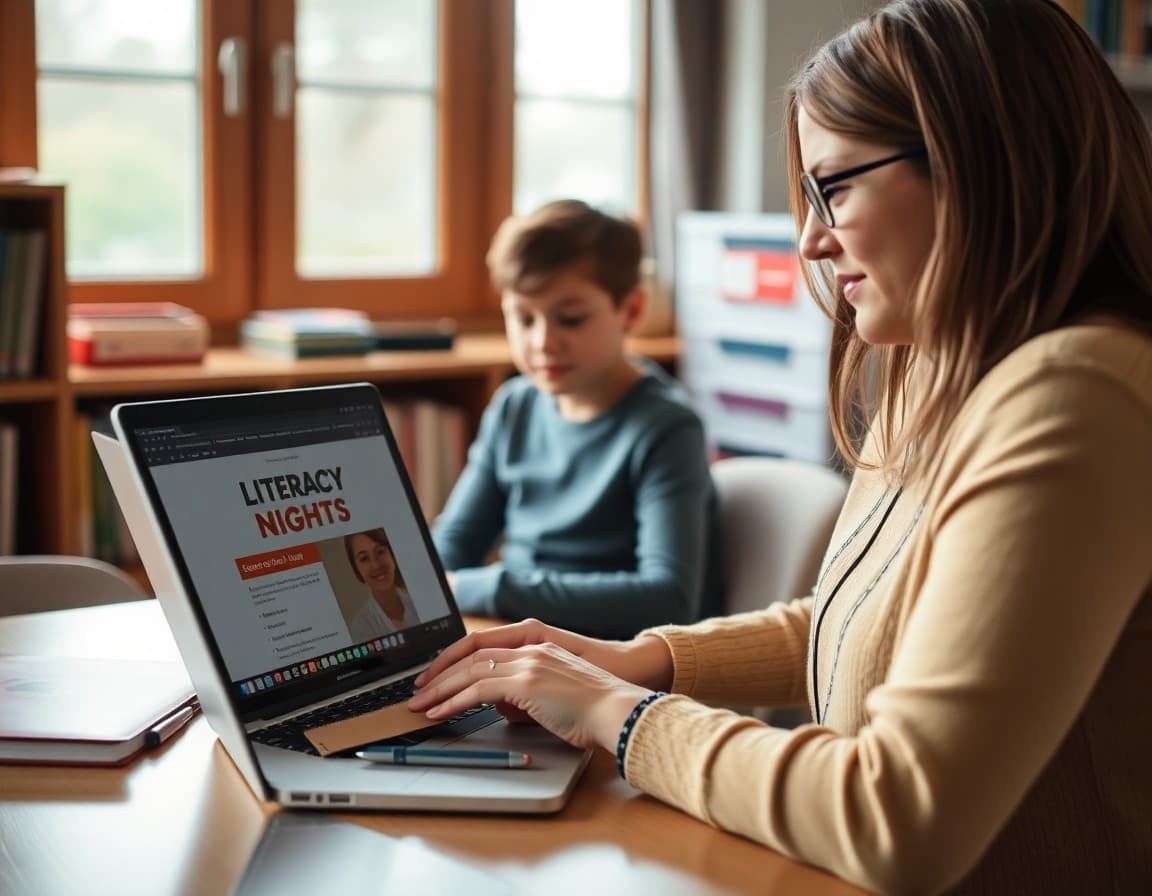
Literacy night has a straightforward value proposition for families: come for an evening, leave knowing how to help your child read better at home. The newsletter invitation works when it communicates that value proposition clearly and makes the event feel accessible and worthwhile for families who are not natural school event attendees.
This template and guide covers what to include in a literacy night invitation, how to frame the activity preview, and what to send in the days that follow to families who could not make it.
Who This Event Is For
Literacy night is most effective when the right families attend. State explicitly which grade levels are the primary audience. "This event is designed for families of students in kindergarten through grade 3 who are building foundational reading and phonics skills" gives the intended audience a clear reason to come. It also signals to families of older students whether the evening applies to them.
If your literacy night spans all grades with differentiated stations, note that too. But if it has a primary focus, name it.
Activity Preview Section
List two or three specific activities families will participate in. This is the highest-value section of the invitation because it turns an abstract event into something concrete families can anticipate. "You will rotate through three hands-on stations including a phonics word-building game, a partner reading fluency practice, and a guided read-aloud with comprehension questions" is far more compelling than "interactive literacy activities."
Sample Newsletter Template Excerpt
Here is a template you can adapt:
Subject line: Family Literacy Night - March 11, Take Home a Free Book and Reading Strategy Kit
Opening: Jefferson Elementary's Family Literacy Night is Tuesday, March 11 from 6:30 to 8:00 p.m. Designed for families of students in grades K-3, this event gives you practical tools to support your child's reading at home starting tomorrow morning.
What you will do:
- Visit three hands-on reading strategy stations with your child
- Hear a 15-minute overview of how we teach reading at Jefferson
- Pick up a free book for your child to keep
What you will take home:
- A strategy card with 5 techniques for home reading time
- A grade-level book list from our librarian
- One free book per child (while supplies last)
Details:
Date: Tuesday, March 11, 2026
Time: 6:30 to 8:00 p.m.
Location: Jefferson Library and Room 14
Bring your child. All K-3 siblings welcome.
Register at [link] to ensure we have enough materials.
The Free Book Section
If your school is offering a free book to each child who attends, this is worth emphasizing in the newsletter. "Each child who attends will choose a free book to keep" is a reliable attendance driver, especially for families of young readers. Partner with your school's PTO, Title I funding, or a community donation to make this possible.
A free book sends a message beyond the practical value of the gift: your school believes in building home libraries and treats books as something every family should have access to, not a luxury item.
Making the Event Accessible
Address accessibility proactively. Will translation be available? Is the library space accessible to families using wheelchairs or strollers? Can families bring infants? Is there a separate activity for toddler siblings? These details matter to families weighing whether to attend and signal that the event was planned with real families in mind.
The Follow-Up for Non-Attendees
Within three days of literacy night, send a brief follow-up to all families with the strategy card content summarized in two or three points, a link to the book recommendation list, and a note about any upcoming literacy-related events or family resources. This follow-up serves families who wanted to come but could not, and it ensures the learning from the event does not stay locked inside the library walls.
Get one newsletter idea every week.
Free. For teachers. No spam.
Frequently asked questions
What should families expect to do at a literacy night?
Literacy nights typically include hands-on stations where families practice reading strategies together, brief presentations from literacy coaches or teachers, book-browsing areas, and take-home resource packets. The best literacy nights give families at least one strategy they can use the next time they read with their child at home. The newsletter should preview at least two or three of these activities so families arrive with realistic expectations and genuine motivation.
Should children attend literacy night alongside their parents?
Yes, and the newsletter should make this clear explicitly. Literacy night is most effective when children and parents engage in activities together. Let families know in advance that children are expected to attend, what ages the activities are designed for, and whether there is a separate activity area for siblings who are too young for the main programming.
How do you increase attendance at literacy night specifically?
Address the most common barrier directly: families who are not sure it applies to them. State clearly which grade levels are the focus. 'This event is most relevant for families of students in kindergarten through third grade who are building foundational reading skills' gives the right families a reason to come and does not waste the time of families whose children are beyond that stage. Also offering a free book to take home is one of the most reliable attendance drivers for family literacy events.
What take-home resources make a literacy night memorable?
A strategy card with three to five specific techniques families can use at home, a book recommendation list organized by grade level, a bookmark with conversation prompts for reading time, and one physical book per child are the most common and effective take-home materials. Families who leave with something tangible are more likely to use what they learned.
How can Daystage help send a literacy night newsletter that drives attendance?
Daystage lets you build a literacy night invitation with activity previews, a book list, a registration or RSVP button, and grade-level sections. Sending through Daystage means your newsletter reaches your full family list in one send rather than relying on flyers that get lost in backpacks.

Adi Ackerman
Author
Adi Ackerman is a former classroom teacher and curriculum writer with 8 years in K-8 schools. She writes about school communication, parent engagement, and what actually works in real classrooms.
More for School Events
Ready to send your first newsletter?
3 newsletters free. No credit card. First one ready in under 5 minutes.
Get started free