
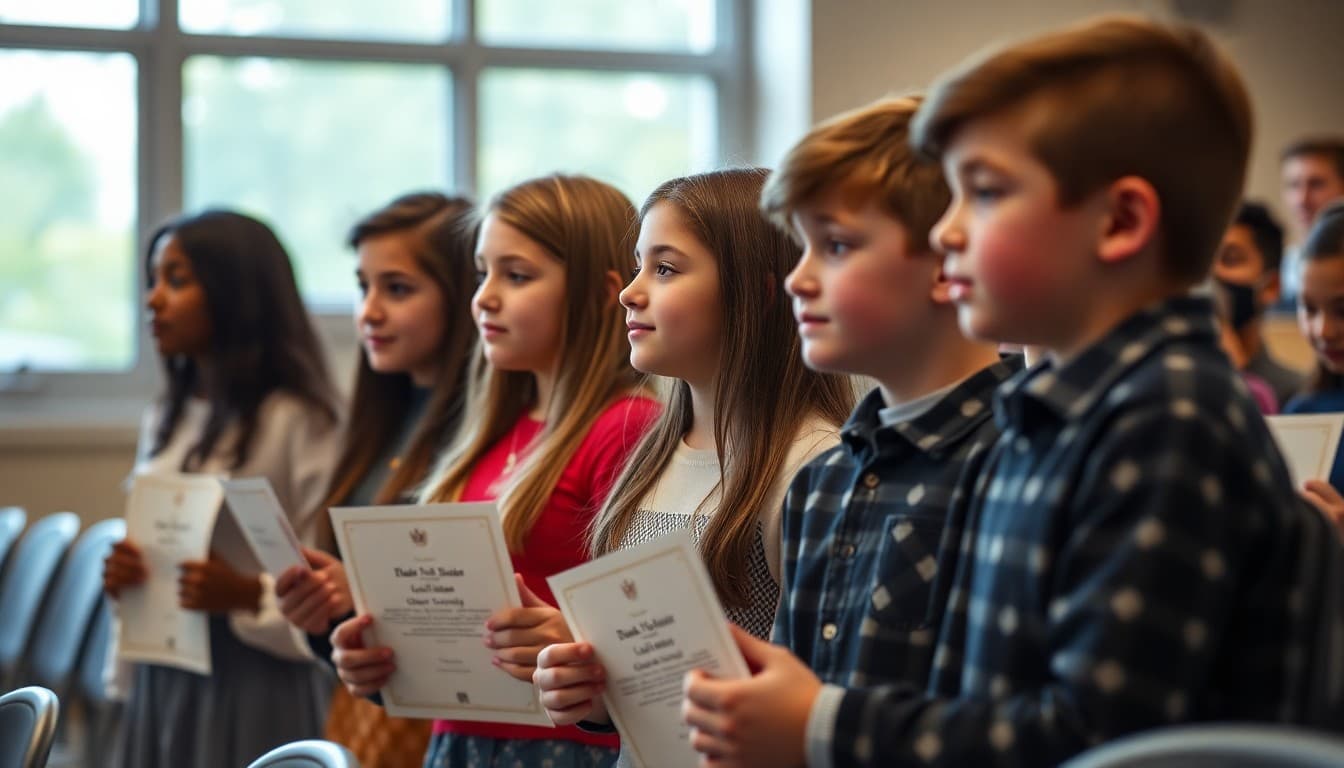
Student Achievement Celebration Newsletter: End of Year Honors
An achievement celebration newsletter does two things: it prepares families for an event and it makes students feel that what they accomplished this year actually matters. Getting both right means being specific about what's being recognized and being inclusive enough that every family has a reason to read carefully.
Open by Framing What Achievement Means at Your School
Start by setting the tone for what kind of recognition your school values. If your school celebrates more than academic grades, say so in the opening. "This year's Achievement Celebration recognizes students across 14 different categories, from honor roll to most improved, from community service to athletic excellence. We designed the program to ensure that every classroom has a student being called to the stage." That opening sets expectations and signals inclusivity before families start scanning for their child's name.
List All Award Categories Clearly
Name every category families should expect to see. Academic honor roll by GPA range. Most Improved. Perfect Attendance (often broken into semester and full year). Character Award or Citizenship. Arts Achievement. Athletic Excellence. Reading Milestone, such as having read 100 books or 50,000 pages. Community Service. Teacher's Choice or Classroom Leadership. STEM Achievement. Foreign Language Excellence. Each category deserves one line of explanation so families understand what it recognizes.
Describe the Ceremony Format and Schedule
Use a template section like this:
"[School Name] End of Year Achievement Celebration: [Date] at [Time]. Location: [Gym, auditorium, or outdoor space]. Doors open at [time]. Program begins at [time]. Expected duration: [X] minutes. Students should arrive by [time] and check in with their homeroom teacher at the [location]. Dress code: [school attire or specific instructions]. Families of all students are welcome whether or not their child is receiving an award."
Families who know what to expect arrive on time and prepared.
Tell Families How to Find Out If Their Child Is Receiving an Award
This is the most important practical detail in the newsletter. Be direct. "Students who are receiving awards will be notified by their homeroom teacher before [date]. If your child's teacher has not mentioned an award by [date], your child is welcome to attend as part of the audience." This prevents the painful scenario of a family dressing up and attending expecting a recognition that isn't coming.
Include a Note on Classroom Achievement That Doesn't Make It to the Stage
Many students won't receive a formal award. A brief section acknowledging this, without being condescending, can be meaningful. "Our Achievement Celebration highlights a selection of the remarkable things that happened in every classroom this year. Every student who grew, tried, and showed up for this community has something to be proud of. Teachers will celebrate individual student progress in classroom wrap-up newsletters and personal communications in the final days of school." This sets expectations and redirects families toward the teacher's individual communication.
Share a Student or Staff Quote
One authentic voice from a student or teacher elevates the newsletter. "Last year's most improved award recipient told me it was the first time she'd ever been recognized for something academic. She carried the certificate home on the bus holding it with both hands." That single story does more emotional work than three paragraphs of ceremony description. If you have a quote or memory like this, use it.
Name Any Special Guests or Presenters
If you have a district administrator, community leader, or special guest presenting awards, name them. If a teacher or counselor who is retiring will be recognized as part of the ceremony, mention it. Families who know the program's highlights in advance engage more fully with the event than those experiencing everything as a surprise.
Close with the Celebration Tone the Event Deserves
End the newsletter on a high note. "We can't wait to celebrate your students alongside you. The accomplishments on display at this ceremony represent a year of genuine effort, growth, and community. Please come ready to cheer." Brief, specific, and warm. The newsletter should feel like the opening act of the celebration, not a bureaucratic notice.
Get one newsletter idea every week.
Free. For teachers. No spam.
Frequently asked questions
What achievement categories should a school recognize at end of year?
Go beyond honor roll. Effective achievement programs recognize academic excellence, most improved, perfect attendance, citizenship and service, arts achievement, athletic excellence, reading milestones, and community leadership. The goal is to find something meaningful to celebrate in the widest possible range of students. A ceremony that only honors the top academic performers loses most of its students before it begins.
How do you write an achievement celebration newsletter that feels inclusive?
Describe the full range of awards being given, not just the academic honors. Use language that acknowledges effort and growth alongside achievement. Include at least one student quote or testimonial. Tell families what to expect at the ceremony so no one feels surprised or left out. If some awards are announced at the event and some in advance, say so clearly.
What should the achievement newsletter tell families about the ceremony?
Include the date, time, location, and estimated duration. Tell families whether seating is limited, whether students should wear specific attire, what order awards will be presented, and how families will know if their child is receiving an award. If families who are not receiving awards are still welcome to attend, say so and explain where they should sit.
How do you handle situations where some students don't receive recognition at an awards ceremony?
Make sure classroom teachers have already communicated with families about which students are being recognized before the ceremony. No family should learn their child isn't receiving an award by watching the ceremony without being told in advance. The newsletter should help set these expectations without making non-recipients feel publicly excluded.
How does Daystage help schools send achievement celebration newsletters with a polished look?
Daystage lets you create a visually formatted newsletter that reflects the celebratory nature of the event. You can include the school logo, award category list, ceremony details, and a message from the principal in a layout that feels worthy of the occasion. Schools that send a polished achievement newsletter instead of a plain text email report significantly higher family attendance at the ceremony.

Adi Ackerman
Author
Adi Ackerman is a former classroom teacher and curriculum writer with 8 years in K-8 schools. She writes about school communication, parent engagement, and what actually works in real classrooms.
More for End of Year
Ready to send your first newsletter?
3 newsletters free. No credit card. First one ready in under 5 minutes.
Get started free