
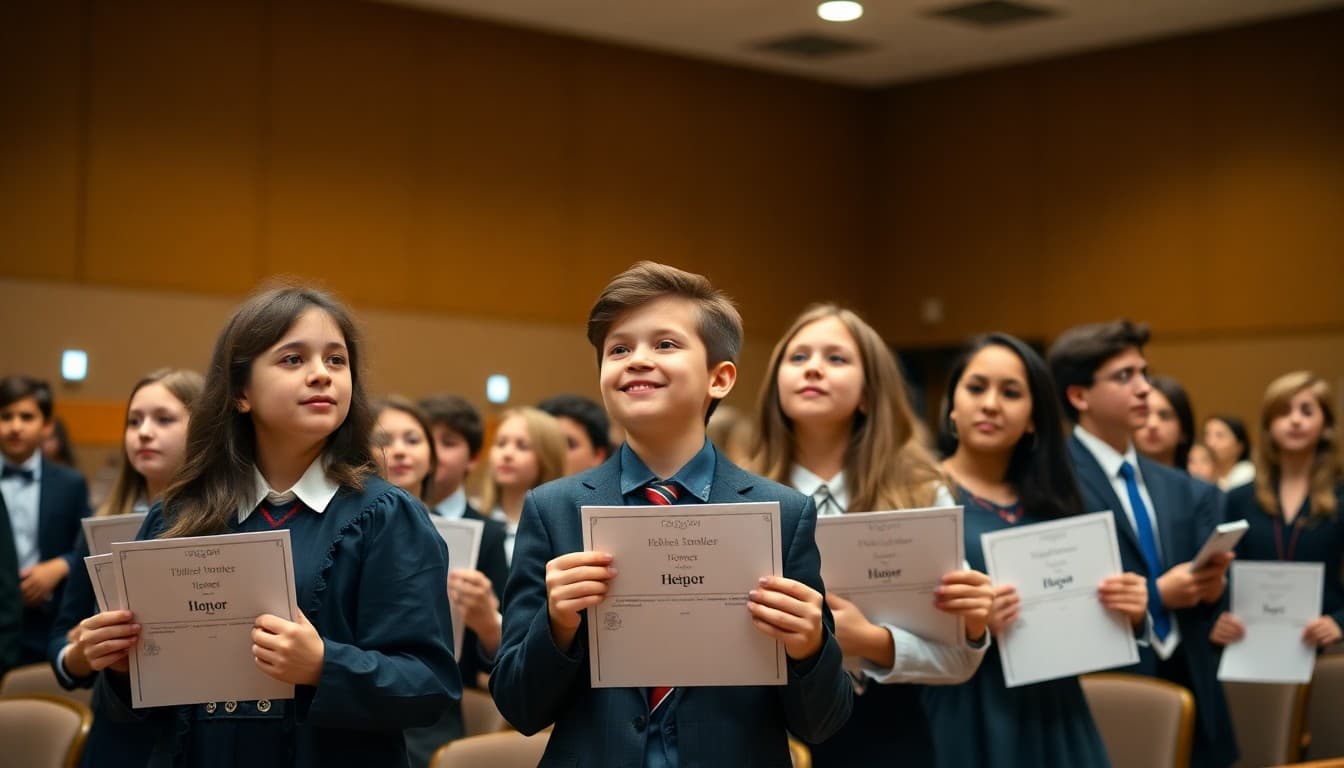
Academic Honors Ceremony Newsletter: Invitation and Details
An academic honors ceremony recognizes some of your school's hardest-working students. The newsletter invitation should match the significance of that recognition. That means complete logistics, clear criteria, and a tone that treats academic achievement as genuinely worth celebrating.
Open by Defining What the Ceremony Celebrates
State clearly what your school's academic honors ceremony recognizes and what the criteria are. "The [School Name] Academic Honors Ceremony recognizes students who achieved a cumulative GPA of 3.0 or higher during the school year, with separate designations for Honors (3.0 to 3.4), High Honors (3.5 to 3.9), and Highest Honors (4.0 and above). We are honored to recognize [number] students across all grade levels at this year's ceremony." Naming the numbers gives families a sense of scale and context for the recognition.
Provide All Ceremony Logistics in One Block
Use a template section:
"[School Name] Academic Honors Ceremony: [Date] | [Day] | [Time]. Location: [Auditorium / gymnasium and address]. Doors open at [time]. Ceremony begins at [time]. Estimated length: [X] minutes. Guest tickets: [X] per honoree. Additional ticket requests: contact [name] by [date]. Dress code for honorees: [formal or school-appropriate attire]. Students should arrive at [location] by [time] to check in with their grade-level advisor. Parking: [lot and any direction notes]."
Explain What Happens During the Ceremony
Walk families through the program sequence. Welcome from the principal. Acknowledgment of the full honor roll by reading names or presenting a list. Presentation of certificates by designation, starting with Honors and ending with Highest Honors. Keynote or brief motivational message from a student speaker or faculty member. Closing and photo opportunity. Tell families whether students are photographed on stage and whether those photos will be shared or if they should bring their own cameras. Knowing the sequence reduces restlessness during the event.
Name the Honor Roll Designations and Criteria Explicitly
Use a template section that families can reference:
"Academic Honors Designations: Highest Honors (Principal's List): cumulative GPA of 4.0 or above. High Honors: cumulative GPA of 3.5 to 3.99. Honors: cumulative GPA of 3.0 to 3.49. All calculations are based on cumulative GPA for the full school year. Students with incomplete grades are not eligible until grades are resolved. Families who have questions about their student's eligibility should contact their school counselor."
Tell Families How to Find Out If Their Child Is Being Recognized
Be direct. "Students who have met the eligibility criteria for any honor designation will receive notification from their homeroom teacher or school counselor by [date]. If you have not received notification by [date] and believe your child may be eligible, contact [counselor name] at [email]." Families should not learn whether their child is receiving honors for the first time at the ceremony itself.
Include a Message About the Meaning of Academic Achievement
One brief paragraph that connects academic achievement to character and effort rather than just grades gives the ceremony more meaning. "We celebrate academic achievement not because grades are the only measure of a student's worth, but because disciplined learning requires the kind of effort, consistency, and intellectual courage that deserves recognition. The students being honored today put in that work. We're proud of them." This framing prevents the ceremony from feeling like it's only about GPA percentages.
Address Students Who Are Close but Not Eligible
Don't ignore families whose children didn't make the list. A brief, general note can be included without being patronizing. "We recognize that many students worked extremely hard this year who are not on this semester's list. Every teacher in this building sees and values that effort. We encourage all students to continue building the habits that make academic excellence possible." This is enough. It doesn't need to be more.
Close with an Invitation and Contact Information
End with the event invitation and direct contact for questions. "We look forward to celebrating your student alongside you at this ceremony. Please reach out to [name] at [email or phone] with any questions about eligibility, logistics, or accommodations. We'll see you on [date]." Clean, direct, and complete. The family reading it should have everything they need to prepare.
Get one newsletter idea every week.
Free. For teachers. No spam.
Frequently asked questions
What criteria do schools typically use for academic honors designations?
Most schools use GPA-based criteria: Highest Honors or Principal's List for students with a 4.0 or above, High Honors for 3.5 to 3.9, and Honors for 3.0 to 3.4. Some schools also factor in attendance and citizenship scores for honors eligibility. The newsletter should name your school's specific criteria clearly so families understand exactly what designation their child received and what it means.
Should the newsletter list all honor roll students by name?
That depends on family preference and district policy. Many schools list all honorees in the newsletter, which provides recognition and motivates other students. Some families prefer privacy for their child's academic performance. A middle approach is to publish the list with the option for families to opt out in advance. Whatever approach you use, communicate it clearly in the newsletter and maintain it consistently.
How do you handle a student who narrowly missed honors eligibility?
Address this privately with individual families, not in the public newsletter. If a student missed the cutoff by a small margin and there are extenuating circumstances, those conversations happen directly. The newsletter communicates to all families and should focus on the recognition being given rather than the criteria for non-qualification.
What is the difference between an honor roll announcement and an academic honors ceremony?
An honor roll announcement is typically a periodic communication listing students who met the academic threshold for that grading period. An academic honors ceremony is a formal event where honorees are publicly recognized, typically at the end of the year. The ceremony newsletter invitation is separate from the honor roll announcement and should include all event logistics rather than just the eligibility list.
How does Daystage help make an academic honors ceremony newsletter feel appropriately prestigious?
Daystage lets you create a newsletter that matches the formality of the event. A clean, school-branded layout with the ceremony details organized clearly, the honor roll criteria stated formally, and a message from the principal makes the newsletter feel like a genuine invitation to a meaningful event. Families who receive a polished academic honors newsletter treat the event with more gravity than those who receive a plain text email.

Adi Ackerman
Author
Adi Ackerman is a former classroom teacher and curriculum writer with 8 years in K-8 schools. She writes about school communication, parent engagement, and what actually works in real classrooms.
More for End of Year
Ready to send your first newsletter?
3 newsletters free. No credit card. First one ready in under 5 minutes.
Get started free