
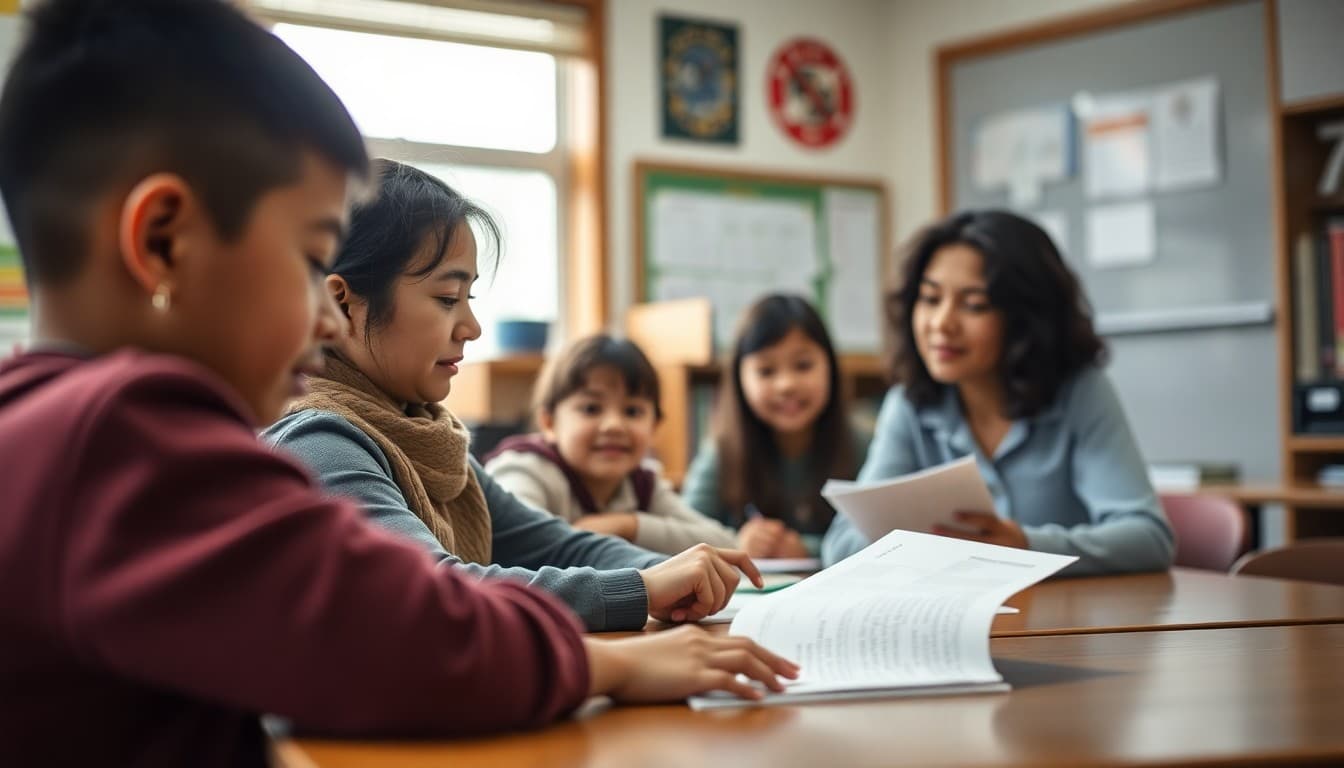
Washington ELL School Newsletter: Reaching Multilingual Families

Washington State has one of the most linguistically diverse ELL populations in the Pacific Northwest. Seattle Public Schools serves students who speak more than 100 different home languages. Highline School District south of Seattle is one of the most diverse school districts in the country. Eastern Washington's Yakima Valley has a large, established Spanish-speaking agricultural community that has been part of the region for generations. For ELL teachers across this range of contexts, a newsletter is one of the most reliable tools for keeping families connected to what their child is learning and what the school expects from them.
Washington's ELL Population
Washington's ELL students are concentrated in two main geographic areas with very different characteristics. Western Washington, particularly South King County and the Puget Sound region, has large Somali, Vietnamese, Spanish-speaking, and East African communities connected to immigration patterns of the past three to four decades. Eastern Washington's Yakima, Benton, and Franklin counties have large, multigenerational Spanish-speaking communities connected to the region's agricultural industry. Each community has different relationships to schools, different levels of home language literacy, and different expectations of what family communication from a school looks like.
Setting Up a Multilingual Newsletter for Washington Schools
For schools with primarily Spanish-speaking families, a parallel English-Spanish format delivers most families' needs. For schools with diverse multilingual populations like those in Highline or Kent, prioritize translation for the most common home languages and use plain-language English for others. Washington OSPI provides translated family resources in several languages that teachers can link to in newsletters, which reduces the burden of translating everything from scratch. Contact your district's ELL office to find out what translation support is already available before investing time in building your own translation process.
What Washington ELL Families Need From Regular Communication
ELL families across Washington's diverse communities consistently need four things: clear explanation of what their child is working on in English language development, honest information about where their child is on the WIDA proficiency scale, practical guidance on how to support language development at home, and clear information about their rights under federal and state law. Washington ELL families in urban areas like Seattle and Renton tend to be more familiar with U.S. school systems than recently arrived families in rural Eastern Washington. Adjust the level of background explanation in your newsletter based on the specific community you serve.
A Template Section for Washington ELL Family Updates
Here is a format used by an ELL specialist in Kent School District for their monthly family communication:
Program Update: This month, students in our advanced ELL group are working on academic vocabulary in the social sciences, specifically the language of government and civic participation. This vocabulary appears on the SBAC ELA assessment and in social studies classes throughout high school. At home, you can support this by watching or reading news about local government with your child and discussing what you see using the vocabulary we are learning. Both of you learning together is one of the most effective ways to build academic language. / Actualización del programa: Este mes, los estudiantes de nuestro grupo ELL avanzado están trabajando en vocabulario académico en ciencias sociales... [Spanish version continues]
That section explains the skill, connects to SBAC, gives a specific home activity with a strong rationale, and delivers it in both languages.
Washington's Transitional Bilingual Instruction Program (TBIP)
Washington's TBIP provides state funding for bilingual education services and has specific requirements for family notification and engagement. Your newsletter should explain the TBIP program to families who may not know what it is or why their child is receiving bilingual services. Washington also has specific requirements around the annual parent notification letter that goes to all ELL families, which should be sent separately from your regular newsletter. Work with your district's ELL coordinator to ensure both the formal notification and your ongoing newsletter communication are meeting state requirements.
Washington's Seal of Biliteracy for ELL Students
Washington offers the Seal of Biliteracy for high school students who demonstrate proficiency in English and at least one other language. For ELL students who have maintained proficiency in their home language while acquiring English, this credential recognizes a genuine achievement that many employers and universities value. Your newsletter can introduce this opportunity to middle school ELL families and explain the demonstration process to high school families. For many ELL students, knowing that their bilingualism is officially recognized by the state changes how they feel about their identity as language learners.
Building Consistent Communication in Communities With High Turnover
Some Washington ELL communities, particularly migrant agricultural families in Eastern Washington, experience high student turnover between school years. A newsletter archive that is accessible to families who join mid-year helps new students and their families quickly understand the program, the teacher's expectations, and the resources available to them. Post your newsletters in a publicly accessible location alongside direct email delivery. A family that arrives in November and can read all four previous newsletters from September through October starts the year far better informed than one who starts from zero.
Get one newsletter idea every week.
Free. For teachers. No spam.
Frequently asked questions
What languages do Washington State ELL newsletters most commonly need?
Spanish is the most needed language for ELL newsletters in Washington, particularly in Eastern Washington's Yakima Valley and in Western Washington's agricultural communities. Somali is the second most common in the Seattle metro area, where large Somali communities are concentrated in Renton and South King County. Vietnamese is common in Federal Way, White Center, and the Puget Sound region. Russian is spoken by communities in Eastern Washington. Check your district's home language data to prioritize your specific school's needs.
What does federal law require for ELL family communication in Washington State?
Washington schools must meet Title III and ESSA requirements to communicate with ELL families in a language they understand about their child's language program, proficiency level, assessment results, and rights. Washington OSPI's Transitional Bilingual Instruction Program (TBIP) funding requirements also include family notification obligations. Washington's Seal of Biliteracy program is worth mentioning in high school ELL newsletters as an opportunity for students who maintain proficiency in their home language.
How does Washington's WIDA ACCESS assessment affect ELL newsletter content?
Washington administers WIDA ACCESS from January through mid-February for all identified ELL students. Your December newsletter should explain what ACCESS measures, when the testing window falls, and how results affect program services. Families who understand the WIDA proficiency scale (1 through 6) are better prepared to interpret score reports when they arrive in spring and to understand what movement between levels means for their child's program.
How do I handle ELL newsletters in Washington's large urban districts?
Seattle, Highline, and Kent School Districts all have established multilingual family liaison programs and translation resources. Contact your district's ELL office or multilingual services department to find out what translation support is available for teacher newsletters. Larger Washington districts often have automated translation workflows that can produce multilingual versions of school communications with a bilingual review step. Start by finding out what your district already offers before building translation capacity from scratch.
Can Daystage help Washington State ELL teachers manage multilingual newsletters?
Yes. Daystage lets you create newsletters with multiple language sections, maintain separate distribution lists for different language communities, and track which families are opening each issue. For Washington ELL teachers in large urban districts serving families from dozens of language backgrounds, the ability to produce professional multilingual newsletters without significant technical overhead saves time and maintains consistent quality across each issue.

Adi Ackerman
Author
Adi Ackerman is a former classroom teacher and curriculum writer with 8 years in K-8 schools. She writes about school communication, parent engagement, and what actually works in real classrooms.
Ready to send your first newsletter?
3 newsletters free. No credit card. First one ready in under 5 minutes.
Get started free