

Spanish School Newsletter Guide: Communication in Espanol
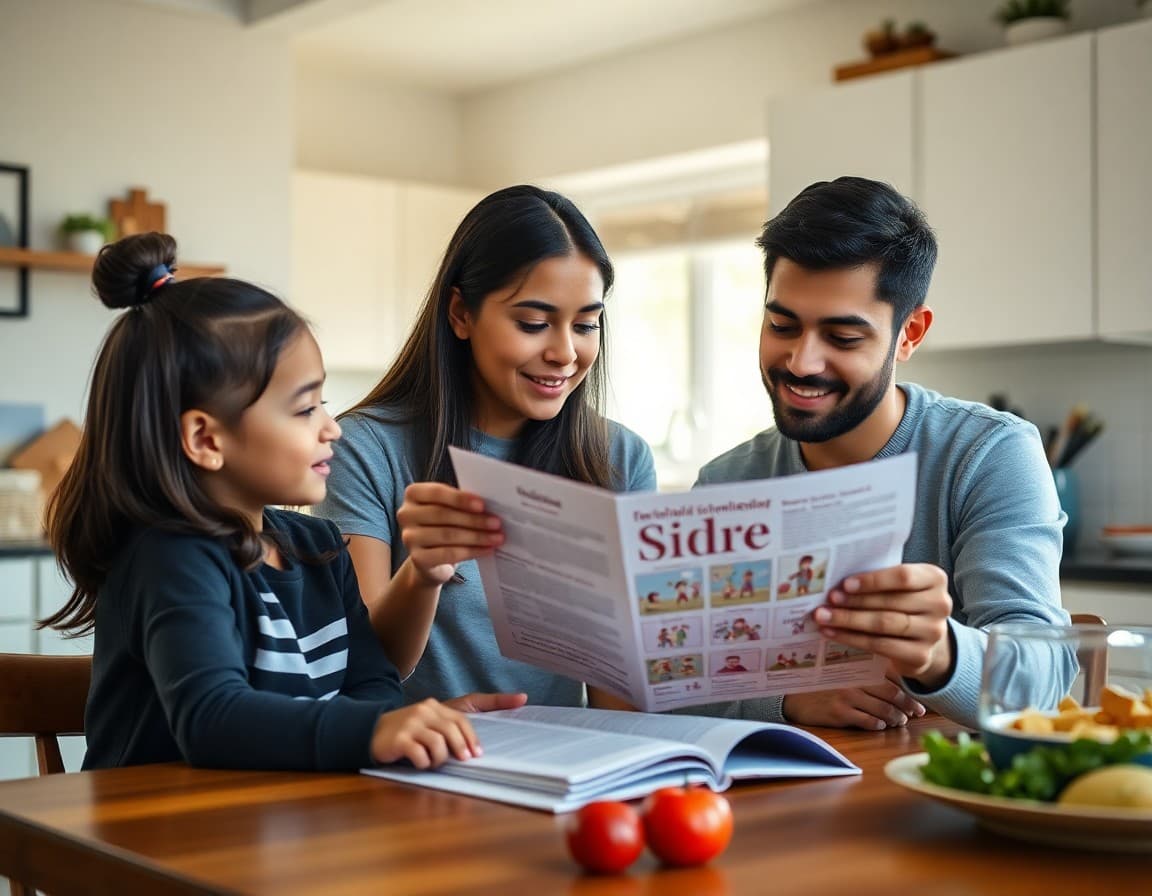
Spanish is the most widely spoken non-English language in U.S. schools. With over 13 million English learners enrolled nationally and Spanish speakers making up roughly 75 percent of that population, a Spanish school newsletter is not a niche accommodation. For many schools, it is the primary vehicle for connecting with a large portion of their families.
Why Translation Quality Matters More Than You Think
A poorly translated newsletter does visible damage. Spanish-speaking parents share newsletters with other Spanish-speaking parents. A newsletter with obvious machine-translation errors -- sentences that are technically correct but sound unnatural, words that carry the wrong connotation in the community's regional variety -- signals that the school did not invest much in communicating with them. That signal sticks.
The standard worth aiming for is not perfect academic Spanish. It is the Spanish a thoughtful bilingual educator would write to a colleague's parent. Clear, respectful, grammatically correct, and free of awkward phrasing that only makes sense when you know the English original. Getting to that standard does not require an expensive translation service. It requires a native speaker on staff or in the parent community to review the content before it sends.
Structure That Works in Spanish Communication
Spanish school newsletters that get read follow a similar structure to effective newsletters in any language: a clear subject line or headline, a brief personal opening, the most important information near the top, and a clear call to action. What changes is the communication style. Spanish-speaking families, particularly from Mexico, Central America, and South America, often respond well to a slightly warmer opening than American English conventions use.
"Estimadas familias de [School Name]" (Dear families of [School Name]) is the standard formal opener. "Con mucho gusto les compartimos las noticias de esta semana" (We are happy to share this week's news with you) is the kind of warm opening that sets a collaborative tone before getting into logistics. Neither of these is flowery -- they are simply calibrated to community expectations.
A Template Opening Section in Spanish
Here is a sample opening that works for a Spanish-language school newsletter:
"Estimadas familias, Les escribimos para compartir informacion importante sobre lo que esta pasando en la escuela esta semana. Por favor lean este mensaje y comuniquense con nosotros si tienen preguntas. Estamos aqui para apoyarles. [School Name] quiere que todos los estudiantes tengan exito, y eso empieza con mantenernos en contacto con ustedes."
That translates roughly to: "Dear families, We write to share important information about what is happening at school this week. Please read this message and reach out if you have questions. We are here to support you. [School Name] wants all students to succeed, and that starts with staying connected with you." Notice the tone: informative, warm, and clear about what the family should do.
Key Vocabulary to Standardize Across Newsletters
Consistency in terminology reduces confusion. Decide how your school will translate key terms and use them consistently across all Spanish communication: "calificaciones" for grades (not "notas" or "grados" interchangeably), "conferencia de padres" for parent-teacher conference, "director/a" for principal, "maestro/a de apoyo en ingles" for ELL teacher. Building a short glossary of standard terms and sharing it with anyone who writes Spanish content for your school prevents the inconsistency that erodes trust over time.
Addressing Cultural Communication Patterns
Many Latin American families come from educational cultures where the school is the authority and families are expected to defer to school professionals rather than question or engage. A school newsletter can actively counteract this expectation by inviting questions, making it clear that parent involvement is welcome and not intrusive, and celebrating parent participation visibly.
Phrases like "Sus preguntas son bienvenidas" (Your questions are welcome) and "Queremos saber su opinion" (We want to hear your perspective) are small gestures that signal a different kind of relationship than families may have experienced in their home countries. Over time, those signals change how families engage with the school.
What Spanish-Speaking Families Most Need to Know
Research on Spanish-speaking family engagement consistently identifies the same gaps: families do not know about available support services, do not understand their legal rights within the school system, and do not know how to navigate processes like IEP meetings, grade appeals, or gifted testing referrals. Your newsletter is the place to address these gaps proactively.
A Spanish newsletter that includes a regular "Did you know?" section covering things like "Your child has the right to an interpreter at any school meeting" or "Free after-school tutoring is available every Tuesday" does more than inform. It signals that the school sees its job as including all families, not just the ones who show up at PTA meetings and already know how the system works.
Timing and Frequency for Spanish Newsletters
Send your Spanish newsletter at the same time as your English newsletter, every time. A Spanish family who gets the translation three days after their English-speaking neighbor got the original is not being served equally. Same content, same day, same channel.
For frequency, a weekly newsletter is the standard for most elementary schools. Monthly is the minimum for maintaining connection. If your Spanish-speaking families have historically lower engagement rates, consider adding a text message with a link to each newsletter -- text open rates run 90 percent or higher compared to email open rates around 25 to 35 percent.
Building Spanish Translation Into Your Workflow
Translation should not be an afterthought that happens at 9 p.m. the night before the newsletter goes out. Build it into your production timeline: finalize the English draft by Wednesday afternoon, have the Spanish version reviewed by Thursday morning, and send both versions Thursday evening or Friday morning. Whatever your newsletter schedule is, the Spanish version needs the same lead time in the production process as the English version, not a shorter window that produces lower quality.
Schools that systematize translation rather than scrambling for it consistently produce higher-quality Spanish communication. And higher-quality communication produces higher Spanish-speaking family engagement. The return on a 30-minute investment in the right production workflow is real.
Get one newsletter idea every week.
Free. For teachers. No spam.
Frequently asked questions
Should a Spanish school newsletter be a direct translation or written fresh in Spanish?
A direct translation is faster but often produces awkward phrasing that Spanish-speaking families notice immediately. Where possible, have a native Spanish speaker write the Spanish version from scratch using the English version as a guide. At minimum, have a fluent Spanish speaker review any translation before it goes out. Machine translation tools like Google Translate handle Spanish reasonably well, but idioms, honorifics, and education-specific vocabulary need human review to get right.
What Spanish dialects should schools account for in their newsletters?
Spanish varies considerably across communities: Mexican Spanish, Puerto Rican Spanish, Dominican Spanish, Central American varieties, and others. For a school newsletter, standard written Spanish works across most communities without alienating any group. Avoid heavy regional slang. The bigger consideration is formality level -- many Latin American families use formal address conventions (usted rather than tu) and appreciate a respectful tone in school communication, even when the content is friendly.
What are common mistakes in Spanish school newsletters?
The most common mistakes are: using English words with Spanish endings (practicar el homework), leaving technical education terms in English without explanation, using inconsistent formality between the English and Spanish versions, and relying entirely on machine translation without human review. Another frequent issue is sending the Spanish version days after the English version, which signals to families that their language is secondary. Send both versions simultaneously.
How do you reach Spanish-speaking families who are not checking their email?
Many Spanish-speaking families, particularly recent immigrants, have limited experience with school email communication or do not regularly check school-provided email accounts. Text message links to digital newsletters, WhatsApp groups organized by homeroom teacher, and paper copies sent home through students all have higher reach for some populations. Ask families at enrollment how they prefer to receive school communications -- you will get answers that save time all year.
Can Daystage help schools send professional-looking Spanish newsletters?
Yes. Daystage lets you design bilingual newsletters that display Spanish and English side by side or as separate language versions sent to different family segments. You can include photos, event details, and links to forms all in one newsletter, and send it to your Spanish-speaking family list directly. Schools that use a professional newsletter platform for Spanish communication report that Spanish-speaking families engage at significantly higher rates than when they receive plain-text translated emails.

Adi Ackerman
Author
Adi Ackerman is a former classroom teacher and curriculum writer with 8 years in K-8 schools. She writes about school communication, parent engagement, and what actually works in real classrooms.
More for ELL & ESL
Ready to send your first newsletter?
3 newsletters free. No credit card. First one ready in under 5 minutes.
Get started free