

Rhode Island ELL School Newsletter: Reaching Multilingual Families
Rhode Island has one of the highest concentrations of English language learner students in New England. In cities like Central Falls and Providence, more than half of all students come from homes where English is not the primary language. For ELL teachers in those communities, a newsletter is not optional outreach. It is a core part of serving families well.
Understanding Rhode Island's Multilingual Community
The three most common home languages for ELL students in Rhode Island are Spanish, Portuguese, and Haitian Creole. Central Falls has a particularly high proportion of Spanish- and Portuguese-speaking families tied to Cape Verdean and Latin American immigration patterns. Providence's ELL population is more diverse, including students from Southeast Asia and West Africa. Knowing your specific school's home language data should drive which languages you prioritize in your newsletter.
What ELL Families in Rhode Island Most Need to Hear
ELL parents consistently report three communication gaps: they do not always understand how language proficiency levels work, they are unclear about what services their child receives, and they do not know how to support language development at home. Your newsletter can address all three without being a policy document. Use short, plain-language explanations of what students are working on in ELL classes, what parents can do at home, and what milestones are coming up.
Structuring a Bilingual Newsletter That Families Will Read
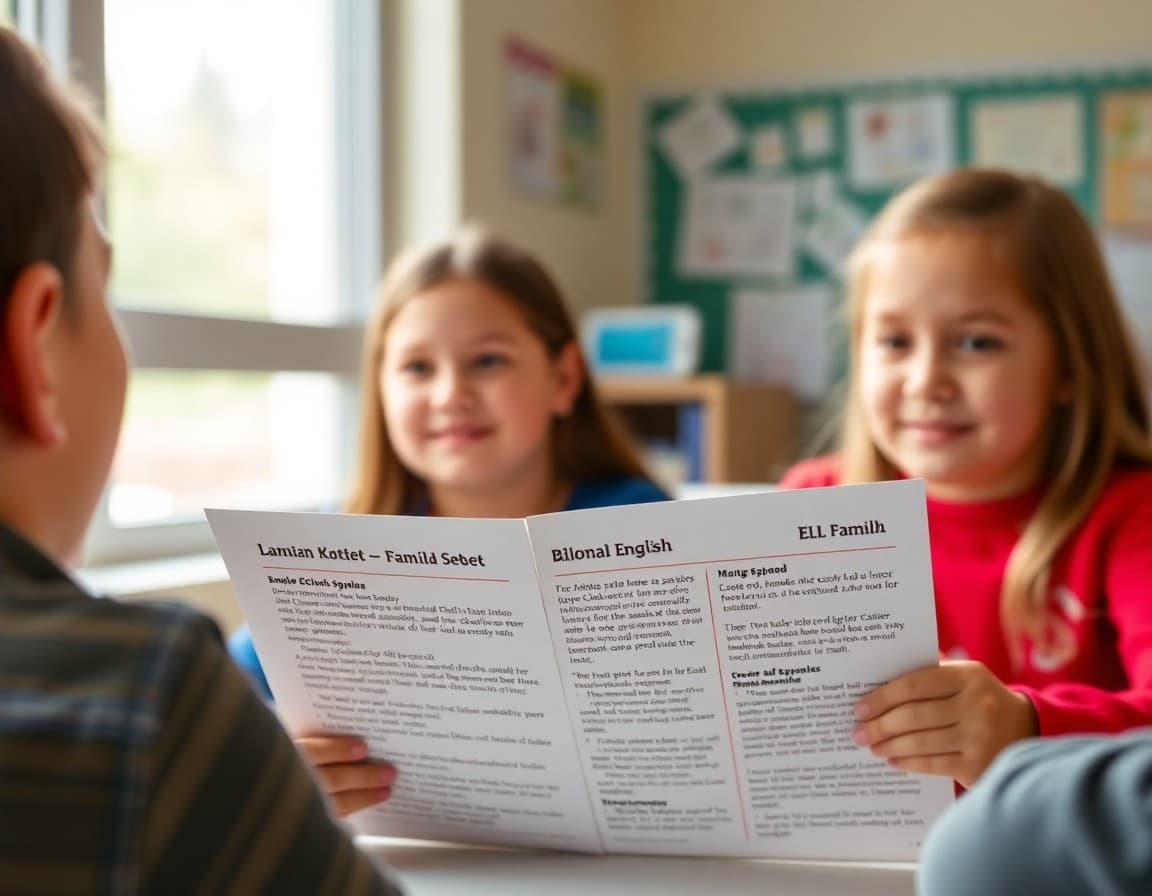
The most practical format is parallel columns: English on the left, the translated language on the right. This lets bilingual families check each version and makes the newsletter look intentionally designed rather than an afterthought. Limit each issue to three to five main topics. Long newsletters in any language get skimmed at best. Shorter, focused updates are more likely to be read and acted on.
A Template Excerpt for ELL Family Updates
Here is an example of how an ELL teacher in a Providence elementary school structures their monthly update:
Language Progress: This month, your child has been working on academic vocabulary in science and social studies. We focus on these subject-area words because they appear on state assessments and in textbooks across all grades. Ask your child to tell you three new words they learned this week and what they mean.
That section works because it explains the "why," gives a concrete home activity, and avoids jargon. It translates cleanly into Spanish or Portuguese without losing meaning.
Navigating Rhode Island's WIDA Assessment Timeline
Rhode Island uses the WIDA ACCESS assessment each January and February to measure English proficiency. Your newsletter should prepare families for this testing window starting in December. Explain in plain language what ACCESS measures, how scores affect program placement, and what the results mean for their child's services. Parents who understand the assessment are far more likely to ensure their child attends school during testing days.
Meeting Federal Communication Requirements
Rhode Island schools are required under Title III to provide ELL families with information about their child's language program, proficiency level, and right to opt out of services. These notifications must be in a language families understand. Your regular newsletter is a good vehicle for reinforcing this information, but the formal annual notice still needs to go out separately as required. Work with your district's ELL coordinator to make sure both bases are covered.
Building Trust With Families Who Are New to U.S. Schools
Many ELL families in Rhode Island are new to the country and unfamiliar with how American public schools communicate. They may not know that a newsletter is an expected, routine document rather than a notice of a problem. Include a brief note at the top of your first newsletter each year explaining what it is and how often it will arrive. Something as simple as "You will receive this update every month from your child's ELL teacher" sets expectations and builds trust over time.
Getting More Families to Open and Respond
Open rates for school emails typically hover around 30 to 40 percent. For ELL families, that rate can drop lower if the subject line is in English only. Try including a short translated phrase in the subject line itself. "Noticias de la clase / Class news - November" takes five seconds to type and signals to Spanish-speaking parents that this email is for them. Track which approach gets better results over a semester and adjust from there.
Get one newsletter idea every week.
Free. For teachers. No spam.
Frequently asked questions
What languages should Rhode Island ELL newsletters include?
Spanish and Portuguese are the most common home languages for ELL students in Rhode Island, particularly in Providence, Central Falls, and Pawtucket. Haitian Creole is also spoken by a significant number of families. Check your school's home language survey data to prioritize which languages to include each issue.
How do I translate my ELL newsletter without a large budget?
Many Rhode Island schools use a combination of district interpreters, community volunteers, and machine translation tools reviewed by a bilingual staff member. For a first draft, tools like Google Translate can get you 80% of the way there, but always have a fluent speaker check the final version before you send. Mistranslations around legal rights or medical information can cause real harm.
How often should ELL program newsletters go out in Rhode Island?
Monthly is a good baseline for ELL program newsletters. That frequency is manageable to produce in multiple languages without burning out your team. During high-stakes periods like language assessments or IEP-adjacent meetings, add a targeted update. Avoid going longer than six weeks without any contact or families lose track of who you are.
What does federal law require for communicating with ELL families?
Under Title III and the Equal Educational Opportunities Act, schools must communicate with limited English proficient parents in a language they can understand about their child's program, placement, and rights. This applies to newsletters that contain information about ELL services, language goals, or program eligibility. Failure to provide translated materials can constitute a civil rights violation.
Can Daystage help me send bilingual ELL newsletters to Rhode Island families?
Yes. Daystage lets you build newsletters with multiple language sections side by side, so families can find their language quickly. You can reuse bilingual templates each month and send directly to parent emails on file, which removes the step of printing and sending home paper newsletters that often get lost in a backpack.

Adi Ackerman
Author
Adi Ackerman is a former classroom teacher and curriculum writer with 8 years in K-8 schools. She writes about school communication, parent engagement, and what actually works in real classrooms.
More for ELL & ESL
Ready to send your first newsletter?
3 newsletters free. No credit card. First one ready in under 5 minutes.
Get started free