

Ohio ELL Program Newsletter: A Guide for ESL Teachers and Coordinators
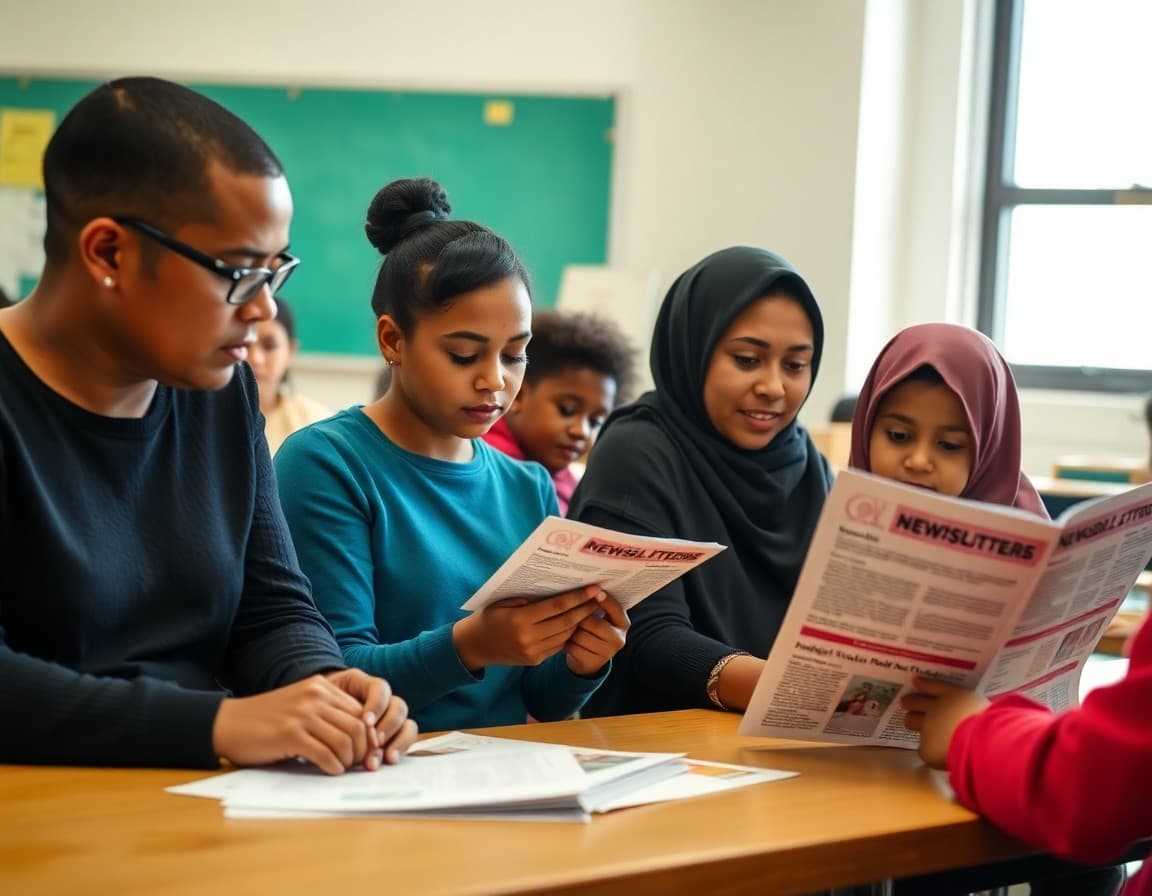
Ohio has one of the most diverse ELL landscapes in the Midwest. Columbus has the second-largest Somali community in the United States. Cleveland's west side has a historic Puerto Rican community and newer arrivals from Mexico, Central America, and elsewhere. Toledo and Lorain have long-established Spanish-speaking communities. Cincinnati serves a growing population of Spanish, Arabic, and Burmese-speaking families. An Ohio ELL program newsletter has to match the specific community profile of the school it serves, not a statewide average.
Ohio's Title III Communication Requirements
Ohio follows federal Title III and ESSA language access standards: essential communications for families with limited English proficiency must be translated, annual WIDA results must be explained, and conferences must be accessible to families who do not read English. The Ohio Department of Education and Workforce reviews compliance through the Title III consolidated application. Your ELL program newsletter is the most visible, consistent communication your program sends year-round. Maintaining regular, translated newsletters builds the family trust and program engagement that formal compliance documents do not create on their own.
Explain WIDA ACCESS Results in Plain Language
Ohio uses WIDA ACCESS to measure English language proficiency. Families receive score reports each spring that require plain-language explanation. Your newsletter during the testing window should explain what the test measures, what the 1-6 proficiency scale means, and what your district requires for reclassification. For Somali-speaking families in Columbus, publish this in Somali. For Spanish-speaking families in Cleveland or Toledo, publish in Spanish. A parent who understands the ACCESS score can ask specific, informed questions at the parent-teacher conference and set language development goals with their child at home.
Serve Columbus's Established Somali Community
Columbus's Somali community is among the largest and most established in the United States. Families began arriving in the late 1980s and early 1990s, and the community has grown continuously through family reunification, secondary migration, and new refugee arrivals. Columbus's east side is the heart of this community, with the Northland neighborhood as a central hub. The Somali Community Association of Ohio, various mosques, and community health organizations are established points of contact. Your newsletter for Somali-speaking families in Columbus should acknowledge the community's depth and history rather than treating these families as newcomers who need basic explanations of how schools work. They have been engaging with Columbus schools for decades.
A Monthly Ohio ELL Program Newsletter Template
This format works across grade levels:
ELL Program Update -- [Month] [Year]
Your student is working on: [Language skill area]
What this looks like in class: [Brief description]
How to support at home: [Activity in the home language]
Coming up:
- [Date]: WIDA ACCESS testing
- [Date]: Parent conference (interpreter available)
Contact: [ELL coordinator name, phone, email]
Address Cleveland's West Side Spanish-Speaking Community
Cleveland's near west side, particularly the Clark-Fulton neighborhood, has been a center of Puerto Rican and other Latino communities since the 1950s. More recent Mexican and Central American arrivals have joined these established communities. The Clark-Fulton and Slavic Village neighborhoods have high concentrations of Spanish-speaking ELL families. Your newsletter for Cleveland Spanish-speaking families can acknowledge the community's long history in Cleveland rather than treating every Spanish-speaking family as a recent immigrant. La Villa Hispana, Ohio Hispanic Coalition, and similar organizations serve this community with family support and advocacy programs.
Connect Ohio Families to Community Resources
Ohio has significant support networks for ELL families. Somali Community Association of Ohio in Columbus serves Somali families. Ohio Hispanic Coalition provides advocacy and services. International Rescue Committee Columbus serves refugee families. Legal Aid Society of Columbus handles immigration-adjacent legal matters. Catholic Social Services has offices in Columbus, Cleveland, and Cincinnati. Carribean Connection in Cleveland serves Caribbean and Latino families. One resource mention per newsletter issue builds a community resource map that families use throughout the year when they face language barriers outside the school context.
Use Daystage to Deliver Ohio ELL Newsletters in the Right Language
Ohio ELL coordinators managing large, diverse caseloads in Columbus, Cleveland, or Cincinnati need production systems that do not require separate workflows for each language. Daystage lets coordinators create one newsletter structure and send separate language versions to the right families simultaneously. A Somali family on Columbus's east side receives the Somali version. A Spanish-speaking family in the Clark-Fulton neighborhood receives the Spanish version. Programs that maintain consistent, multilingual communication throughout the year build the family engagement that Ohio ELL programs need to demonstrate positive outcomes on state accountability measures.
Get one newsletter idea every week.
Free. For teachers. No spam.
Frequently asked questions
What are Ohio's requirements for communicating with ELL families?
Ohio follows federal Title III and ESSA language access requirements. Schools must translate essential communications for families with limited English proficiency, including ELL identification notices, annual ACESS assessment results, placement letters, and conference invitations. The Ohio Department of Education and Workforce oversees compliance through the Title III consolidated application and provides language access guidance through its Office of Federal Programs.
What assessment does Ohio use for English language proficiency?
Ohio uses ACCESS for ELLs (WIDA) to measure English language proficiency in grades K-12. The assessment covers Listening, Speaking, Reading, and Writing on a 1-6 scale. Ohio's reclassification criteria include WIDA composite and domain score thresholds along with academic performance indicators. Your newsletter should explain what ACCESS measures and what reclassification means for families receiving score reports each spring.
What languages do Ohio ELL families most commonly speak?
Spanish is the most common home language in Ohio's ELL population, with significant communities in Columbus, Cincinnati, Toledo, and Lorain. Columbus has one of the largest Somali communities in the United States. Arabic, Nepali, and Burmese speakers are also significant in Columbus. Cleveland serves large Spanish, Arabic, and Bhutanese communities. Northeast Ohio has historically had significant Spanish-speaking Puerto Rican and Mexican communities.
How should Ohio ELL newsletters address Columbus's Somali community?
Columbus has one of the largest Somali communities in the United States, concentrated on the east side of the city. The community has been building since the early 1990s and has established mosques, restaurants, businesses, and community organizations. Many families have been in Columbus for 20 or more years. Your newsletter for Somali-speaking families should be available in Somali and should reference established community organizations like the Somali Community Association of Ohio and Columbus Public Health's outreach programs.
Can Daystage support Ohio ELL programs with multilingual newsletters?
Yes. Daystage lets ELL coordinators create formatted newsletters and send separate language versions to specific family groups. For a Columbus district with Spanish, Somali, and Nepali-speaking families, you can manage multiple language versions through one platform. Daystage handles formatting and delivery so coordinators focus on content quality and community-specific translation accuracy.

Adi Ackerman
Author
Adi Ackerman is a former classroom teacher and curriculum writer with 8 years in K-8 schools. She writes about school communication, parent engagement, and what actually works in real classrooms.
More for ELL & ESL
Ready to send your first newsletter?
3 newsletters free. No credit card. First one ready in under 5 minutes.
Get started free