

North Dakota ELL School Newsletter: Reaching Multilingual Families
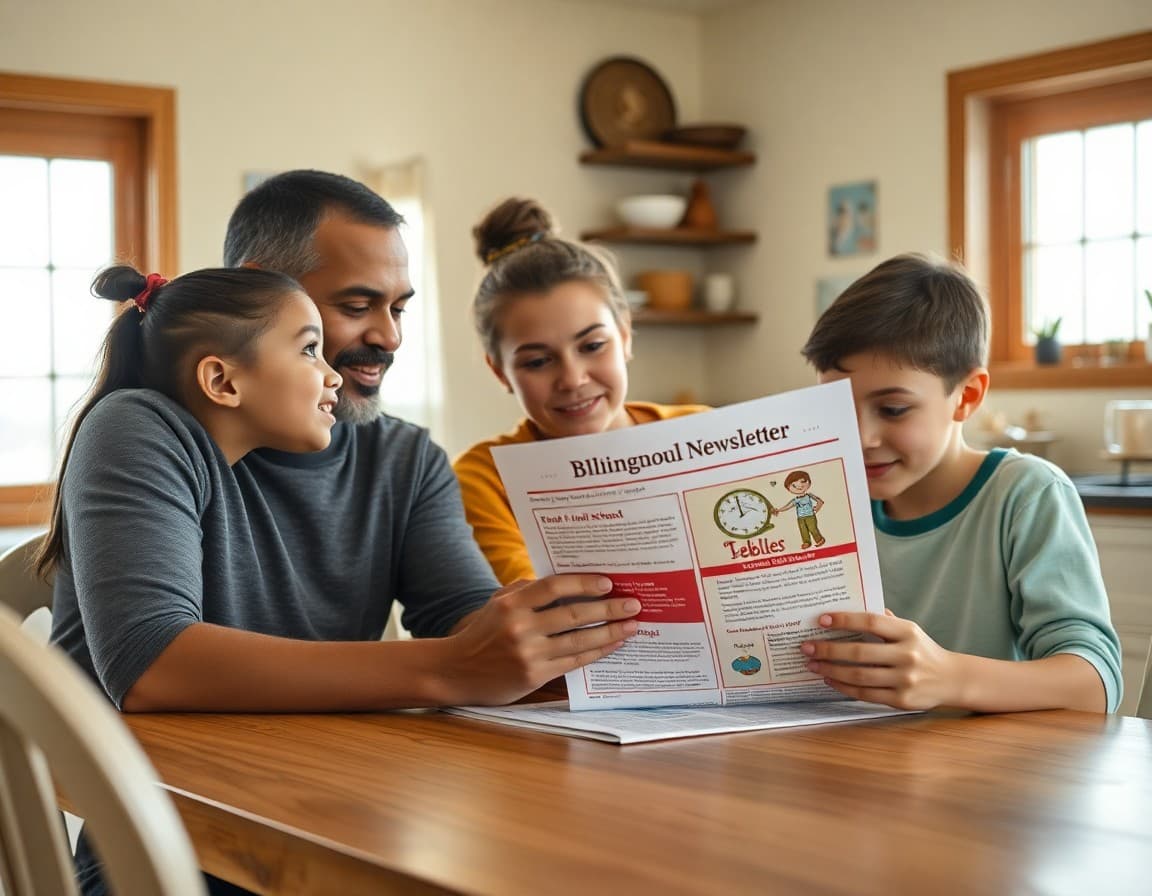
North Dakota's ELL population has grown significantly in recent decades, driven by both refugee resettlement in Fargo and Hispanic migration to agricultural and processing communities. For ELL teachers in ND, reaching multilingual families requires understanding the distinct needs of very different communities -- a Spanish-speaking family from Mexico working in a meat-packing plant in Cass County has different communication needs than a Somali refugee family resettled in Fargo through Lutheran Social Services. This guide covers both contexts.
ND's Language Access Obligations
North Dakota's Title III program office provides guidance on language access for ELL families. Federal requirements under Title III of ESSA and Title VI of the Civil Rights Act require meaningful communication with families who have limited English proficiency. In ND's smaller districts, where resources for translation are limited, this can be challenging. But the obligation applies regardless of district size, and the ND DPI expects documented efforts to communicate with families in their home language.
For routine newsletters, automated translation reviewed by a bilingual staff member is generally sufficient. For high-stakes communications (IEP notices, disciplinary actions, enrollment decisions), professional translation or a certified bilingual interpreter is required under IDEA and Title III.
Language Priorities by ND Community
North Dakota's ELL landscape is geographically concentrated:
- Fargo-Moorhead area (Cass County): Spanish, Somali, Arabic, Nepali, Karen
- Grand Forks area: Spanish, Somali, other refugee community languages
- Bismarck-Mandan area: Spanish, some refugee community languages
- Western ND (Dickinson, Williston, Minot): Spanish (agricultural and energy sector)
- Reservation communities: Lakota/Dakota, Ojibwe, Hidatsa/Mandan (oral languages; written translation resources are limited)
Check your district's current Home Language Survey data annually. Refugee resettlement patterns shift language needs quickly.
Writing for ND's Refugee Families
Fargo is one of the more significant refugee resettlement cities in the upper Midwest. Lutheran Social Services of ND and Arrive Ministries are the primary resettlement agencies. Many recently resettled families include parents with limited formal education, trauma histories that affect institutional trust, and uncertainty about their long-term status. Newsletter content for these families should be:
- Extremely plain and short -- aim for third-grade reading level in English
- Free of idioms, slang, and cultural references that assume US familiarity
- Clear about the purpose ("This newsletter tells you what your child is learning this month")
- Inclusive of practical resources like the ND refugee resettlement agency contacts
- Explicit about confidentiality ("This newsletter is sent to all families; it does not share your information with immigration authorities")
A Template Excerpt for ND ELL Newsletters
English: In January, your child will take a test called WIDA ACCESS. This test measures how much English your child has learned. It does not affect their grades or class standing. Students who do very well on this test may no longer need English support classes -- this means their English is strong, which is a good thing.
Español: En enero, su hijo tomara una prueba llamada WIDA ACCESS. Esta prueba mide cuanto ingles ha aprendido su hijo. No afecta sus calificaciones. Los estudiantes que obtengan puntuaciones muy altas pueden ya no necesitar clases de apoyo en ingles -- esto significa que su ingles es solido, lo cual es positivo.
Native American Language Communities in ND Schools
Students from ND's tribal communities who attend public schools may come from homes where Lakota, Dakota, Ojibwe, or Hidatsa are spoken. These languages have primarily oral traditions, and written translation resources are limited. For these families, oral communication through trusted community members and tribal education departments is typically more effective than written newsletters. Your newsletter should include a clear statement that interpretation is available for all school communications and events, and that the school values the family's home language.
Coordinate with your school's Indian Education program coordinator to identify the best communication channels for tribal community families. A newsletter is one tool; it may not be the most important one for this specific population.
Building Trust with ND's ELL Families Over Time
ELL families in ND -- whether agricultural workers who have been in the state for years or refugee families who arrived recently -- often feel peripheral to the school community. A newsletter that arrives consistently in their home language, explains school processes in plain terms, and provides practical resources signals that the school is oriented toward them. That orientation, demonstrated monthly over a school year, builds the trust that makes family engagement possible. Daystage's bilingual layout makes it possible to deliver that signal efficiently without manual formatting work each month.
Get one newsletter idea every week.
Free. For teachers. No spam.
Frequently asked questions
What are North Dakota's language access requirements for ELL families?
Under Title III of ESSA and federal civil rights guidance, North Dakota school districts must communicate meaningfully with families of ELL students in a language they understand. The ND Department of Public Instruction provides guidance on language access through its Title III program office. Districts with 20 or more students speaking the same home language must provide translated materials. ND's smaller districts sometimes struggle with translation resources, but the legal obligation applies regardless of district size.
What languages are most common in North Dakota ELL programs?
Spanish is the most common non-English language in ND schools, concentrated in Cass County (Fargo area), Grand Forks, and Burleigh County (Bismarck area). Somali, Arabic, and Nepali are significant in Fargo due to refugee resettlement. Native American languages, including Lakota/Dakota, Ojibwe, and Hidatsa, are present in schools near reservation communities, though these populations often have specific needs that differ from recent immigrant ELL families.
How do I reach refugee families in North Dakota ELL programs?
ND's refugee population, concentrated primarily in Fargo, includes significant Somali, Sudanese, Bhutanese, and Karen communities. For these families, newsletters work best when they are extremely plain, clearly formatted, and paired with in-person outreach through resettlement agencies like Lutheran Social Services of ND. Many refugee families have interrupted schooling and may not be fully literate in their home language either. Oral communication through trusted community members is often more effective for this population.
How does the WIDA ACCESS test affect ND ELL newsletter content?
North Dakota uses the WIDA ACCESS assessment annually, typically in January and February. Your January newsletter should explain what ACCESS measures (English language proficiency, not academic content), what the proficiency levels mean, and how scores affect continued ELL services. Many ND ELL families, particularly those in smaller districts with fewer bilingual staff, have limited understanding of the testing system and how it determines their child's program placement.
What tools help ND ELL teachers produce bilingual newsletters?
Daystage's bilingual layout is useful for ND ELL teachers who need Spanish-English parallel content without manual formatting. For Somali, Nepali, or Arabic content in Fargo-area schools, use a translation tool for a first draft and ask a bilingual community member to review it. Pair Daystage's scheduling feature with your translation workflow so the newsletter goes out on schedule even during busy testing periods.

Adi Ackerman
Author
Adi Ackerman is a former classroom teacher and curriculum writer with 8 years in K-8 schools. She writes about school communication, parent engagement, and what actually works in real classrooms.
Ready to send your first newsletter?
3 newsletters free. No credit card. First one ready in under 5 minutes.
Get started free