
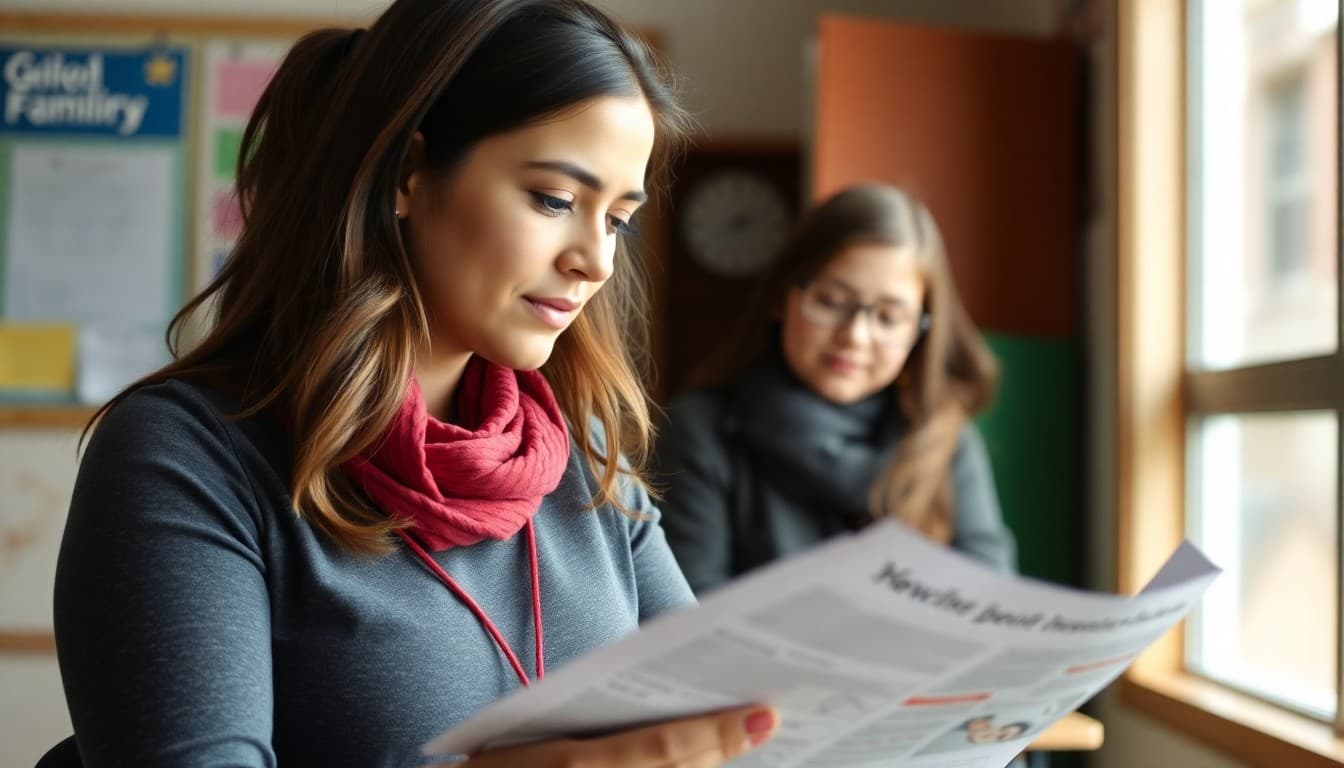
Michigan ELL School Newsletter: Reaching Multilingual Families

Michigan has a unique ELL communication landscape shaped by one defining feature: Dearborn, Michigan has the highest per-capita concentration of Arab Americans of any city in the United States. This means ELL teachers in southeastern Michigan are working with Arabic as a dominant home language in a way that few other US cities experience. Alongside this distinctive community, Michigan also has large Spanish, Somali, and other language ELL populations that require thoughtful multilingual communication.
Michigan's ELL Population
Michigan enrolls approximately 100,000 English Language Learners. Dearborn Public Schools has one of the highest ELL enrollment percentages of any large Michigan district, with Arabic as the primary home language for a significant majority of ELL students. Grand Rapids City Schools have a large Spanish-speaking population, largely from Mexico and Central America. Hamtramck, one of the most diverse small cities in America, has significant Bangladeshi, Albanian, Bosnian, and Somali populations. Lansing and Detroit have growing Somali communities.
This geographic diversity means there is no single "Michigan ELL newsletter." Teachers must know their specific community's language profile before deciding how to structure bilingual content.
Communicating With Arabic-Speaking Families
Arabic presents specific challenges for newsletter design. It is written right-to-left, which means layout choices that work for English-Spanish bilingual newsletters may not work for English-Arabic combinations. Use clear sectional separation. A header that says "Arabic / عربي" followed by a clearly delineated Arabic text block, formatted separately from the English content, works better than attempting to alternate bilingual sentences.
ACCESS (Arab Community Center for Economic and Social Services) in Dearborn has bilingual staff and extensive experience working with school communication. Teachers in Dearborn and southeastern Michigan should know about ACCESS as a resource for both translation review and community outreach to ELL families who may need additional support beyond the newsletter.
Meeting Title III Requirements in Michigan
Michigan's Title III compliance requires districts to identify family language needs through home language surveys, provide interpretation at school meetings, and translate written communications for families who need them. For teachers in Dearborn, Grand Rapids, and other districts with large ELL populations, newsletter translation is effectively required. For teachers in districts with smaller ELL populations, providing translated newsletters when families request it is the minimum standard.
Document your newsletter distribution. Keep records of which issues were translated, what languages were included, and when they were sent. This documentation matters if the district faces a language access complaint or a Title III monitoring review.
Designing a Bilingual Newsletter That Works
The most practical format for Michigan ELL newsletters is English primary content with translated summaries of the three to five most critical items. Full translation is ideal when resources permit. When they do not, prioritize the content families most need to act on: upcoming deadlines, permission slips, assessment dates, and service changes.
Keep English content simple and jargon-free so automated translations are more accurate. Short sentences, concrete nouns, and active verbs produce cleaner machine translations than complex compound sentences with education-specific vocabulary. Write for the translation before you translate.
A Template Excerpt for Michigan ELL Newsletters
Here is a section that works for Arabic and Spanish translation:
"Language Learning Update: This month students practiced using new vocabulary in speaking activities. We worked on describing objects and places in school. You can help at home by asking your child to describe their bedroom or school bag in English. Every conversation counts. // تحديث تعلم اللغة: هذا الشهر تدرب الطلاب على استخدام مفردات جديدة في أنشطة الكلام. عملنا على وصف الأشياء والأماكن في المدرسة."
That format is specific, includes a home connection activity, and provides a parallel Arabic translation that demonstrates the school's commitment to including Arabic-speaking families.
Supporting Somali and Other Refugee Families in Michigan
Michigan has significant Somali communities in Detroit, Lansing, Grand Rapids, and smaller cities. Many Somali families arrived through refugee resettlement programs and may have had interrupted schooling. Written newsletters in Somali are valuable but should be supplemented with audio messages or community liaison outreach for families who have limited literacy in any written language. The Somali Community Association of Michigan and similar organizations can assist with both translation and community outreach.
Never assume that because a family has been in Michigan for several years they no longer need translated materials. Language acquisition for adult immigrants takes many years, and families who have primarily relied on oral community channels for information may still need translated written communications even after years in the US.
Building Trust Through Consistent Communication
Michigan ELL families who receive inconsistent communication from schools often disengage not from lack of interest but from lack of access to accessible information. A newsletter that arrives consistently, in the family's language, with practical and relevant content builds the kind of trust that leads to family presence at conferences, higher event attendance, and stronger family advocacy for their child's needs.
Do not wait until you have a perfect translation system before starting. Send what you can, improve the translation process over time, and be transparent with families that you are working to provide better multilingual communication. Families in Michigan's ELL communities appreciate honest effort far more than they expect perfect execution.
Measuring Reach and Adjusting
Track newsletter open rates by community. If Arabic-speaking families in Dearborn have significantly lower open rates than English-speaking families, investigate: is the Arabic translation appearing correctly in email clients? Is the subject line translated? Are newsletters being sent at times that work for families who may be fasting during Ramadan or observing other cultural or religious schedules? Small adjustments based on actual data produce meaningful improvements in reach.
Get one newsletter idea every week.
Free. For teachers. No spam.
Frequently asked questions
What languages are most important for Michigan ELL newsletters?
Arabic is Michigan's most distinctive ELL language, with Dearborn having the highest concentration of Arabic speakers of any US city. Spanish is the second most common ELL language, particularly in Grand Rapids, Lansing, and western Michigan. Somali, Bosnian, Bengali, Albanian, and Vietnamese are also spoken by significant Michigan school populations. Detroit and Flint have diverse multilingual communities. Check your district's home language survey data to prioritize translation correctly.
How does Michigan's large Arab American community affect ELL newsletter design?
Arabic is a right-to-left language, which creates unique formatting challenges for bilingual newsletters. When including Arabic translations, use a section layout that clearly separates English and Arabic text rather than attempting inline bilingual formatting. Be aware that Modern Standard Arabic differs from spoken dialects, and many families from Lebanon, Iraq, or Yemen speak dialects that differ meaningfully from formal Arabic. A community reviewer from the specific dialect community is valuable for accuracy.
What are Michigan's legal requirements for ELL family communication?
Michigan follows Title III of ESSA, requiring meaningful communication with families with limited English proficiency. The Michigan Department of Education has language access guidance that requires districts to identify family language needs and provide translation and interpretation services. Michigan's large Arabic-speaking community in Dearborn has historically been active in asserting language access rights, so teachers in that community should be particularly attentive to translation quality.
How can Michigan ELL teachers get Arabic newsletters translated accurately?
Dearborn has extensive Arabic translation resources, including bilingual staff in the school district, community organizations like ACCESS (Arab Community Center for Economic and Social Services), and bilingual parent volunteers. For teachers in districts with smaller Arabic populations, Google Translate provides a usable draft that an Arabic-speaking community member should review before sending. Automated Arabic translation quality varies significantly by dialect, so human review matters.
What delivery method works best for Michigan ELL newsletters?
Mobile delivery is essential for Michigan's ELL families. Arabic-speaking families in Dearborn, Spanish-speaking families in Grand Rapids, and Somali families in Detroit and Lansing all access school communications primarily on smartphones. A platform like Daystage creates newsletters that render well on mobile and can be scheduled for delivery at optimal times. For families without reliable email, WhatsApp-based distribution has worked well in several Michigan ELL programs.

Adi Ackerman
Author
Adi Ackerman is a former classroom teacher and curriculum writer with 8 years in K-8 schools. She writes about school communication, parent engagement, and what actually works in real classrooms.
Ready to send your first newsletter?
3 newsletters free. No credit card. First one ready in under 5 minutes.
Get started free