
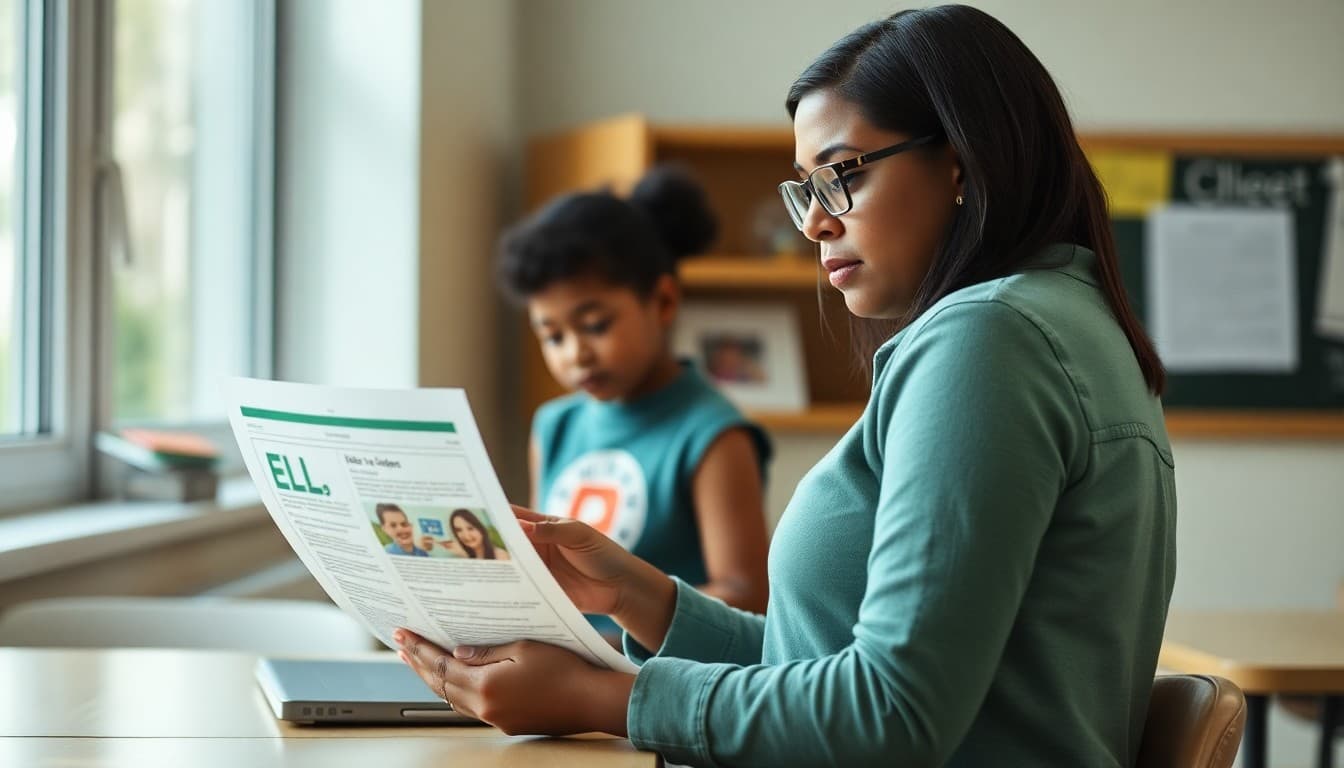
Maine ELL School Newsletter: Reaching Multilingual Families

Maine's ELL population has grown significantly over the past decade, particularly in Lewiston, Portland, and surrounding communities that have welcomed large numbers of refugees from Somalia, Congo, and other countries. For ELL teachers across the state, a newsletter is not just a communication tool. It is often the primary written link between school and families who are navigating a new country, a new language, and a new education system simultaneously.
Who Maine ELL Families Are
Maine's multilingual learners come from more than 60 countries. The largest groups in recent years have been Somali, Congolese, Angolan, and Central American families, concentrated in urban areas but also present in smaller communities. Many arrived through federal refugee resettlement programs and have legal status, but face significant language and cultural barriers to school engagement. Understanding who your families are shapes every decision about newsletter format, language, and content.
Lewiston alone has more than 7,000 residents of African descent, many of them children in public schools. A newsletter that does not acknowledge this community's presence and needs is leaving a large percentage of families behind.
Meeting Title III Communication Standards
Title III funding comes with requirements that schools communicate meaningfully with ELL families. Maine's Department of Education has published guidance making clear that "meaningful access" to information means translation or interpretation, not just sending materials in English and hoping families find help. For newsletters, this means providing at minimum a translated summary of key information in the family's home language.
Keep records of translation efforts. If a family requests translated materials and the school cannot provide them within a reasonable time, that is a compliance risk. A consistent newsletter with a bilingual format makes it easier to document that communication is happening.
Structuring a Bilingual Newsletter
The most practical format for Maine ELL newsletters is English content followed by translated summaries of the three to four most important items. Full translation of every word is ideal but often not feasible. Prioritize: deadline notices, permission slip reminders, assessment dates, and any information about a student's progress or needs.
Use short sentences and plain language in the English version so translations are cleaner. Avoid idioms, acronyms without explanation, and institutional jargon. "Parent-Teacher Conference" should be explained as "a meeting between you and your child's teacher to discuss how they are doing in school."
A Template Excerpt for ELL Family Newsletters
Here is a section that translates cleanly and communicates clearly:
"Upcoming: Report cards will be sent home on Friday, November 15. Please review your child's grades and contact me if you have questions. My email is [address] and I can arrange an interpreter for our conversation. [Somali translation below / Traduction en dessous]"
That structure is direct, includes a clear action, offers support, and signals that language is not a barrier. It takes five minutes to write in English and another ten minutes to review with a translation tool.
Working With Community Partners in Maine
Lewiston has the Maine Immigrant and Refugee Services organization. Portland has the Multilingual and Multicultural Center. Bangor has the Resettlement Program through Catholic Charities Maine. These organizations often have bilingual staff who can help review translations or reach families through community channels. Mentioning them in newsletters as resources builds trust with families who may not know these supports exist.
Some Maine schools have created community liaison positions. If your school has one, include their contact information in every newsletter. Families are far more likely to respond to a newsletter when they know there is a person who speaks their language they can contact.
Addressing the Digital Divide
Not every ELL family in Maine has reliable home internet. Lewiston has high rates of public housing where broadband may be shared or unreliable. Some families, particularly recent arrivals, rely entirely on prepaid phones. When designing newsletters, optimize for mobile first and keep file sizes small. Avoid newsletters that require downloading a PDF to read.
Sending via SMS link or WhatsApp in addition to email reaches families who check messages on their phones more reliably than email. Some Maine schools have moved to a "primary SMS, backup email" model for ELL family communication with strong results.
Building Trust Over Time
ELL families who have experienced trauma or distrust of institutions may not engage immediately with newsletters even when translated. Consistency is the key variable. Families who receive a newsletter every two weeks for three months begin to rely on it. They start looking for it. When trust builds, they respond, ask questions, and attend events.
Include positive student highlights in every issue, even brief ones. A single sentence about a student who showed leadership in class, with permission, goes further toward family engagement than any policy communication. Maine ELL families, like all families, want to know their child is seen and valued.
Measuring Engagement and Adjusting
Track open rates by family language group if your platform allows it. If Somali-speaking families have a 15 percent open rate while English-speaking families have 45 percent, something in the delivery or content is not working for that group. Adjust send time, check if the translated content is accurate, or reach out through a community liaison to ask directly what would make the newsletter more useful.
Twice a year, send a brief survey in the family's home language asking two questions: Did you read the newsletter this month? Is there information you wish it included? The responses will improve every future issue.
Get one newsletter idea every week.
Free. For teachers. No spam.
Frequently asked questions
What languages should Maine ELL newsletters include?
Maine's largest ELL populations speak Somali, Amharic, Portuguese, Spanish, French, and Arabic. Portland, Lewiston, and Bangor have significant refugee and immigrant communities. Teachers should check their district's language data to identify the top two or three home languages in their classroom and prioritize those for translation. Even a partial translation or a bilingual summary improves family access significantly.
What are Maine's legal requirements for communicating with ELL families?
Under Title III of the Every Student Succeeds Act and Maine Department of Education guidance, schools must provide translated communications to families with limited English proficiency when those families request it or when it is reasonably clear translation is needed. IDEA also requires that IEP-related communications for ELL students with disabilities be available in the family's home language. Maine's Office of Multilingual Learners provides resources to help districts meet these obligations.
How do I get newsletters translated without a large budget?
Many Maine districts use a combination of bilingual paraprofessionals, community volunteers, and free translation tools like Google Translate for initial drafts with human review for accuracy. Some districts partner with local cultural organizations in Lewiston and Portland that serve Somali and other refugee communities. Keep newsletter language simple and direct so machine translations produce cleaner output.
How should I handle literacy differences among ELL families?
Some families have limited literacy in their home language as well as English, particularly recent arrivals from rural areas of East Africa or Southeast Asia. For those families, short audio or video summaries of the newsletter sent via a messaging app can supplement written content. Visuals, numbered lists, and short sentences also help. Avoid dense paragraphs and jargon even in translated versions.
Are there newsletter platforms built for ELL teacher communication?
Yes. Daystage is designed for school newsletters and makes it straightforward to organize bilingual content in a clean, mobile-friendly format. Since many ELL families in Maine access communications on smartphones rather than desktop computers, a platform that renders well on mobile significantly improves reach.

Adi Ackerman
Author
Adi Ackerman is a former classroom teacher and curriculum writer with 8 years in K-8 schools. She writes about school communication, parent engagement, and what actually works in real classrooms.
More for ELL & ESL
Ready to send your first newsletter?
3 newsletters free. No credit card. First one ready in under 5 minutes.
Get started free