

Kentucky ELL Program Newsletter: Guide for ESL Teachers and Coordinators
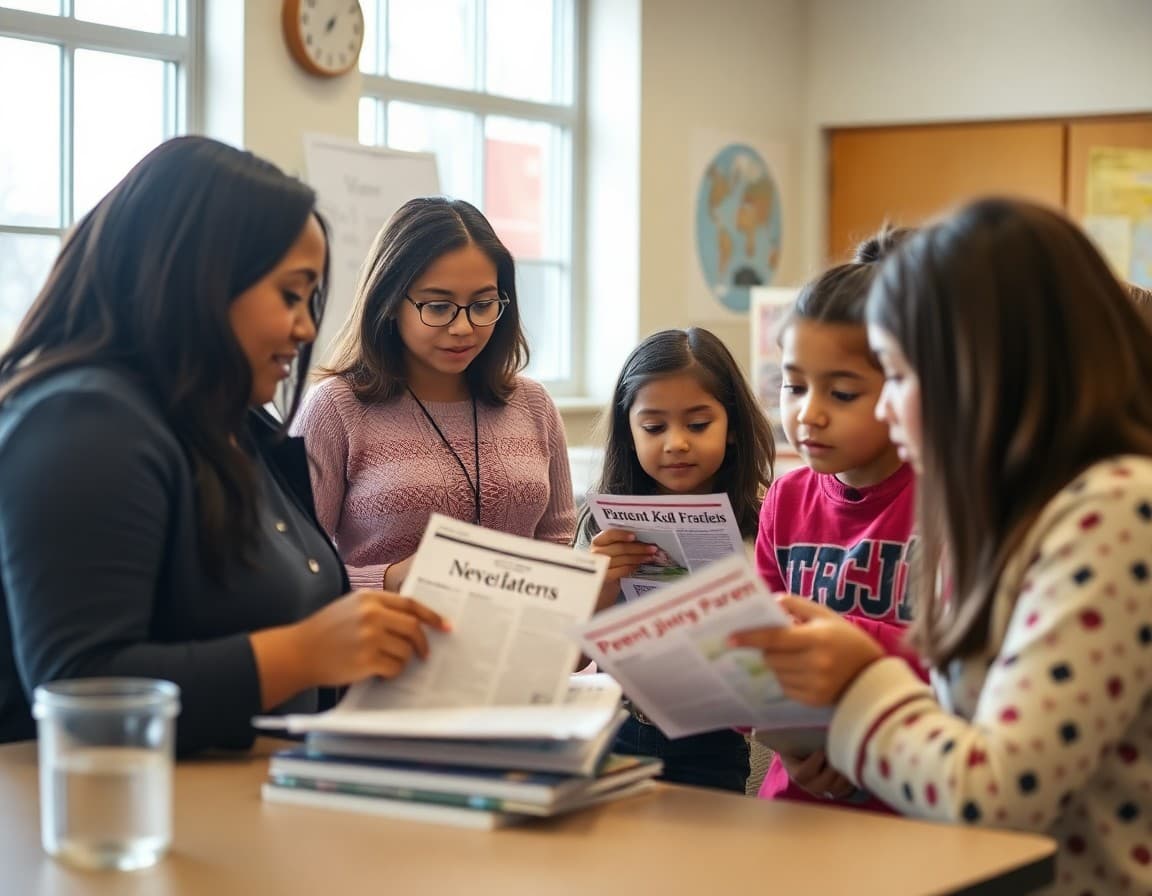
Kentucky's ELL landscape has two faces. In Lexington's horse country, Spanish-speaking workers from Mexico and Central America have built communities around the Thoroughbred industry. In Louisville, one of the South's most active refugee resettlement cities, Somali, Burmese, Nepali, and Bosnian families have arrived over decades and built distinct communities. The ELL program newsletters that serve these families well look different from each other, even when they share a state and a language assessment system.
Kentucky's Title III Communication Framework
Kentucky follows federal Title III and ESSA language access requirements: essential communications for families with limited English proficiency must be translated, annual assessment results must be explained, and program services must be communicated in a language families understand. The Kentucky Department of Education reviews Title III compliance through the consolidated state plan. Your ELL program newsletter is the most consistent, visible communication your program sends to families. It builds the trust and understanding that formal compliance documents cannot create on their own.
Explain WIDA ACCESS Results Every Spring
Kentucky uses WIDA ACCESS to measure English language proficiency. Families receive score reports each spring that are technical and difficult to interpret. Your newsletter during the testing window and when scores release should explain what the test measures, what the 1-6 scale means for services, and what your district requires for reclassification. A clear sentence like "A composite score of 4.5 or above usually means your child has reached the English level needed for mainstream classes without additional ELL support" gives families a milestone they can track. Publish this in Spanish for most Kentucky families, and in Somali or other languages based on your school's enrollment data.
Address Lexington's Horse Country Spanish-Speaking Community
The Bluegrass horse industry draws Spanish-speaking workers who live and work on farms around Versailles, Georgetown, Paris, and Midway, often at significant distances from schools. These families have unique schedules tied to horse care routines that run seven days a week. Evening and weekend conference options matter more here than in most other community contexts. Your newsletter should acknowledge that reality and include contact information for Spanish-speaking liaisons at the school who can communicate flexibly. The Esperanza Center at the University of Kentucky provides ESL and family support programs for Lexington's Spanish-speaking community.
A Monthly Kentucky ELL Program Newsletter Template
This format works for most Kentucky ELL programs:
ELL Program Update -- [Month] [Year]
Your student is working on: [Language skill area]
What this looks like at school: [Brief description]
How to support at home: [One activity in the home language]
Coming up:
- [Date]: WIDA ACCESS testing
- [Date]: Parent-teacher conference (interpreter available, flexible scheduling)
Contact: [ELL coordinator name, phone, email]
Serve Louisville's Refugee Community With Appropriate Context
Louisville has been resettling refugees since at least the 1970s with the arrival of Southeast Asian families following the Vietnam War. The community has grown to include large Somali, Burmese, Nepali, Congolese, and Bosnian populations. Many newly arrived refugee families in Louisville have experienced trauma and have had interrupted schooling. Your newsletter for newcomer families in Louisville should start with orientation -- how school days work, how to reach the teacher, what the school year calendar looks like -- before moving to program-specific information about WIDA testing and reclassification. Kentucky Refugee Ministries and Catholic Charities of Louisville are the primary resettlement agencies and trusted points of contact for many of these families.
Include Kentucky Community Resources Every Issue
Kentucky has resources for ELL families that many do not access because they do not know they exist. Kentucky Refugee Ministries has offices in Louisville and Lexington. Catholic Charities of Louisville serves immigrant and refugee families with social services and ESL classes. The International Center of Kentucky in Louisville provides resettlement and language services. Americana Community Center in Louisville serves a wide range of immigrant families with education and social support. Sullivan University and Jefferson Community and Technical College offer adult ESL programs. One resource per issue builds awareness that families use when they need it.
Use Daystage to Reach Kentucky's Geographically Spread ELL Families
Kentucky ELL families are spread from horse farms in Woodford County to apartment complexes in Louisville's south end. Paper newsletters sent home with students are an unreliable distribution channel for both groups. Daystage lets coordinators deliver formatted newsletters directly to family email addresses in the right language for each family. A Somali family in Louisville receives a newsletter with an English version and instructions for requesting an interpreter. A Spanish-speaking family in Lexington receives the Spanish version. The coordinator manages one workflow and reaches both communities on the same day with the same quality of information.
Get one newsletter idea every week.
Free. For teachers. No spam.
Frequently asked questions
What are Kentucky's requirements for communicating with ELL families?
Kentucky follows federal Title III and ESSA language access requirements. Schools must translate essential communications for families with limited English proficiency, including ELL identification notices, annual WIDA assessment results, placement letters, and conference invitations. The Kentucky Department of Education oversees Title III compliance through its Division of Student Success and provides language access guidance to local districts.
What assessment does Kentucky use for English language proficiency?
Kentucky uses WIDA ACCESS for ELLs to measure English language proficiency in grades K-12. The test covers Listening, Speaking, Reading, and Writing on a 1-6 scale. Kentucky's reclassification criteria include WIDA composite and domain score thresholds along with academic performance indicators. Families receiving score reports need plain-language explanations of what ACCESS measures and what reclassification means for their student's program.
What languages do Kentucky ELL families most commonly speak?
Spanish is the most common home language in Kentucky's ELL population, with significant communities in Louisville, Lexington, and the horse country around Versailles and Lexington where Spanish-speaking stable workers have built permanent communities. Kentucky also has one of the largest Somali communities in the South, primarily in Louisville. Bosnian, Arabic, Burmese, and Nepali-speaking families are also present in Louisville, which is a significant refugee resettlement city.
How should Kentucky ELL newsletters address the Louisville refugee community?
Louisville has been a major refugee resettlement city for decades, with significant Somali, Burmese, Nepali, and Bosnian communities. These families often have very different relationships with schools and institutions than economic immigrant families. Many arrived with interrupted schooling and trauma histories. Your newsletter for newly arrived refugee families should explain the basics of American schools before program-specific updates, and should reference Kentucky Refugee Ministries and Catholic Charities of Louisville as trusted support organizations.
Can Daystage support Kentucky ELL programs with multilingual newsletters?
Yes. Daystage lets ELL coordinators create formatted newsletters and send separate language versions to specific family groups. For a Louisville district with Spanish, Somali, and Burmese-speaking families, you can manage multiple language versions through one platform. Daystage handles formatting and delivery so coordinators focus on content quality and translation accuracy.

Adi Ackerman
Author
Adi Ackerman is a former classroom teacher and curriculum writer with 8 years in K-8 schools. She writes about school communication, parent engagement, and what actually works in real classrooms.
More for ELL & ESL
Ready to send your first newsletter?
3 newsletters free. No credit card. First one ready in under 5 minutes.
Get started free