

Iowa ELL School Newsletter: Reaching Multilingual Families
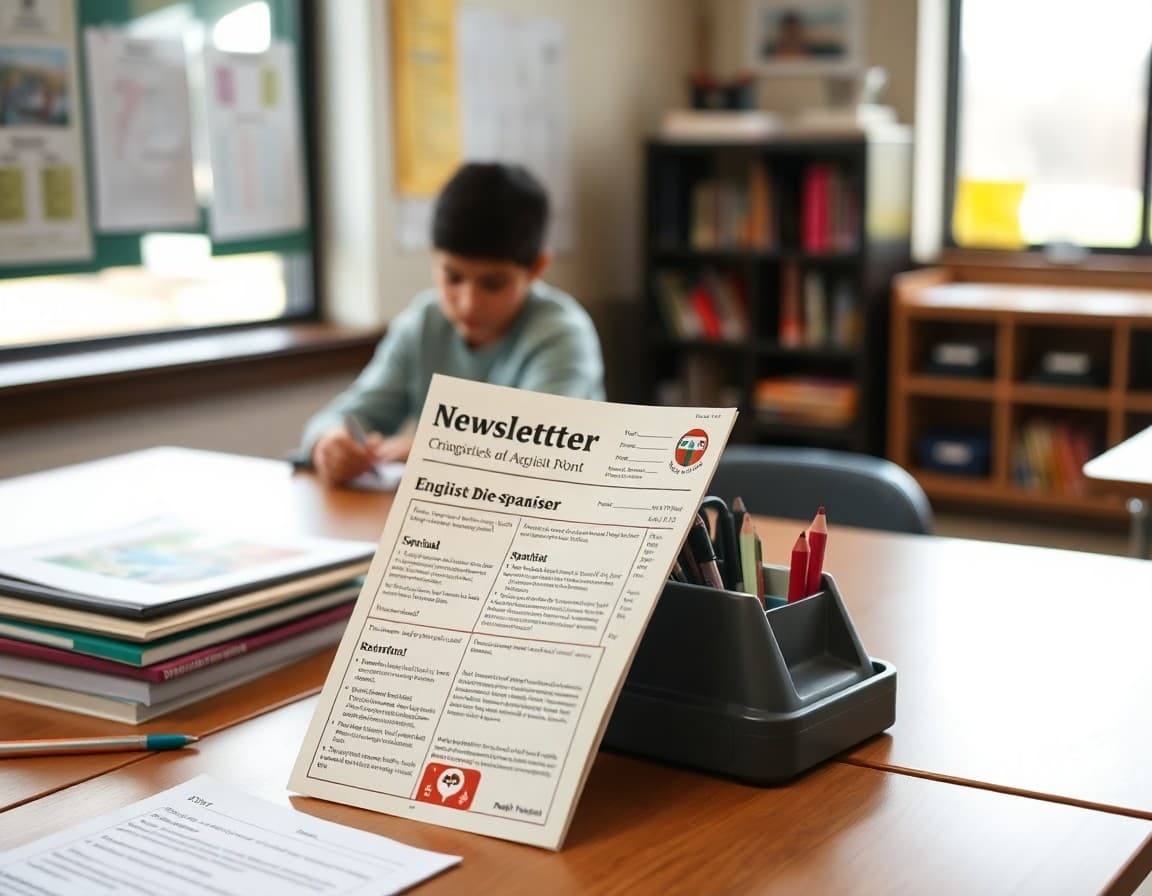
Iowa's ELL population reflects the state's agricultural economy and its history as a refugee resettlement destination. Meat processing communities in Postville, Columbus Junction, Ottumwa, and Marshalltown have large Spanish-speaking populations with significant proportions of working parents who have limited formal schooling. Des Moines and Iowa City serve sizable Somali, Congolese, and Burmese communities. For ESOL teachers in these schools, a newsletter that genuinely reaches multilingual families requires Spanish translation at minimum, cultural awareness, and knowledge of the specific barriers facing families in your community. This guide covers how to build that newsletter.
Iowa's ELL Population: Agricultural Communities and Refugee Families
Iowa's ELL population is approximately 55,000 students, distributed across rural agricultural communities and a handful of urban centers. The rural Iowa ELL community is primarily connected to the meat processing industry -- companies like Tyson, JBS, and Iowa Premium operate large plants that employ thousands of Spanish-speaking workers in communities that were historically homogeneous. These communities changed rapidly in the 1990s and 2000s, and some schools are still catching up on the language access infrastructure needed to serve multilingual families well. In Des Moines and Iowa City, refugee resettlement has brought Somali, Congolese, Burmese, and other language communities that require different translation resources than those used for Spanish.
Iowa's Title III Framework and Language Access Obligations
Iowa's Department of Education receives Title III federal funding and monitors district compliance with language access requirements. Key communications -- ESOL program placement, annual progress reports, CCC meeting invitations for students who are also special education eligible, and any document requiring parental consent -- must be available in families' home languages. For newsletters, the minimum obligation is that any section requiring a family action (signing a form, attending a meeting, responding to a request) is translated. Iowa's EL Programs team can provide guidance on which communications require translation under the state's language access plan.
Meat Processing Community Context: What Iowa ESOL Teachers Need to Know
Iowa's Spanish-speaking agricultural and meat processing families often have unique communication barriers beyond language: limited literacy in Spanish as well as English, irregular work hours that make school events inaccessible, significant fear around immigration status that affects willingness to engage with schools, and cultural practices around education that may differ from U.S. norms. Newsletters that acknowledge these realities without being condescending build trust. Simple language, large print, visual cues where possible, and a friendly tone signal that you see families as partners rather than problems to manage. Including information about community legal services or immigrant family support organizations in your newsletter sends a clear message about whose side the school is on.
WIDA ACCESS Testing: Preparing Iowa's Multilingual Families
Iowa's ACCESS testing window runs January through March. A December newsletter section should explain ACCESS in plain language, with a translated Spanish parallel at minimum. Include: what the test measures (English proficiency, not academic content), how long it takes (approximately three to four school days across the four domains), what scores mean for your child's ESOL services, and what families can do to prepare (consistent English exposure at home, getting enough sleep, attending school regularly during the testing window). For families from communities where standardized testing is unfamiliar, a simple reassurance that this test is about measuring language growth -- not grading the student -- reduces test anxiety.
Content Structure for Iowa ELL Newsletters
A practical content structure for Iowa ESOL newsletters:
- ESOL program update: what students are working on in English development this month
- Academic connection: how language skills connect to grade-level content work
- Home language strategy: one specific activity in Spanish or the home language
- ACCESS update: (December-March) testing schedule, what to expect
- Iowa community resource: a local or statewide support service for multilingual families
Template Excerpt: December Iowa ESOL Newsletter
An English and Spanish parallel section:
"December ESOL update. This month we are working on academic writing -- learning to state an opinion and support it with evidence. Your child will use this skill in every class through high school. Access for ELLs testing begins in late January. This is an annual test that measures your child's English language progress -- it helps us decide what kind of ESOL support your child needs. I will send more details in January. Winter break is December 23 through January 6. School resumes January 7."
"Actualizacion de ESOL de diciembre. Este mes trabajamos en escritura academica, aprendiendo a expresar una opinion y apoyarla con evidencia. Las pruebas ACCESS para ELL comienzan a fines de enero. Esta es una prueba anual que mide el progreso de ingles de su hijo/a. Le enviare mas detalles en enero. Las vacaciones de invierno son del 23 de diciembre al 6 de enero. La escuela regresa el 7 de enero."
Sustaining Iowa ELL Newsletter Communication All Year
Iowa ESOL teachers in meat processing communities often face the added challenge of families moving between Iowa and other states for seasonal work or employment changes. A newsletter that families receive consistently -- even during brief periods when a student is absent -- keeps the school-family relationship alive across those transitions. Including your contact information prominently in every issue and noting that you welcome calls from wherever families are currently located signals continuity. Tools like Daystage make it practical to maintain a monthly send schedule even during the busiest stretches of the Iowa school year.
Get one newsletter idea every week.
Free. For teachers. No spam.
Frequently asked questions
What language access requirements apply to Iowa ELL newsletters?
Iowa schools must comply with Title VI of the Civil Rights Act and the Equal Educational Opportunities Act, which require meaningful communication with families who have limited English proficiency. Iowa's Title III plan reinforces these requirements at the state level. Key communications about student placement, progress, and required parental consent must be available in families' home languages. The Iowa Department of Education's English Learner Programs team provides guidance to districts on language access compliance.
What languages are most needed for Iowa ELL newsletters?
Spanish is the most widely needed language for Iowa ELL newsletters, concentrated in meat processing communities in Postville, Columbus Junction, Ottumwa, and Marshalltown, and in urban neighborhoods in Des Moines and Iowa City. Somali is critical in parts of Des Moines's Near North Side and Grinnell. Karen and Burmese are significant in parts of Des Moines, Iowa City, and Waterloo. Bosnian and other Eastern European languages serve communities in some central Iowa areas.
How should Iowa ESOL newsletters address the WIDA ACCESS assessment?
Iowa administers ACCESS for ELLs through WIDA from January through March. Many Iowa ELL families -- particularly those in agricultural and meat processing communities with limited formal schooling -- receive no explanation of what ACCESS measures or why it matters. A December newsletter section covering what ACCESS tests, how scores affect ESOL service decisions, and when the testing window is scheduled helps families prepare and reduces the confusion and absenteeism that can disrupt test administration.
How can Iowa ELL newsletters connect families to community resources?
Iowa has several organizations that support multilingual immigrant and refugee families: the Iowa Coalition Against Domestic Violence serves immigrant women, the Iowa Bureau of Refugee Services connects families to resettlement support, and organizations like LULAC Iowa provide advocacy and services for Latino families. Including a community resource spotlight in each newsletter issue turns your communication from a one-way school update into a genuinely useful family tool.
Does Daystage help Iowa ESOL teachers produce bilingual newsletters efficiently?
Yes. Daystage lets Iowa ESOL teachers build bilingual newsletter layouts in a single document, eliminating parallel file management. For Iowa teachers in small districts where no dedicated translation staff is available, having a streamlined bilingual production workflow is especially useful. The platform's delivery tracking also provides documentation of family contact that supports Iowa Title III compliance reporting.

Adi Ackerman
Author
Adi Ackerman is a former classroom teacher and curriculum writer with 8 years in K-8 schools. She writes about school communication, parent engagement, and what actually works in real classrooms.
More for ELL & ESL
Ready to send your first newsletter?
3 newsletters free. No credit card. First one ready in under 5 minutes.
Get started free