

Heritage Language Newsletter: Supporting Home Language at School
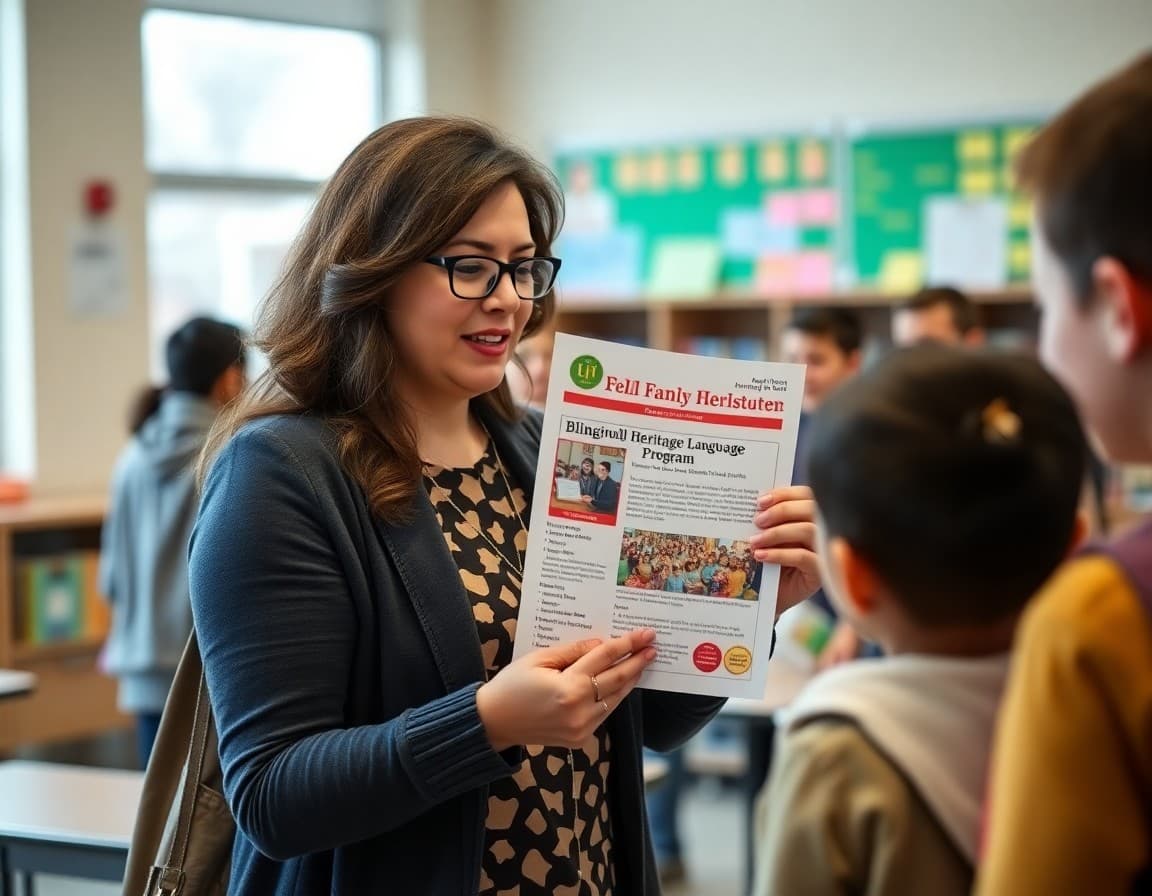
When a Guatemalan parent hears her child's school say "we value the languages your family speaks at home," something shifts. She stops seeing the school as a place that will erase her culture and starts seeing it as a partner. Heritage language newsletters are one of the most cost-effective tools schools have for building that kind of trust.
What Research Says About Home Language and Academic Success
Families often worry that speaking their home language at home will confuse their child or slow down English learning. This is one of the most persistent myths in bilingual education, and it is directly contradicted by decades of research. Studies by Virginia Collier and Wayne Thomas tracking over 700,000 students showed that students in programs supporting their home language outperformed English-only peers on standardized tests by 5th grade, with the gap continuing to widen through high school.
Jim Cummins' interdependence hypothesis explains why: the cognitive academic skills a student develops in any language transfer across languages. A child who can read and summarize a text in Spanish already understands what reading and summarizing mean. That understanding accelerates English literacy acquisition.
Your newsletter has a role to play here. Sharing this research with families -- in plain language and in their home language -- gives them a research-backed reason to keep reading to their children in Arabic, Vietnamese, or Haitian Creole.
What to Include in a Heritage Language Newsletter
A heritage language newsletter serves three purposes: it celebrates multilingualism as an asset, it equips families with resources for home language development, and it invites community participation in school culture. Sections that work well include a spotlight on multilingual student work, a list of bilingual books available through the school or public library, resources for home language literacy (apps, websites, community programs), and an invitation to a cultural sharing event or heritage month celebration.
Avoid language that frames the home language as a bridge to English only. "Your home language matters because it will help your child learn English" is better than no acknowledgment at all, but "your home language matters because it is who your family is" is more honest and more resonant.
A Template Section for Heritage Language Affirmation
Here is a section that works well in the body of a heritage language newsletter:
"The language your family speaks at home is a gift. We want your child to keep learning it, reading in it, and using it with your family. Research shows that students who stay strong in their home language become stronger readers and writers in English too. We are proud to have families who speak [list languages] in our school community."
This kind of direct, warm affirmation takes less than 100 words and does real relationship-building work every time a family reads it.
Connecting Families to Heritage Language Resources
One of the most practical things a newsletter can do is point families toward resources they did not know existed. The New York Public Library, Los Angeles Public Library, and many other systems have extensive bilingual collections available through digital lending. Storyline Online has books read aloud by actors in multiple languages. The Colorin Colorado website has family guides in Spanish and other languages that explain key concepts in U.S. schooling.
For families whose home language uses a different script -- Arabic, Hindi, Somali, Chinese -- finding literacy resources can be harder. Your ELL coordinator or a community liaison may know of resources specific to those language communities. Including even one or two concrete resources per newsletter makes a real difference for families who want to help but do not know where to start.
Highlighting Multilingual Student Work
Featuring student writing or artwork that reflects heritage languages and cultures in your newsletter does several things at once. It tells multilingual students their background is valued. It shows other families the richness in your school community. And it gives heritage language families a concrete reason to read the newsletter carefully because their child might be featured.
This does not have to be elaborate. A student poem in Spanish with an English translation. A drawing from a Lunar New Year writing assignment. A sentence or two about a cultural tradition a student shared in class. Small gestures accumulate into a culture where multilingualism is visibly celebrated rather than quietly tolerated.
Heritage Language Events Worth Featuring
Heritage Month observances -- Hispanic Heritage Month in September and October, Lunar New Year in January or February, Somali Heritage Month, Black History Month, and others -- give schools natural hooks for heritage language newsletters. Feature families who are willing to share. Invite parents to come in and read a book in their home language to a class. Host a multilingual storytelling event where families from different language backgrounds share a folk tale or family story.
The newsletter is the announcement vehicle and the follow-up recap. Families who could not attend still feel included when they read about what happened, especially when it includes photos and names of participants from their language community.
Handling Families Who Are Not Heritage Language Speakers
Not every family in your school speaks a language other than English. A heritage language newsletter still has value for monolingual English-speaking families because it builds their understanding of what multilingualism means for their child's classmates, it models inclusive communication, and it can prompt conversations about the value of language learning generally.
You do not need to segment the newsletter for monolingual families versus multilingual families. A newsletter that celebrates linguistic diversity is worth sending to everyone. English-speaking parents who read it and come away with a better understanding of their school's multilingual families have become better advocates for those families in the broader school community.
Making Heritage Language Communication a Year-Round Practice
A once-a-year heritage language newsletter is better than nothing. A quarterly practice is significantly better. The schools that do this well treat heritage language affirmation the same way they treat any other school value: they return to it consistently, in multiple formats, across the school year. It shows up in the back-to-school newsletter, in the winter holiday communication, in end-of-year recognition, and in every newsletter that features student work.
That consistency is what turns a policy statement about valuing diversity into something families actually experience as true.
Get one newsletter idea every week.
Free. For teachers. No spam.
Frequently asked questions
What is a heritage language and why does it matter for schools?
A heritage language is a language other than English that a student speaks at home, learned from family members, and has some degree of proficiency in even if they were born in the United States. Heritage language maintenance is supported by research showing that students who stay literate in their home language develop stronger academic English over time. Schools that acknowledge this through their newsletters and programming build trust with multilingual families.
How should a heritage language newsletter differ from a standard ELL newsletter?
A standard ELL newsletter focuses on English acquisition progress and instructional programs. A heritage language newsletter celebrates the home language as an asset, shares resources for developing home language literacy, and invites families to see their linguistic background as something the school values rather than something to overcome. The tone is affirmative rather than remedial.
What research supports heritage language maintenance in schools?
Studies from researchers including Cummins and Thomas and Collier show that students who maintain and develop their home language alongside English consistently outperform peers in long-term academic achievement. WIDA's framework explicitly recognizes the home language as a resource for English language development. Sharing this research with families in accessible language helps parents understand why reading to their child in Spanish, Tagalog, or Arabic at home is directly supporting school success.
How can schools support heritage language development without funding a full program?
Even without a formal heritage language program, schools can recommend bilingual books through the public library, share free online literacy resources in home languages, highlight multilingual student work in newsletters, and invite families to participate in cultural sharing events. Recognizing home language in the newsletter itself sends a powerful message that costs nothing beyond the time to write it thoughtfully.
Can Daystage help schools send heritage language newsletters to specific family groups?
Yes. Daystage lets you segment your family list by language background and send customized versions of a newsletter to each group. A school with Somali, Spanish, and Vietnamese families can send each group content that includes heritage language resources specific to their community, all from the same platform. That kind of targeted communication builds the trust that gets families showing up and engaged.

Adi Ackerman
Author
Adi Ackerman is a former classroom teacher and curriculum writer with 8 years in K-8 schools. She writes about school communication, parent engagement, and what actually works in real classrooms.
More for ELL & ESL
Ready to send your first newsletter?
3 newsletters free. No credit card. First one ready in under 5 minutes.
Get started free