
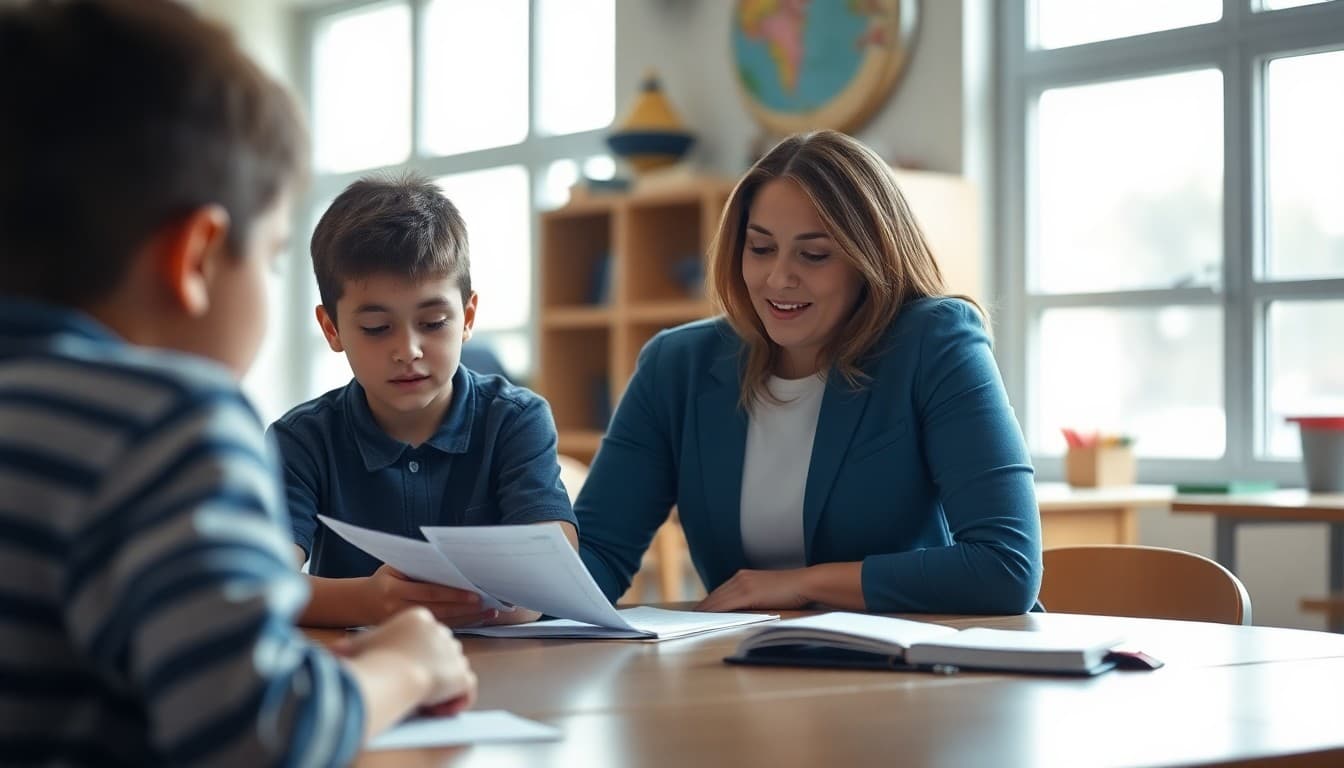
ELL Instructional Aide Newsletter: How We Support Language Learners

Most ELL families have no idea what an instructional aide does. They see a second adult in their child's classroom and wonder: is that person there because my child has a problem? Is my child being watched? A newsletter that explains the aide's role clearly prevents these concerns from becoming barriers to the very support the student needs.
What Families Actually Understand About In-Class Support
Many families assume that having an aide in the classroom means their child is in a lower academic track or has been identified as having a disability. In cultures where any kind of specialized support carries stigma, families may actively ask for their child's aide support to be removed -- not because the support is not working, but because they do not understand what it is.
A newsletter that explains the instructional aide role precisely and positively prevents this misunderstanding. The key message is straightforward: your child's aide is there to help them access the same instruction everyone else in the class receives, while they are still developing English. This is not a remedial service. It is specialized scaffolding that allows your child to participate fully in grade-level learning.
Describing What an ELL Aide Actually Does During the School Day
Generic descriptions do not reassure families the way specific ones do. Instead of "the aide provides support to English learners," describe a typical interaction: "During math class, when the teacher explains a problem-solving strategy, the aide quietly translates the key steps into Spanish for students who are still learning English. This means those students can focus on the math concept instead of struggling to understand the language of the directions."
Another example that resonates: "During writing workshop, the aide sits with a small group of students who are newer to English. She helps them brainstorm their ideas in their home language first, then supports them in expressing those ideas in English. The goal is always to help students move toward greater independence in English over time."
A Template Newsletter Introduction of an ELL Instructional Aide
Here is a template section for introducing a new ELL aide to families:
"We are pleased to introduce [Name], who joins our school this year as an ELL Instructional Aide supporting students in grades [X] through [X]. [Name] speaks [languages] and brings [X] years of experience working with multilingual students. In the classroom, [Name] helps English learners access instruction by clarifying directions, supporting vocabulary development, and working with small groups during practice activities. You are welcome to reach out to [Name] at [contact information] with questions about how ELL support works in your child's classroom."
That introduction is professional, specific, and gives families a direct contact point. It humanizes the support role before families ever see the aide in action.
Explaining the Difference Between an Aide and a Special Education Paraprofessional
Some families confuse ELL instructional aides with special education paraprofessionals. The roles serve different purposes, though the classroom presence looks similar. An ELL aide supports students who are learning English -- there is no disability involved. A special education paraprofessional supports students with identified disabilities under an IEP or 504 plan. If your ELL program uses paraprofessionals and you also have special education paraprofessionals in the same classrooms, explaining the distinction in your newsletter prevents families from drawing incorrect conclusions about why their child has in-class support.
What Families Can Expect as English Proficiency Grows
A newsletter about ELL aide support should also address what happens over time. Aide support is scaffolding, not permanent. As students develop English proficiency, the amount of direct aide support decreases and their independence in the classroom increases. This progression is the goal of ELL services, and families should understand it from the start so they can celebrate growing independence rather than worrying about decreasing support.
Being specific helps: "As [child's name] grows in English, they will need less direct support from the aide during class activities. We will communicate with you about these milestones and about how you can reinforce your child's growing independence at home."
Building a Relationship Between Families and ELL Support Staff
Many ELL instructional aides are themselves members of the language communities they serve. A bilingual aide who shares a language, immigration background, or cultural experience with the families they support is a uniquely powerful bridge between school and home. Your newsletter can acknowledge this by allowing the aide to introduce themselves in their own voice -- a brief paragraph or even a photo with a caption -- which builds trust in a way that a third-person description cannot.
Addressing Concerns Before They Become Complaints
The most common family concern about ELL aide support is that it creates dependency or holds the student back. Address this preemptively in your newsletter: "Our goal is never to create dependence on aide support. Every interaction is designed to build your child's English skills and academic confidence so they can eventually complete the same tasks independently that they currently complete with support. This is the same philosophy as training wheels -- useful while you are learning, removed as soon as you are ready."
Get one newsletter idea every week.
Free. For teachers. No spam.
Frequently asked questions
What is the role of an ELL instructional aide in the classroom?
An ELL instructional aide, also called a paraprofessional or bilingual aide, provides direct support to English learners in the classroom under the supervision of a certified teacher. This support includes translating directions, clarifying vocabulary in the student's home language, helping students access grade-level content while their English develops, and providing small-group instruction support. The aide is not the student's teacher -- they support the teacher's instruction by making it accessible to students who are still developing English fluency.
How should a newsletter explain the aide's role to families without creating confusion?
The key distinction to make is between support and separation. Some families worry that having an aide means their child is being singled out or kept away from typical instruction. Clarify in your newsletter that the aide's job is to make the same instruction more accessible, not to teach a different curriculum. Use concrete examples: 'When the teacher gives directions for a math activity, the aide helps your child understand those directions in Spanish so they can participate in the same activity as everyone else.'
Are ELL aides required to be bilingual?
Federal and state requirements vary. Under No Child Left Behind and continuing under ESSA, paraprofessionals in Title I programs must meet certain educational qualifications, but bilingualism is not uniformly required. In practice, bilingual aides are significantly more effective for students who are new to English because they can bridge language gaps directly rather than relying entirely on visual and contextual cues. Schools that invest in bilingual ELL aides typically see faster academic integration for their newest English learners.
How do you introduce a new ELL aide to families in a newsletter?
Include a brief bio, a photo, the languages they speak, and the classrooms or grade levels they support. Explain their qualifications and background in accessible terms. Mention that families are welcome to reach out with questions. A personal introduction in the newsletter humanizes the aide before families ever meet them, which makes families more comfortable with their child receiving support from this person.
Can Daystage help ELL programs communicate about instructional aide support to families?
Yes. Daystage lets you create a newsletter with photos of your ELL aides, descriptions of their roles, and multilingual content so families can read it in their home language. Schools that introduce their ELL support staff through a well-designed newsletter at the start of the year report that families are significantly more comfortable with the in-class support model and less likely to have concerns about their child being singled out. The newsletter does preventive communication work that saves time on individual parent conversations.

Adi Ackerman
Author
Adi Ackerman is a former classroom teacher and curriculum writer with 8 years in K-8 schools. She writes about school communication, parent engagement, and what actually works in real classrooms.
More for ELL & ESL
Ready to send your first newsletter?
3 newsletters free. No credit card. First one ready in under 5 minutes.
Get started free