
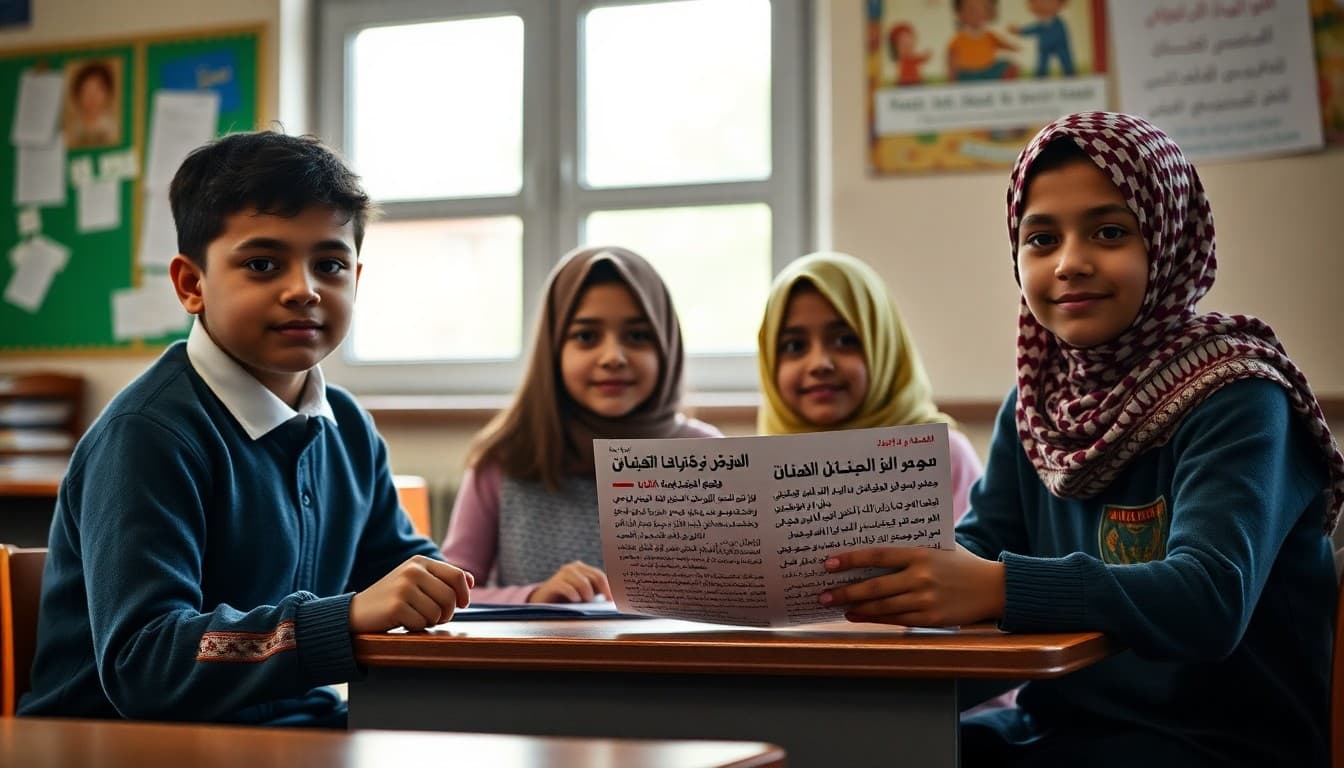
Arabic School Newsletter Guide for Arabic Speaking Families
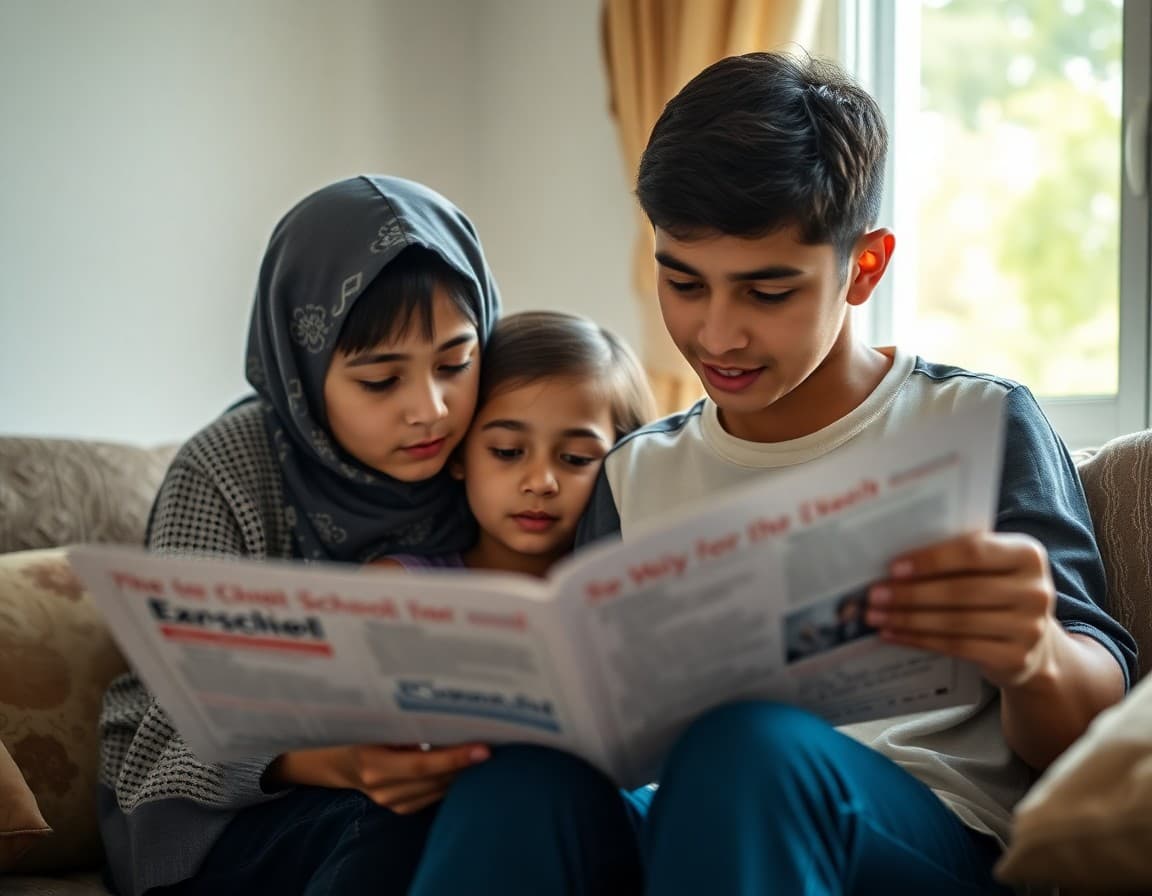
Arabic-speaking families in U.S. schools represent one of the most linguistically diverse communities an ELL educator can serve. They come from over 20 countries, bring vastly different educational backgrounds, and face a range of acculturation challenges. A good Arabic school newsletter does not treat them as a monolith -- it treats them as families who deserve clear, respectful communication in a language they can actually read.
Understanding the Arabic-Speaking School Community
The Arabic-speaking school population in the U.S. includes families who immigrated from Egypt, Iraq, Syria, Yemen, Lebanon, Jordan, Morocco, Sudan, and other Arab countries. Detroit and its suburbs have one of the largest Arab-American populations in the country. Houston, New York, Chicago, Los Angeles, and Washington D.C. all have significant Arabic-speaking school communities.
These families vary enormously in literacy level, educational background, immigration experience, and cultural practice. Some are professionals with advanced degrees who immigrated voluntarily. Others are refugees from conflict zones who arrived with limited schooling and significant trauma. A newsletter aimed at Arabic-speaking families needs to be written at a level accessible to readers across this range, which means plain Modern Standard Arabic without complex academic vocabulary.
Right-to-Left Formatting: Get It Right Before Sending
Arabic text flows right to left. If you send a newsletter with Arabic text pasted into a standard left-to-right template without enabling RTL text direction, the newsletter will display with corrupted formatting -- letters appearing backwards, text alignment broken, punctuation in the wrong place. Families who receive this will either not be able to read it or will read it as a sign the school did not bother to format the translation properly.
Test your Arabic newsletter on at least two different email clients and a mobile device before sending. Gmail, Outlook, and Apple Mail all handle RTL text differently. Check that numbers display correctly, that bullet points are on the correct side, and that line breaks happen naturally in the Arabic text rather than breaking in the middle of a word.
A Template Opening for an Arabic School Newsletter
Here is an opening that works for an Arabic family newsletter in Modern Standard Arabic:
"السادة أولياء الأمور الكرام، تحية طيبة وبعد، يسعدنا أن نشاركم أهم أخبار وفعاليات [اسم المدرسة] لهذا الأسبوع. إذا كان لديكم أي استفسار، يرجى التواصل معنا على الرقم [رقم الهاتف]. لدينا موظفون يتحدثون العربية وسيكون من دواعي سرورنا مساعدتكم."
This translates to: "Dear respected parents and guardians, warm greetings. We are pleased to share with you the most important news and activities of [School Name] for this week. If you have any inquiries, please contact us at [phone number]. We have staff who speak Arabic and it will be our pleasure to assist you." The honorific address and formal register are both essential for Arabic-speaking families who may interpret informal communication as disrespectful.
Ramadan and Religious Observance Communication
For Muslim families, Ramadan is the most significant religious observance of the year. Students who are fasting during Ramadan may have lower energy and concentration, particularly in the afternoon. A newsletter that acknowledges Ramadan and shows awareness of how fasting may affect students signals to Muslim families that the school takes their religious practice seriously.
Practical newsletter content during Ramadan might include: a note that students who are fasting do not have to participate in eating activities during school parties or celebrations, a reminder to PE teachers to adjust expectations for fasting students during outdoor activities in warm weather, and a general message of respect for the observance. Schools in communities with significant Muslim populations often see a notable increase in family goodwill from this level of acknowledgment.
Addressing Family Concerns About School Culture
Some Arabic-speaking families -- particularly those from more conservative Muslim backgrounds -- have concerns about aspects of American school culture: mixed-gender physical education, certain health or sex education curriculum, Halloween celebrations, and other practices. A newsletter that proactively explains opt-out rights and how to communicate concerns removes barriers for families who might otherwise disengage from the school rather than raise a concern they fear will be dismissed.
You do not need to change your programs to acknowledge that families have rights within them. A clear explanation of how parents can request accommodations or review curriculum demonstrates institutional respect for family values without requiring the school to abandon its practices.
Building Trust Through Consistent Communication
Many Arabic-speaking families, particularly recent refugees and immigrants, have had experiences with government and institutional communication that were negative or threatening. A school newsletter that is consistent, warm, honest about what the school offers, and clear about who families can call when they need help is a form of trust-building that accumulates over time.
Include information about interpreter services, legal rights (like the right to request an interpreter at all school meetings), free and reduced meal programs, and community resources in your regular Arabic newsletter rotation. Families who trust the school newsletter as a reliable source of useful information engage with it as a resource rather than ignoring it as institutional noise.
Getting Arabic Translation Done Consistently
Finding a reliable Arabic translator or reviewer is often the biggest operational challenge for schools wanting to send regular Arabic newsletters. Start with your own staff -- Arabic-speaking paraprofessionals, community liaisons, and bilingual teachers are often willing to review translations when the workload is manageable. Local mosques and Arab cultural organizations may have bilingual volunteers who can assist.
Some districts with significant Arabic-speaking populations have centralized Arabic translation services funded through Title III. If your district has this resource, use it. If not, a trained bilingual parent volunteer reviewer paired with a good machine translation draft is a sustainable model for most schools.
Reaching Families Who Are Not Checking Email
Some Arabic-speaking families, particularly recent refugees and elderly parents, are not reliably checking school email. WhatsApp is widely used across Arab countries and is a high-reach communication channel for many Arabic-speaking families. Text message links to digital newsletters also work well. Paper copies sent home through students remain effective for families with limited digital access, and a phone call from an Arabic-speaking staff member before major events is often the most reliable way to reach families who are not engaged with digital communication.
Get one newsletter idea every week.
Free. For teachers. No spam.
Frequently asked questions
What variety of Arabic should schools use in newsletters?
Modern Standard Arabic (MSA) is the written standard used across all Arabic-speaking countries and is understood by literate Arabic speakers regardless of their country of origin. Spoken Arabic varies significantly by region -- Egyptian Arabic, Levantine Arabic, Gulf Arabic, and Moroccan Darija are quite different from each other -- but written MSA is widely understood for reading. School newsletters should use MSA, not a regional dialect, to reach the broadest range of Arabic-speaking families effectively.
What are the technical challenges of Arabic school newsletters?
Arabic is written right to left, which requires right-to-left text formatting in your newsletter tool. Standard English newsletter templates do not automatically handle this. If you paste Arabic text into a left-to-right template, the text may display incorrectly with broken formatting. Check that your newsletter platform supports right-to-left text before attempting to send an Arabic newsletter. Numbers in Arabic newsletters for international audiences are typically written with Western Arabic numerals (0-9) for clarity.
How reliable is automated translation for Arabic school content?
Arabic machine translation quality is lower than for European languages. Google Translate and DeepL both handle MSA, but education-specific vocabulary, formal honorifics, and culturally specific communication conventions require human review. Arabic also has gendered grammatical structures that automated tools sometimes handle incorrectly. For anything involving rights, procedures, health, or discipline, a native Arabic speaker review is essential before sending.
What cultural considerations matter most for Arabic-speaking families?
Arabic-speaking families come from many different countries and cultural backgrounds -- Arab families from Egypt, Syria, Iraq, Yemen, Lebanon, Morocco, and elsewhere have different cultural norms despite sharing a language. Common threads include high value placed on family honor and the school's treatment of that, preference for formal and respectful communication, strong value placed on academic achievement, and for Muslim families, religious observances including Ramadan that affect students' schedules and energy. A newsletter that shows awareness of Ramadan timing in its scheduling communication is noticeably more considerate than one that schedules a major test on a day when students may have fasted all day.
How does Daystage handle right-to-left Arabic newsletter formatting?
Daystage supports multilingual content and lets you paste Arabic text into newsletter sections. For right-to-left display, Arabic text pasted into Daystage will render correctly as long as the text is properly formatted. Schools that send Arabic newsletters through Daystage alongside their English versions can reach Arabic-speaking families with a professional, readable newsletter simultaneously with the rest of the school community. This simultaneity matters as much as the language itself for communicating equal respect.

Adi Ackerman
Author
Adi Ackerman is a former classroom teacher and curriculum writer with 8 years in K-8 schools. She writes about school communication, parent engagement, and what actually works in real classrooms.
Ready to send your first newsletter?
3 newsletters free. No credit card. First one ready in under 5 minutes.
Get started free