
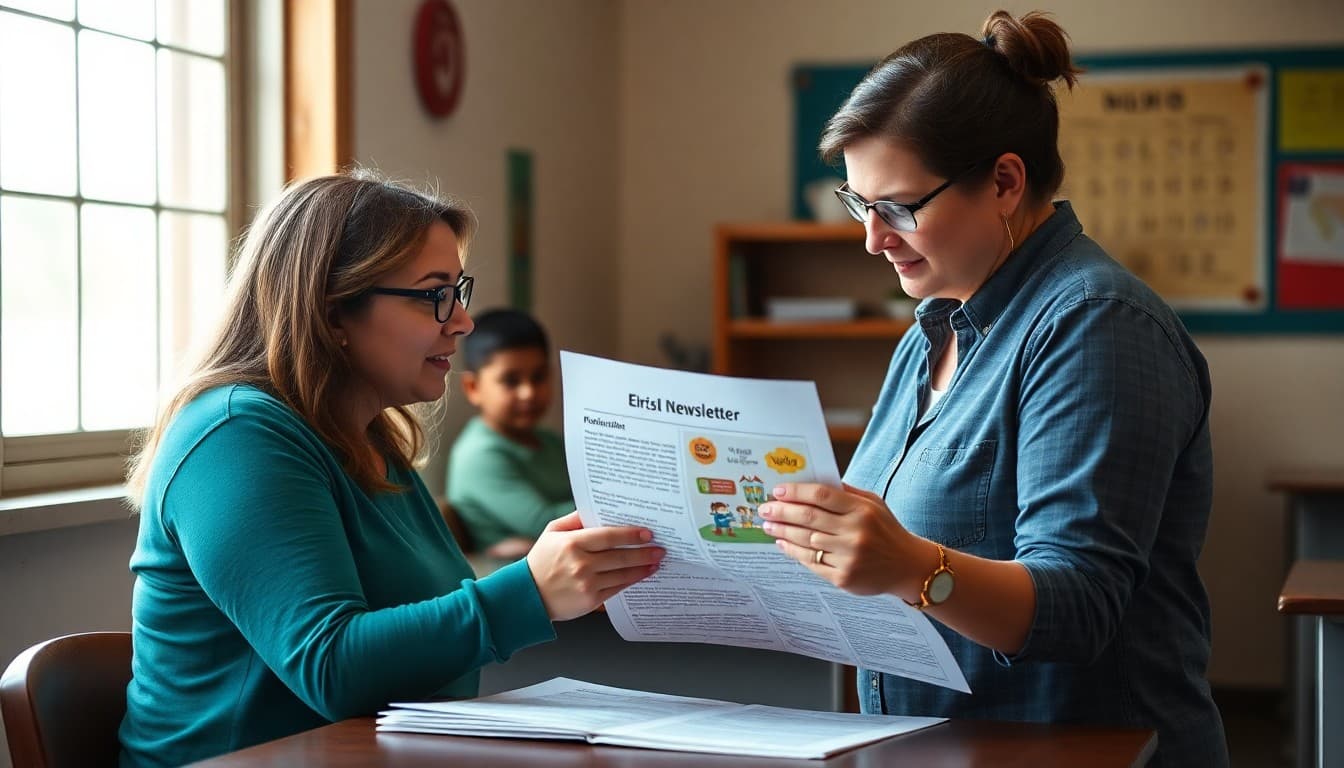
Arkansas ELL Program Newsletter: Practical Guide for ESL Teachers
Arkansas has one of the fastest-growing ELL populations in the South, driven by decades of poultry industry growth and, uniquely, one of the largest Marshallese communities in the continental United States. The families ELL programs serve in Arkansas are not a monolith, and neither should be the newsletters you send them.
Start With Your Specific Community's Languages
Arkansas ELL programs vary enormously by district. In Springdale and Fayetteville, Marshallese families are a significant portion of ELL enrollment and require a completely different approach from the Spanish-focused communication that works elsewhere. In the Delta, Spanish-speaking agricultural workers are the primary population. In Little Rock, you may have a mix of Somali, Spanish, and Burmese-speaking families. Review your school's home language survey data before the first newsletter of the year and let that data determine which languages you prioritize. Translation into Spanish only when a quarter of your families speak Marshallese is a missed opportunity and a potential compliance issue.
Understand Arkansas's Title III Communication Framework
Title III and ESSA require Arkansas schools to translate essential communications for families with limited English proficiency. The Arkansas Division of Elementary and Secondary Education reviews compliance through the Title III consolidated application process. Your ELL program newsletter is voluntary but represents the most visible part of your language access commitment. Schools that maintain regular, translated newsletter communication demonstrate a culture of inclusion that goes beyond minimum compliance and builds the family trust that programs need to work.
Explain WIDA ACCESS in Plain Terms
Arkansas uses WIDA ACCESS to measure English language proficiency. The assessment covers Listening, Speaking, Reading, and Writing on a 1-6 scale. Families who receive a score report rarely know how to interpret it. Include a plain-language explanation in your newsletter during the spring testing window: what ACCESS measures, what the scores mean in practical terms, and what a student needs to score to exit ELL services in your district. This explanation should be translated into the family's home language, not just summarized in English.
A Monthly ELL Program Newsletter Format
This template works for most Arkansas ELL programs:
ELL Program Update -- [Month] [Year]
Your student is working on: [Current language skill area]
What this means at school: [One sentence description]
How to support at home: [One activity in the home language]
Coming up:
- [Date]: WIDA ACCESS testing
- [Date]: Parent conference (interpreter available, call ahead)
Contact your ELL coordinator: [Name, phone, email]
Address the Marshallese Community Directly
The Marshallese community in Northwest Arkansas is large, culturally distinct, and often underserved by school communications that assume the only non-English need is Spanish. Marshallese families frequently have extended-family household structures, strong church connections through Assembly of God congregations, and communication networks that run through community leaders and pastors. Partnering with local Marshallese community organizations and church leaders to distribute and explain your newsletter is often more effective than direct mail. Ask community liaisons to help review translated materials before distribution.
Connect Families to Arkansas Community Resources
Arkansas has resources for ELL families that many families do not know about. Canopy NWA in Fayetteville serves immigrant and refugee families across Northwest Arkansas. The Marshallese Educational Initiative in Springdale works specifically with Micronesian families. Adult education and ESL programs are available through Arkansas Tech University and community colleges throughout the state. The Arkansas Hunger Relief Alliance can connect families to food assistance programs. Mentioning one resource per newsletter issue builds cumulative awareness and positions your program as a community hub, not just an academic service.
Write Short and Avoid Education Jargon
Arkansas ELL families range from those with advanced formal education to those with minimal schooling in any language. Your newsletter should be readable at a fifth-grade level in English before you translate it. Avoid terms like "ELP proficiency levels," "reclassification criteria," and "language acquisition support services." Use plain substitutes: "English language score," "when your student tests out of the ELL program," and "help your student learn English." Plain language survives translation better and reaches more families.
Use Daystage to Send the Right Newsletter to the Right Families
Sorting paper newsletters by language and sending them home in backpacks is slow and unreliable. Daystage lets Arkansas ELL coordinators send formatted newsletters directly to families by email, with separate language versions going to the right groups. A family in the Marshallese community receives the version in their language. A Spanish-speaking family in the River Valley gets theirs. The coordinator manages one workflow rather than several separate production processes, and families get information in the language they can actually use. That combination is what increases attendance, test preparation participation, and parent-teacher conference rates.
Get one newsletter idea every week.
Free. For teachers. No spam.
Frequently asked questions
What are Arkansas's legal requirements for communicating with ELL families?
Arkansas schools must follow Title III and ESSA requirements for meaningful communication with families who have limited English proficiency. Essential communications, including ELL identification notices, annual assessment results, program placement letters, and conference invitations, must be translated into the family's home language. The Arkansas Division of Elementary and Secondary Education monitors Title III compliance through its consolidated state plan.
What languages do Arkansas ELL families most commonly speak?
Spanish is the predominant home language among Arkansas ELL students, concentrated in the poultry-processing communities of Northwest Arkansas, the Delta, and the River Valley. Springdale and Fayetteville are among the largest concentrations of Marshallese-speaking families in the United States outside the Marshall Islands, which creates a unique language need that many other states do not have. Some districts also serve families who speak Somali or Burmese.
What assessment does Arkansas use for English language proficiency?
Arkansas uses WIDA ACCESS for ELLs to measure English proficiency. The test evaluates Listening, Speaking, Reading, and Writing on a 1-6 scale. Students must meet state-set composite and domain score thresholds to qualify for reclassification. Arkansas's reclassification process also considers academic achievement and teacher recommendation in addition to ACCESS scores.
How should Arkansas ELL newsletters address the Marshallese community?
Springdale and Fayetteville have the largest Marshallese communities outside the Pacific Islands, and those families have specific communication needs. Marshallese is a distinct Micronesian language and is not related to Spanish. Translation resources are limited compared to Spanish. The University of Arkansas partnered with local organizations to produce some translated health materials, and those community contacts can help identify translators for school communications as well.
Can Daystage help Arkansas ELL programs send multilingual newsletters?
Yes. Daystage lets ELL coordinators create formatted newsletters and send them to specific family groups. You can prepare a Spanish version, a Marshallese version, and an English version and route each to the right families. The platform handles formatting and delivery so coordinators focus on content and translation rather than production logistics.

Adi Ackerman
Author
Adi Ackerman is a former classroom teacher and curriculum writer with 8 years in K-8 schools. She writes about school communication, parent engagement, and what actually works in real classrooms.
More for ELL & ESL
Ready to send your first newsletter?
3 newsletters free. No credit card. First one ready in under 5 minutes.
Get started free