
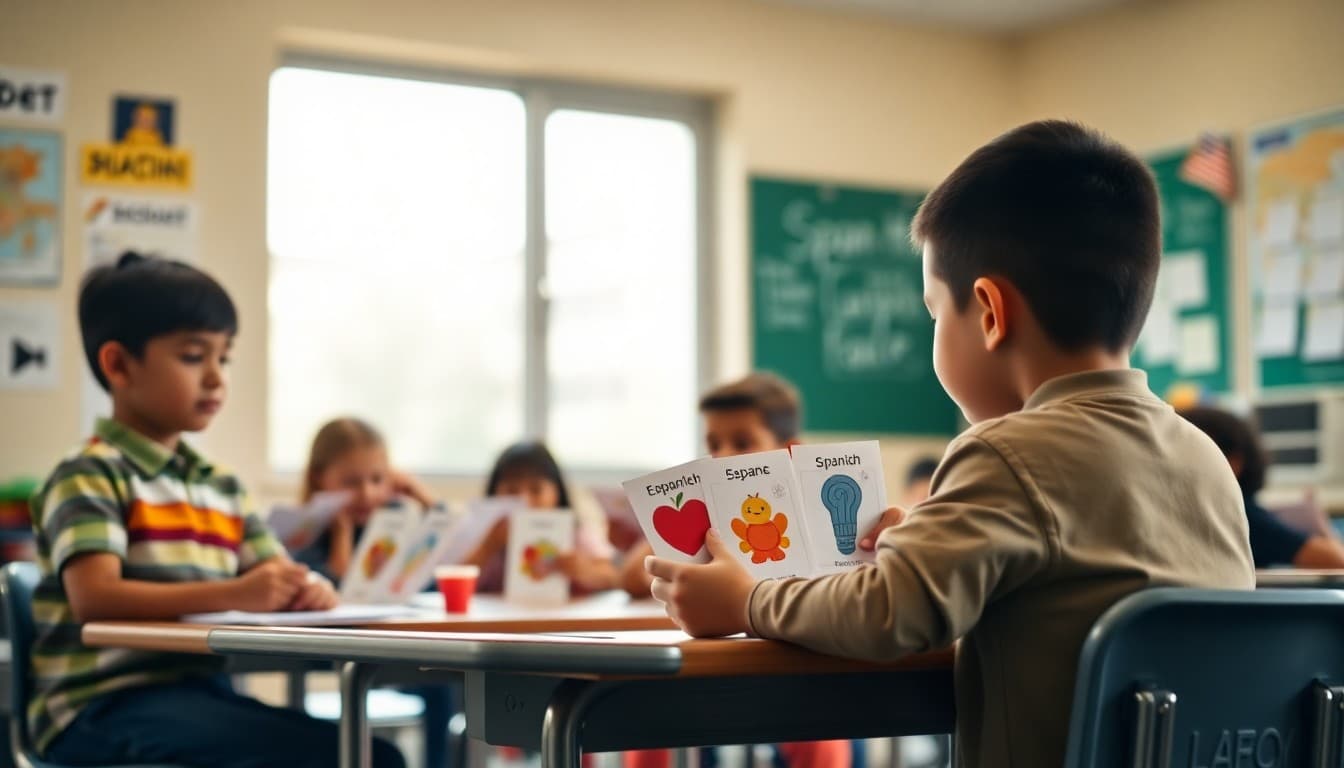
Spanish Elementary Newsletter: Learning Updates for Parents

Spanish specials classes face a communication challenge that core subject teachers do not: students attend once or twice a week, parents often do not speak the language, and the learning happens almost entirely at school. A monthly Spanish newsletter that shares specific vocabulary, explains the learning approach, and gives families simple at-home activities can significantly extend the impact of limited class time.
Share the Current Vocabulary Theme
Start with the specific vocabulary focus. "This month, students are learning family member vocabulary in Spanish: madre, padre, hermano, hermana, abuelo, and abuela." Then add the classroom context: "We have been practicing these words through games, songs, and a family drawing activity where students introduced their family members to a partner using Spanish." That description gives parents a clear picture of the content and the learning approach in two sentences.
Include the Vocabulary List
A vocabulary list with English translations in every newsletter is the single most useful element for families. Format it simply: madre (mother), padre (father), hermano (brother), hermana (sister), abuelo (grandfather), abuela (grandmother). If you include simple pronunciation guides, even better: "abuela: ah-BWAY-lah." Parents who can pronounce the words correctly help their child practice accurately rather than reinforcing mispronunciations that are harder to undo later.
Explain How Students Learn in Class
Many parents assume language classes are about drilling vocabulary and grammar rules. Describe the communicative approach: "In our Spanish classes, students learn vocabulary through movement, games, songs, and conversation. We rarely sit and memorize. Research shows that language learned through real communication sticks better than language learned through drill. When students play a card game to practice colors, they are using the words in a real communicative context." That explanation builds trust in the program and connects to what parents see in their child's engagement with the subject.
Give Non-Spanish Speakers Specific Ways to Help
This is the most important section for Spanish newsletters. Address non-speaking parents directly: "You do not need to speak Spanish to support Spanish learning at home. Here are three things that actually work. First, ask your child to teach you five words. The act of teaching is one of the most powerful ways to deepen learning. Second, label three objects in your home with Post-it notes in Spanish this week. Third, watch a familiar movie with the audio in Spanish. Hearing the language in context, even through entertainment, reinforces vocabulary."
A Template Home Practice Section
Here is a template you can adapt for any Spanish vocabulary theme:
"This month's home practice suggestion: Post-it Label Challenge. Write [5-6 CURRENT VOCABULARY WORDS] on Post-it notes and stick them on the corresponding objects or pictures in your home. Every time your child (or anyone in the family) touches or passes that object, they say the Spanish word out loud. After a week, challenge your child to remember the words without the notes. This technique, called spaced retrieval practice, is one of the most effective vocabulary learning strategies available."
Highlight Songs or Media Students Are Using in Class
If you use specific songs or videos in class, share them with families. "We are using Jack Hartmann's Spanish counting songs and a GoNoodle Spanish vocabulary video this month. Search for these on YouTube at home. Your child will likely recognize them immediately and be excited to share them with you. Hearing familiar songs at home reinforces the in-class learning with almost no effort from families."
Celebrate Cultural Connection
Spanish is connected to a rich and diverse set of cultures. A brief cultural note adds dimension to the vocabulary focus: "The word abuela is not just vocabulary. It carries cultural weight across 20 countries where Spanish is an official language. In many Spanish-speaking families, grandparents play a central role in daily life and child-raising. Learning family vocabulary is also learning something about the cultures that speak the language." That kind of context builds genuine interest in the language, not just compliance with assignments.
Invite Heritage Spanish Speakers to Engage
Many elementary classrooms include children from Spanish-speaking families. Address them specifically: "If Spanish is spoken at home, this is a great time to encourage your child to use the vocabulary with family members in Spanish. Bilingual students and heritage speakers enrich our classroom community and often serve as wonderful models for their classmates. If you are interested in sharing any aspect of your culture with our class, please reach out." That invitation acknowledges and values a resource that many teachers overlook.
Get one newsletter idea every week.
Free. For teachers. No spam.
Frequently asked questions
What should a Spanish class newsletter for elementary parents include?
A Spanish newsletter should share the vocabulary or grammar structures students are learning this month, explain how they are practicing in class, and give families specific ways to practice at home. Even parents who do not speak Spanish can help: labeling household items with Spanish words, watching a familiar show with Spanish audio, or asking their child to teach them a phrase all reinforce classroom learning without requiring parental fluency.
How often should Spanish teachers send a newsletter to elementary parents?
Monthly is the right cadence for most Spanish specials programs. A monthly newsletter can introduce the current vocabulary theme, share one or two practice activities, and celebrate student progress without overwhelming families with weekly updates. If your program has students once or twice a week, a monthly update also helps families remember what their child is working on given the less frequent class schedule.
How can non-Spanish-speaking parents support Spanish learning at home?
They can ask their child to be the teacher. Having a child teach a parent five Spanish words reinforces the child's learning through retrieval practice, builds confidence, and creates a positive association with Spanish class. Parents can also look up the vocabulary words on a free app like Duolingo or Google Translate and practice alongside their child. The parent does not need to know Spanish. They just need to be curious.
What vocabulary themes do elementary Spanish programs typically cover?
Common themes across elementary Spanish programs include greetings and introductions, numbers and colors, family members, animals, food and drinks, classroom objects, weather and seasons, body parts, and action verbs. Most programs spiral through these themes, adding complexity each year. The newsletter should name the specific theme so parents can target home practice.
What tool makes Spanish newsletters easy to send to elementary families?
Daystage lets Spanish teachers send vocabulary-focused newsletters with word lists, audio links, and at-home practice activities in a clean, readable format. You can create a Spanish class template and update the theme each month. Families receive it directly without needing to log into a portal, which makes it practical even for programs that see students just once or twice a week.

Adi Ackerman
Author
Adi Ackerman is a former classroom teacher and curriculum writer with 8 years in K-8 schools. She writes about school communication, parent engagement, and what actually works in real classrooms.
More for Elementary
Ready to send your first newsletter?
3 newsletters free. No credit card. First one ready in under 5 minutes.
Get started free