

Student Spotlight in Elementary School Newsletter: Young Achievers
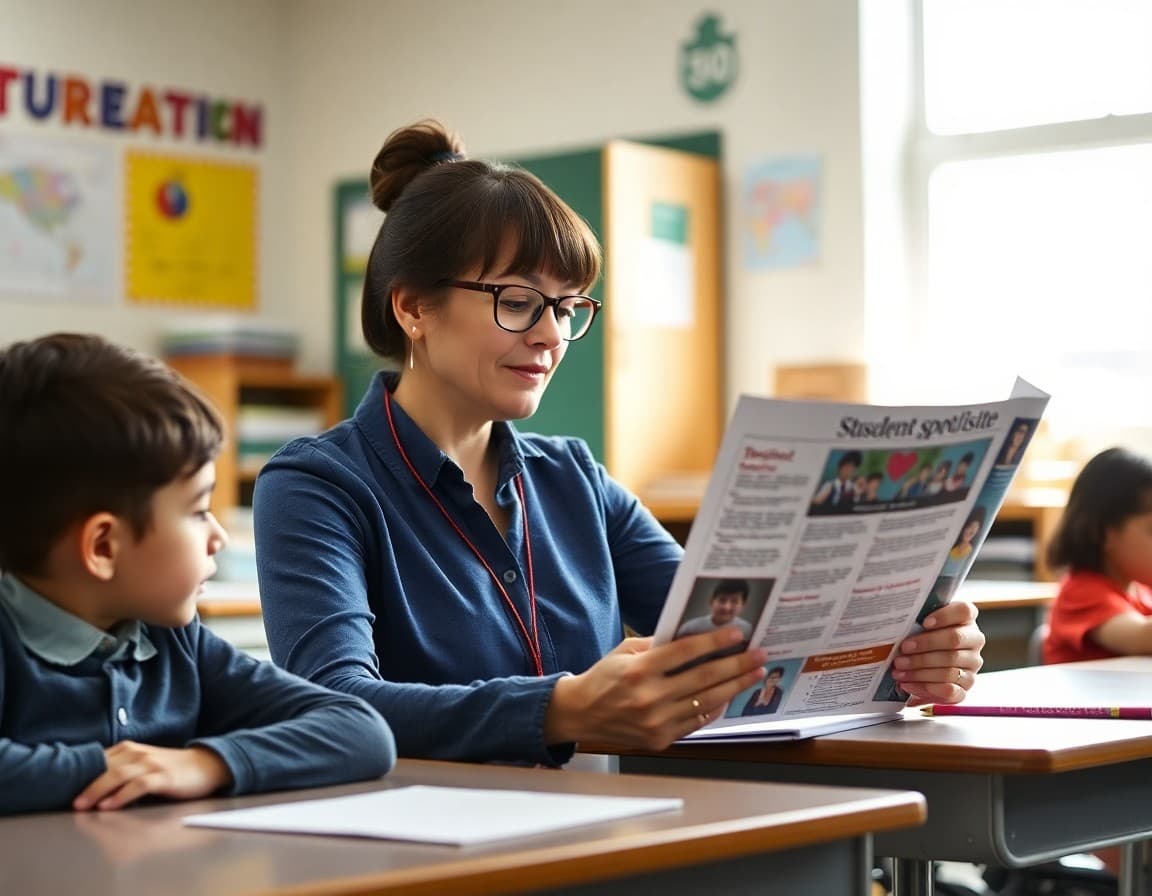
A student spotlight in the class or school newsletter is one of the simplest and most powerful recognition tools available to elementary teachers. Being seen and celebrated in a communication that reaches your family and your whole school community matters to a child in ways that a sticker on a paper or a verbal compliment in class cannot replicate. Getting the spotlight right, choosing the right students, framing the achievement genuinely, and rotating recognition equitably, takes intentionality. This guide covers how to do it well.
Celebrate Effort and Growth, Not Just Achievement
The most common mistake in student spotlights is defaulting to the same five students: the highest test scorers, the most behaviorally compliant, the ones who are easiest to praise. These students deserve recognition, but a class-wide spotlight program that only celebrates academic high performance tells most students that they will never be featured. The student who read five books when they started the year reading zero, the child who managed their frustration constructively for the first time, the kid who helped a new student find their way around the building, are all spotlight-worthy. Expanding the criteria expands who gets to feel seen.
Make Every Spotlight Specific, Not Generic
"Student of the Week: Maria is a great student who works hard and is kind to her friends." That spotlight says nothing. It could apply to any child in any class in any school. "This week's spotlight: Maria spent three days revising her story until the ending felt right to her. When we read it to the class, three students asked to borrow it. Maria said her goal was to make people feel something when they read it. Goal achieved." That spotlight says something real about a real child, and when Maria's family reads it, they know exactly which moment is being recognized.
Build a Fair Rotation System
A simple numbered list of all students, worked through sequentially across the school year, ensures that every student appears in a spotlight at least once. Post the list where you can see it when writing the weekly newsletter, and check off each student as they are featured. Within the rotation, look at what that specific student has done in the past two weeks and find the most genuine thing to celebrate. The rotation ensures equity. The specific writing ensures authenticity.
A Template Student Spotlight Section
Here is a template for an elementary student spotlight:
"Student Spotlight: [STUDENT NAME] This week we are celebrating [STUDENT NAME] for [SPECIFIC ACHIEVEMENT, GROWTH, OR CHARACTER QUALITY]. [1-2 SENTENCES WITH A SPECIFIC DETAIL ABOUT WHAT THEY DID OR HOW THEY GREW]. [Optional: a brief quote from the student.] We are proud of [FIRST NAME] and grateful to have them in our classroom community."
That is 60 to 80 words. It takes about three minutes to write per student when you have been paying attention to what is happening in the classroom that week.
Handle Permissions Before Publishing
Most schools obtain media consent from families at enrollment that covers standard school communications including newsletters. Before featuring a student by name or photo in your newsletter, confirm that your school's consent form covers newsletter publication. If a family has opted out of media consent, feature the student verbally in class instead or ask for specific consent from that family. When a photo is included in a spotlight, ensure the student and family are aware and comfortable. One conversation in advance prevents the situation where a spotlight becomes a complaint about privacy.
Balance Academic and Non-Academic Recognition
Over the course of a year, a student spotlight rotation should recognize: academic achievement in reading, a math breakthrough, creative work (art, writing, project), character in action (kindness, courage, honesty), contribution to the class community, perseverance through difficulty, and social growth. A teacher who tracks which type of achievement each spotlight celebrates can see quickly if the rotation is over-weighted toward any single category. Most healthy class cultures need to see all of these recognized regularly to reinforce that the classroom values the full range of what it means to be a good student and a good person.
Let Students Nominate Each Other
A student nomination component adds peer voice to the recognition process and builds the habit of students noticing and appreciating each other. A simple Friday question, "Did you notice someone in our class do something worth celebrating this week?" gives students the language and the invitation to recognize each other. The teacher curates and writes the final spotlight, but the observation can come from peers. Spotlights that include something like "Three classmates mentioned this" carry particular meaning for the student being recognized.
Send with the Weekly Class Newsletter
The student spotlight lands best when it arrives as part of the weekly class newsletter that families are already in the habit of reading. Sending it in the same newsletter as the academic update and the weekly schedule means families see the recognition in context of the full classroom community. Daystage makes it easy to include a student spotlight section as a standard component of every weekly newsletter, with a format that highlights the recognition visually without requiring design work from the teacher.
Get one newsletter idea every week.
Free. For teachers. No spam.
Frequently asked questions
What should a student spotlight section in an elementary newsletter include?
An effective elementary student spotlight section should describe a specific achievement, action, or character quality rather than a generic honor. It should feel personal and specific enough that the student and family recognize exactly what is being recognized. Including a brief quote from the teacher or the student's own words makes the spotlight feel genuine rather than formulaic. The spotlight should focus on growth, effort, kindness, or contribution as much as academic achievement.
How do you choose students fairly for spotlight features in a class newsletter?
A rotating system ensures every student eventually appears in a spotlight over the course of the year. A simple tracking list makes it easy to see who has been featured and who has not. Within a rotation, spotlight different kinds of achievement, academic, social, effort-based, creative, and community-focused, so that students who do not excel academically still have a genuine reason to be featured. The student who showed the most perseverance on a challenging project is as spotlight-worthy as the student who scored highest on an assessment.
Do you need parental permission to feature a student in a newsletter?
Permissions for featuring students in school communications, including names and photos, are typically governed by the school's media consent forms that families sign at enrollment. If your school's enrollment forms include media consent for school newsletters, you are generally covered. However, if a student's family has opted out of media consent, do not feature them by name or photo in a newsletter without specific permission. When in doubt, check with your school office before publishing.
What types of achievements should an elementary student spotlight celebrate?
The most meaningful student spotlights celebrate a wide range of achievements: academic growth (not just high performance), demonstrated kindness to a classmate, perseverance through a challenge, creative problem-solving, improvement in a skill they had been working on, contribution to the class community, and examples of living the school's values. Spotlighting only the highest academic achievers sends a narrow message about what the school values. Spotlighting effort, character, and growth alongside academic achievement builds a more inclusive and motivating classroom culture.
What tool do elementary teachers use to create student spotlight newsletters?
Daystage is used by elementary teachers to create polished weekly newsletters that include student spotlight sections. Teachers can write brief spotlight features, add a photo (where permitted by media consent), and send the newsletter directly to all family emails in a few minutes. The professional format makes student spotlights feel genuinely celebratory rather than like an afterthought in a plain text email.

Adi Ackerman
Author
Adi Ackerman is a former classroom teacher and curriculum writer with 8 years in K-8 schools. She writes about school communication, parent engagement, and what actually works in real classrooms.
More for Elementary
Ready to send your first newsletter?
3 newsletters free. No credit card. First one ready in under 5 minutes.
Get started free