
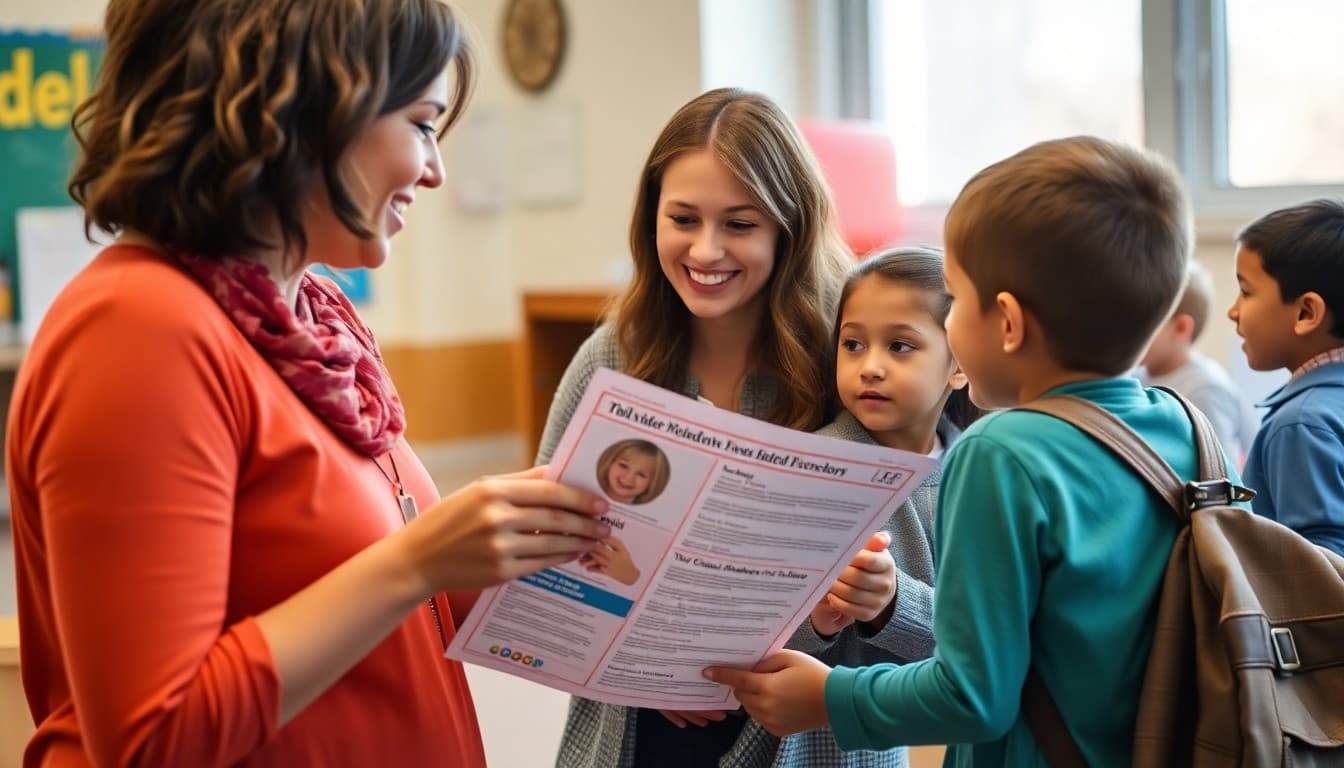
North Carolina Elementary School Parent Communication Guide

North Carolina's elementary schools are as varied as the state itself: fast-growing suburban campuses outside Raleigh and Charlotte, small rural schools in the piedmont and mountain regions, and coastal district schools that close for hurricanes. Parent communication in this context is not one-size-fits-all. This guide covers what works for NC elementary teachers who want to reach every family reliably, regardless of where they teach.
Match Your Channels to Your Community
A teacher in Cary or Apex, where most families have reliable broadband and smartphones, can lean heavily on email newsletters and app notifications. A teacher in rural Robeson County or the Outer Banks should have a plan for reaching families with limited internet access through text messaging and paper notices. Spend the first week of school finding out which families cannot reliably receive digital communication. That list is not a failure; it is your guide for building a more complete system.
Prepare Families for EOG Testing Windows
North Carolina's End-of-Grade tests in reading and math are administered in the spring for grades 3 through 5. The preparation families most need is not test tips but practical information: when are the testing windows, what is the attendance policy during testing, how should students prepare the night before, and how will results be shared. A newsletter in March that covers this clearly saves every school office from fielding the same questions repeatedly in April and May. Include a brief explanation of what EOG scores mean and how they affect promotion decisions.
Address Hurricane Preparedness Along the Coast
Schools in coastal NC counties operate under the real possibility of hurricane-related closures, sometimes with little notice. Families benefit from knowing in advance how the school communicates weather closures, what the school's emergency protocol is, and how makeup days are handled. A beginning-of-year newsletter section on emergency communication, and a September refresh when hurricane season is most active, sets expectations before the first weather event rather than during it.
A Template Newsletter Section for NC Families
Here is a simple template that works across North Carolina elementary schools:
"Good [day], [CLASS] families. Here is what we are working on this week: [ACADEMIC FOCUS]. Coming up: [DATES AND EVENTS]. One thing to practice at home: [SPECIFIC SKILL OR ACTIVITY]. Reminder: [TESTING, POLICY, OR SEASONAL NOTE]. Reach me at: [CONTACT]. Thank you for everything you do for your child's education."
Adding Spanish for key dates and reminders below the English section takes about five extra minutes and significantly increases engagement from Spanish-speaking families in your school community.
Communicate About the Read to Achieve Program
North Carolina's Read to Achieve law requires third graders to demonstrate reading proficiency before advancing to fourth grade. Elementary teachers in lower grades benefit from keeping families informed about reading benchmarks and literacy expectations well before third grade. A regular newsletter section on what families can do at home to build reading skills, what the school's literacy benchmarks look like, and how Read to Achieve affects the third-grade year helps families engage with literacy development as an ongoing priority rather than a last-minute concern.
Highlight Strong School Traditions
Many North Carolina elementary schools have strong traditions around character education, academic recognition ceremonies, and community events. These are the moments families want to know about in advance so they can arrange work schedules, bring other family members, and show up. A newsletter that builds anticipation for events like a fifth-grade graduation ceremony, an arts night, or a science fair sends the message that these moments matter and that family presence is expected and welcomed.
Support Multilingual Families Across the State
North Carolina's Hispanic and Latino population has grown significantly in counties like Wake, Mecklenburg, Durham, and Alamance. In communities around meat processing plants and agriculture in the eastern part of the state, Spanish-speaking families may make up a majority of a school's enrollment. Sending even a partially translated newsletter, or ensuring that take-home notices about key policies and events are available in Spanish, is both a practical communication strategy and a genuine signal of inclusion.
Maintain Consistency Through a Busy School Year
The NC school year includes testing windows, state holidays, and a calendar that shifts from district to district. The teachers who maintain the most consistent parent communication are those who build it into their weekly routine rather than fitting it in around everything else. Daystage helps NC elementary teachers make that consistency sustainable by cutting newsletter production time to minutes and handling the delivery automatically so the teacher can focus on the classroom.
Get one newsletter idea every week.
Free. For teachers. No spam.
Frequently asked questions
What are the best ways to communicate with parents at North Carolina elementary schools?
North Carolina elementary schools span fast-growing suburban communities in the Research Triangle and Charlotte metro, rural mountain communities in the west, and coastal districts in the east. Each requires a slightly different approach. Suburban NC families are generally high-digital and expect app and email communication. Rural families often rely on text messaging and paper notices. Combining multiple channels and maintaining a consistent weekly rhythm is the most reliable strategy statewide.
What state-specific events or topics should North Carolina elementary newsletters cover?
North Carolina elementary newsletters should cover NC Check-Ins and End-of-Grade (EOG) testing windows in the spring, hurricane preparedness for coastal communities, tornado and severe weather protocols for inland areas, and district-specific events like Read to Achieve summer reading program reminders. Many NC districts also have strong athletic and arts programs at the elementary level that benefit from advance communication about schedules and expectations.
How do North Carolina elementary schools handle multilingual parent communication?
North Carolina has seen significant growth in its Hispanic and Latino population over the past two decades, particularly in agricultural communities, the meat-processing industry areas, and suburban growth corridors. Many NC elementary schools now serve substantial numbers of Spanish-speaking families. Providing newsletters or at least key portions in Spanish is a practical investment. NC also has Montagnard, Vietnamese, and other Southeast Asian communities in certain cities that may require additional language support.
What communication tools work best for reaching North Carolina elementary families?
In Wake, Mecklenburg, and Durham counties, email and app-based notifications work for most families. In rural areas of western NC or the coastal plain, text messaging and phone calls remain more reliable. Many NC districts use platforms like ParentSquare or similar tools at the district level. Teachers often supplement these with classroom-specific newsletters that give more personal, detailed updates than district-level systems provide.
What tool do North Carolina elementary school teachers use to send professional newsletters?
Daystage is used by elementary teachers in North Carolina to create and send polished weekly newsletters without design experience. Teachers can send by class or grade, include event reminders and photos, and reach all families across devices. It is a practical choice for NC teachers who want consistent, professional communication without adding hours to their weekly prep.

Adi Ackerman
Author
Adi Ackerman is a former classroom teacher and curriculum writer with 8 years in K-8 schools. She writes about school communication, parent engagement, and what actually works in real classrooms.
More for Elementary
Ready to send your first newsletter?
3 newsletters free. No credit card. First one ready in under 5 minutes.
Get started free