
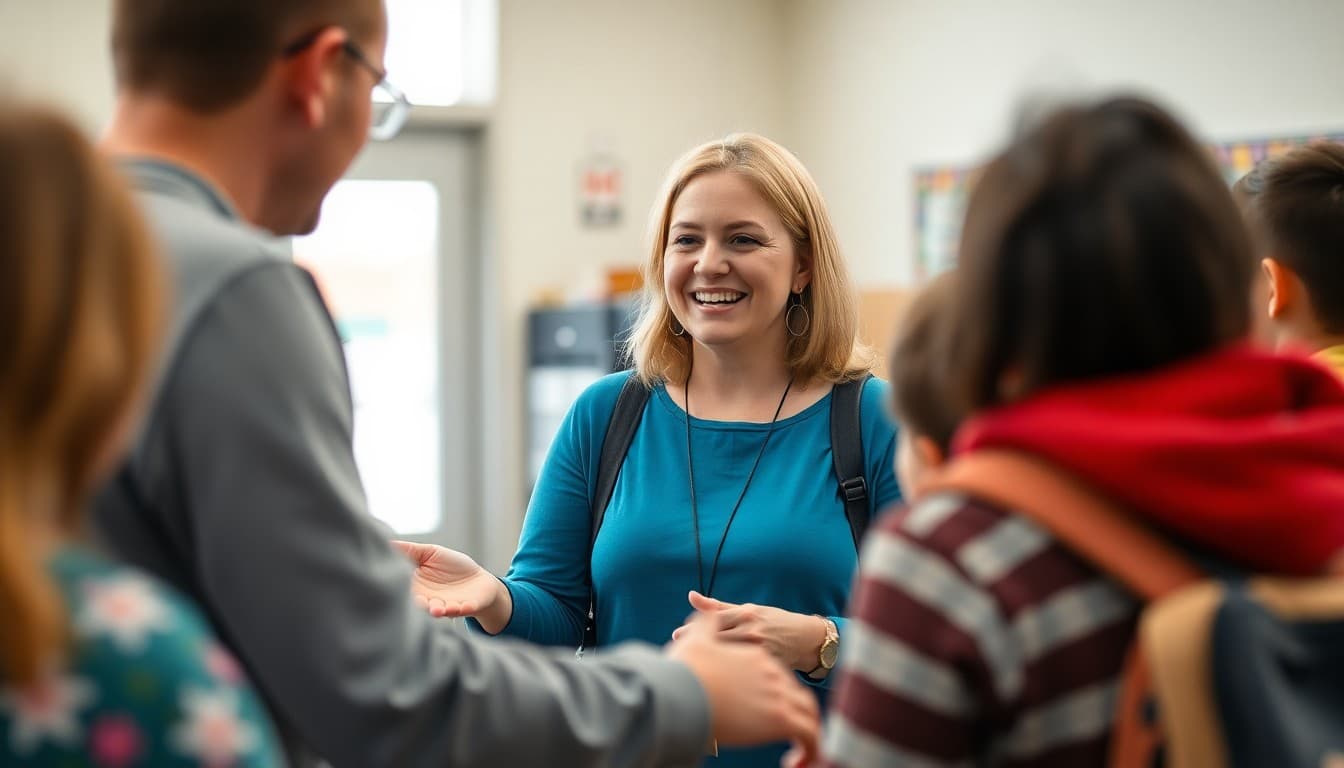
Michigan Elementary School Parent Communication Guide

Michigan elementary schools span Detroit's complex urban educational landscape, the fast-growing Grand Rapids metro, mid-sized cities like Lansing, Flint, and Kalamazoo, northern rural communities, and the isolated communities of the Upper Peninsula. Each of these contexts requires a different communication approach, but all share the need for consistency, honesty, and genuine family partnership.
Communicate About Michigan's Read by Third Grade Policy
Michigan law requires elementary schools to communicate proactively about early reading development. If a student in kindergarten through third grade is not making adequate reading progress, families must be notified in writing within 30 days of assessment. Teachers must create reading improvement plans for below-grade-level readers, and in some cases, schools must communicate about the possibility of third-grade retention. Elementary teachers at K-3 levels should communicate regularly about reading progress, what the school is doing to support all readers, and what families can do at home. Waiting until a required notification to communicate about reading struggles creates crisis rather than partnership.
Prepare Families for Lake-Effect Snow and Closures
Communities near Lake Michigan (from New Buffalo to Petoskey and beyond) and communities in the Upper Peninsula near Lake Superior experience intense lake-effect snowfall that can dump feet of snow overnight. School closure communication in these communities needs to be fast and multi-channel: text alerts, local radio, school websites, and phone trees all matter when families may lose power during the same storm that closes school. Include closure protocol information in the September newsletter for all Michigan schools, and revisit it in November before the worst of the winter begins.
Cover the M-STEP Testing Schedule
Michigan uses the M-STEP (Michigan Student Test of Educational Progress) in spring for grades 3 through 8 in ELA, mathematics, social studies, and science. Elementary families benefit from knowing which subjects are tested at their child's grade level, when the testing window opens, and how scores are reported and used. Michigan also uses the Early Literacy and Mathematics Benchmark Assessments (ELMA) for early elementary grades. A newsletter that explains both assessments helps families understand the complete picture of how their child's progress is measured.
A Template for Michigan Elementary Newsletters
Here is a practical template for Michigan elementary classrooms:
"Dear [CLASS] families. This week: [2-3 UPDATES]. We are working on [ACADEMIC FOCUS] in class. [IF K-3: A note on reading: your child is currently [PROGRESS DESCRIPTOR]. The best thing you can do at home is [SPECIFIC READING ACTIVITY].] Try at home: [ONE ACTIVITY]. Important dates: [DATES]. Weather closures: [SYSTEM AND CHANNELS]. Questions? [CONTACT INFO]."
The reading note is specific to Michigan's Read by Third Grade law and should appear in every K-3 newsletter, keeping reading progress visible to families throughout the year.
Communicate With Dearborn's Arab American Families
Dearborn and Dearborn Heights have the largest Arab American community in the United States, with significant Lebanese, Yemeni, Iraqi, and other Arab populations. Elementary schools in these communities should provide Arabic-language translations of key communications, schedule family events with awareness of Islamic prayer times and Ramadan, and build genuine relationships with community organizations and mosques that serve these families. Cultural sensitivity is not a special accommodation here. It is baseline professional practice for any Dearborn elementary teacher.
Support Detroit's School Choice Navigation
Detroit families navigate one of the most complex school choice landscapes in the country, with traditional public schools, charter schools, and Schools of Choice enrollment all competing for students. Elementary schools that communicate clearly about their academic programs, school culture, and student outcomes build the family loyalty that reduces the annual enrollment uncertainty that affects Detroit schools. Transparent, specific communication about what makes your school distinctive is the most practical retention strategy available.
Acknowledge Michigan's Natural Environment
Michigan has 3,288 miles of freshwater coastline and more than 11,000 lakes. This extraordinary natural environment is an educational resource that elementary newsletters can connect to classroom learning. A science unit on freshwater ecosystems becomes more immediate when students can relate it to the lake or river near their school. A brief "Michigan Connection" in each science newsletter builds state pride and environmental literacy simultaneously, making learning feel grounded in the specific place students live.
Build Consistent Communication Habits
Michigan elementary teachers who communicate consistently throughout the school year build families who are informed, engaged, and more likely to remain enrolled. Daystage makes this habit achievable by keeping the creation process fast, which matters in Michigan's demanding school environment where teachers in Detroit and in rural UP communities alike wear many hats and have limited time for non-instructional tasks.
Get one newsletter idea every week.
Free. For teachers. No spam.
Frequently asked questions
What are the key considerations for parent communication in Michigan elementary schools?
Michigan has significant geographic and demographic diversity: Detroit is one of the largest majority-Black cities in the country with a complex school landscape including traditional public schools, charter schools, and Schools of Choice open enrollment. The Grand Rapids metro area is growing and diverse. Northern Michigan has small rural communities with tight social networks, and the UP (Upper Peninsula) has extremely rural schools with unique challenges. Communication strategies should reflect this diversity rather than applying a statewide template.
What state-specific topics should Michigan elementary newsletters address?
Michigan elementary newsletters should cover the M-STEP (Michigan Student Test of Educational Progress) testing schedule in spring, lake-effect snow closure protocols for communities near Lake Michigan and Lake Superior, the Michigan Read by Third Grade policy (which affects communication about early reading), and any updates related to Michigan's substantial charter school sector. The Flint water crisis has also created specific communication obligations for schools in affected areas around water quality and lead testing.
How does Michigan's Read by Third Grade law affect elementary communication?
Michigan's Read by Third Grade law requires schools to identify students reading below grade level and notify families, create reading improvement plans for struggling readers, and, in certain circumstances, retain students who do not demonstrate reading proficiency by the end of third grade. Elementary teachers in Michigan, particularly at grades K through 3, have specific legal communication obligations around reading progress. Clear, early, and ongoing communication about reading development prevents the shock families experience when they first learn about potential retention.
How do Michigan elementary schools communicate with Detroit's diverse families?
Detroit Public Schools Community District serves a predominantly Black student population with families who have experienced decades of school system instability, closures, and quality challenges. Building trust through consistent, honest communication is foundational. Spanish-speaking families in southwest Detroit (Mexicantown neighborhood) need Spanish-language communications. Arab American families in Dearborn (the largest Arab American community in the US) need culturally sensitive communication that may include Arabic translation for key documents.
What tool do Michigan elementary teachers use to send newsletters to families?
Daystage works well for Michigan elementary schools from Detroit to Traverse City to the UP. Teachers can send professional newsletters by class or grade, include photos and event details, and reach families on any device. For Michigan's diverse school landscape, the platform's ability to accommodate multilingual content and reach families without requiring a separate app download makes it practical across very different community contexts.

Adi Ackerman
Author
Adi Ackerman is a former classroom teacher and curriculum writer with 8 years in K-8 schools. She writes about school communication, parent engagement, and what actually works in real classrooms.
More for Elementary
Ready to send your first newsletter?
3 newsletters free. No credit card. First one ready in under 5 minutes.
Get started free