
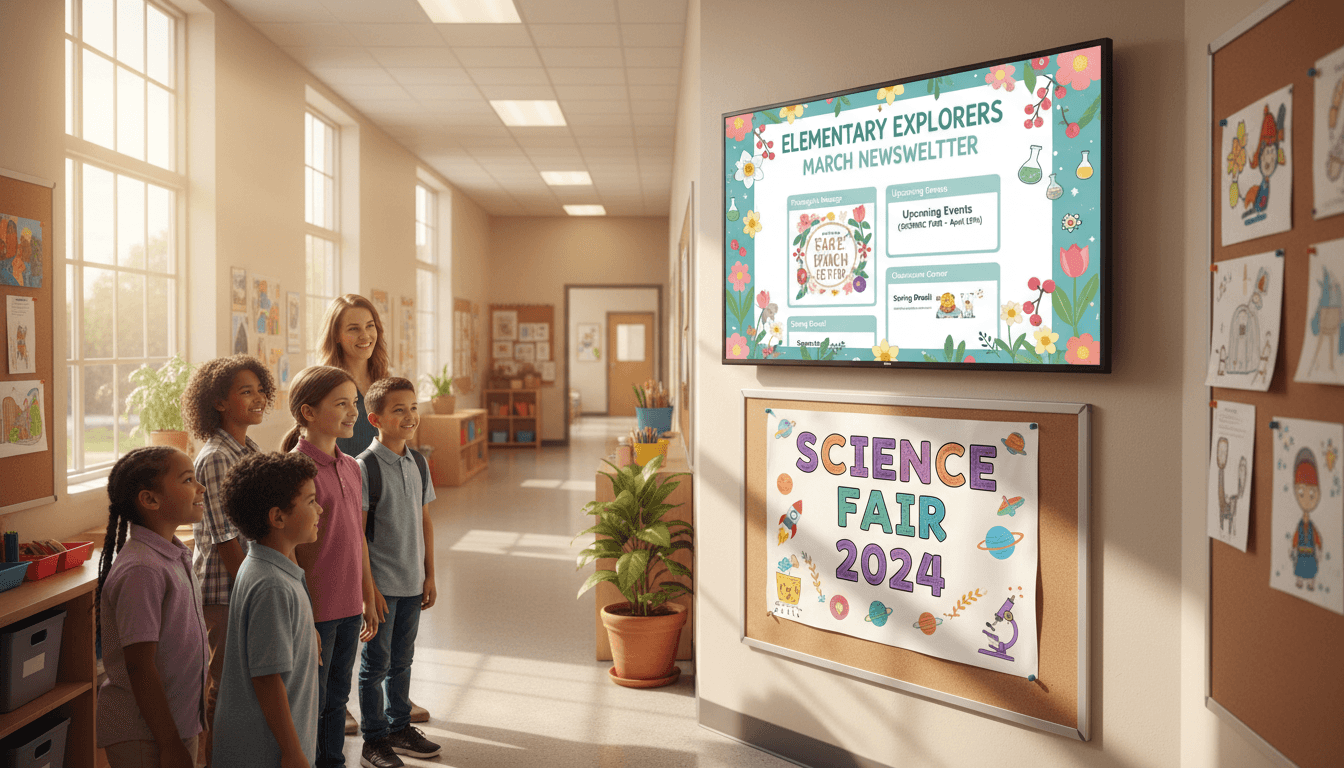
March Newsletter Template for Elementary School Parents
March is a transitional month in most elementary schools. National Reading Month is closing out, state testing is either underway or looming, and spring break is somewhere in the middle creating a planning gap that catches families off guard every year. A well-timed March newsletter handles all three and sets families up for Q4.
This template covers the sections that matter most in March. Adapt the specifics to your school calendar and testing schedule.
Opening: What March Looks Like for Our Class
Start with the two or three things that actually require family awareness this month. March tends to have more competing priorities than any other single month: spring break, testing, science fair, reading month close-out, and end-of-Q3 grades. Your opening paragraph sets expectations so nothing lands as a surprise.
Sample opening: "March is a big month. Spring break runs March 17-21, state testing begins March 31st, and we are wrapping up our National Reading Month challenge on March 28th. Details on each are below. Please read the testing section carefully as attendance during that week is important."
Spring Break: Dates, Policies, and What to Expect
State the exact first and last day of break and the return date. If your school has enrichment programs or childcare over break, include where families can find sign-up information. If homework expectations change during break, say so directly.
For reading: if your school has an ongoing reading log or challenge, clarify whether it continues over break. Something like: "Our reading log continues over spring break. Students are encouraged to read for 15 minutes a day. This does count toward our March total, which closes on the 28th." That one sentence removes ambiguity for every family.
State Testing: What Parents Need to Know
This is the most important section of the March newsletter for many elementary grades. Testing windows for STAAR, ILEARN, FSA, PARCC, and similar assessments often fall in late March or April. Families need the dates and a clear request from you.
Cover three things: when testing happens, what the assessment measures, and what you need from families. Example: "Our state ELA assessment runs from March 31st to April 2nd during the morning session. Please make sure your child arrives on time, has eaten breakfast, and gets a full night of sleep during that week. If you have a scheduled appointment or trip during those dates, please contact the front office as soon as possible. These assessments cannot be made up on an alternate schedule."
National Reading Month Close: Results and Recognition
If your class ran a February or March reading challenge, March is the month to share results and recognize student effort before the challenge closes. Families who participated want to know whether the class hit its goal and how their child's participation contributed.
Keep it specific: "As of March 10th, our class has logged 423 minutes toward our 500-minute goal. We have 18 days left. Our top five readers this month will be recognized at our Friday morning meeting on March 28th. Thank you for supporting this at home." That level of detail makes the reading challenge feel real rather than administrative.
Spring Science: What We Are Exploring This Month
March is one of the best months for life science and earth science in elementary grades. Plant life cycles, weather patterns, and ecosystems connect directly to what is happening outside. Tell families what your class is working on and how they can reinforce it at home.
Example: "We are starting our plant life cycle unit this week. Students will plant bean seeds in cups and observe germination over two weeks. You can support this at home by asking your child to describe the four stages of a plant life cycle: seed, germination, growth, and reproduction. We will also take a short nature walk around campus the week of March 24th to observe early signs of spring."
St. Patrick's Day Projects and March Seasonal Work
March seasonal projects work best when they are tied to real academic skills. A leprechaun trap engineering challenge builds measurement, force, and design-thinking concepts. A writing prompt asking students to defend whether luck is real or just preparation uses opinion writing skills. Let families know what you are doing and, if there are materials involved, what you need from them and by when.
Example: "On March 14th, we will do a leprechaun trap engineering challenge. Each student will design and build a trap using only classroom supplies. No materials needed from home for this one. Students will write a design plan beforehand explaining their strategy, which connects to our opinion writing unit."
Q3 Grades and What Parents Should Watch For
The end of Q3 is approaching in most March calendars. Families whose children are struggling need to hear from you before the report card, not with it. Use a brief newsletter section to flag that Q3 grades close soon and invite families to reach out if they have concerns.
Try: "Third quarter ends on March 28th. Report cards will be distributed April 11th. If you have concerns about your child's progress in any area, please contact me before spring break so we can connect. Missing assignments for Q3 can be submitted through March 25th. After that date, grades are final for this quarter."
March Events and Dates
Close with a clean list of dates. March typically includes spring break, testing windows, reading challenge deadlines, and any seasonal classroom events. List only the dates that require family awareness or action.
Sample dates: March 14 (leprechaun trap challenge), March 17-21 (spring break, no school), March 24 (students return), March 28 (reading challenge closes, Q3 ends), March 31 (state testing begins). Confirm with your school calendar before sending.
Get one newsletter idea every week.
Free. For teachers. No spam.
Frequently asked questions
What should an elementary school March newsletter include?
March newsletters need to cover spring break logistics, any state or standardized testing that runs in March or April, and whatever academic push is underway before the end of Q3. Teachers also use March to spotlight National Reading Month results and introduce spring science or social studies projects. If your school has a science fair or spring book fair, this is the month to give families the details they need to help students prepare.
How do I prepare families for spring testing in the newsletter?
Give families the testing window dates, the name of the assessment, and what it measures. Then explain what you are asking of families specifically: good sleep, breakfast, attendance during the testing window, and minimal schedule disruptions. Parents who understand why attendance matters during testing week are far more likely to reschedule non-urgent appointments. Keep your tone matter-of-fact rather than alarm-raising.
How do I communicate spring break policies without creating confusion?
State the first and last days of spring break and the return date clearly. If your school has extended care options, note where families can find that information. If homework or reading expectations change over break, be explicit: either there is reading homework or there is not. Vague language like 'encourage reading over break' leads half the class to do nothing and half to stress about how much. Pick a side and state it clearly.
What St. Patrick's Day or March seasonal content works well in a classroom newsletter?
Classroom projects connected to March themes work well when they are tied to real academic skills. A leprechaun trap engineering challenge builds on design thinking. A writing prompt about luck or perspective ties to opinion writing. A spring nature walk connected to life science standards gives families a concrete activity. In the newsletter, explain what the project is, the skill it builds, and any materials families need to contribute before a specific date.
What is the best newsletter tool for elementary schools sending March updates?
Daystage lets elementary teachers send monthly newsletters that cover testing prep, spring break details, and project information in one well-formatted message. Teachers build the newsletter in a visual editor, include event dates and reminders, and send directly to family email addresses. Because the newsletter arrives in email rather than a physical backpack folder, families are more likely to see testing window dates and spring break schedules before the week they happen.

Adi Ackerman
Author
Adi Ackerman is a former classroom teacher and curriculum writer with 8 years in K-8 schools. She writes about school communication, parent engagement, and what actually works in real classrooms.
More for Elementary
Ready to send your first newsletter?
3 newsletters free. No credit card. First one ready in under 5 minutes.
Get started free