
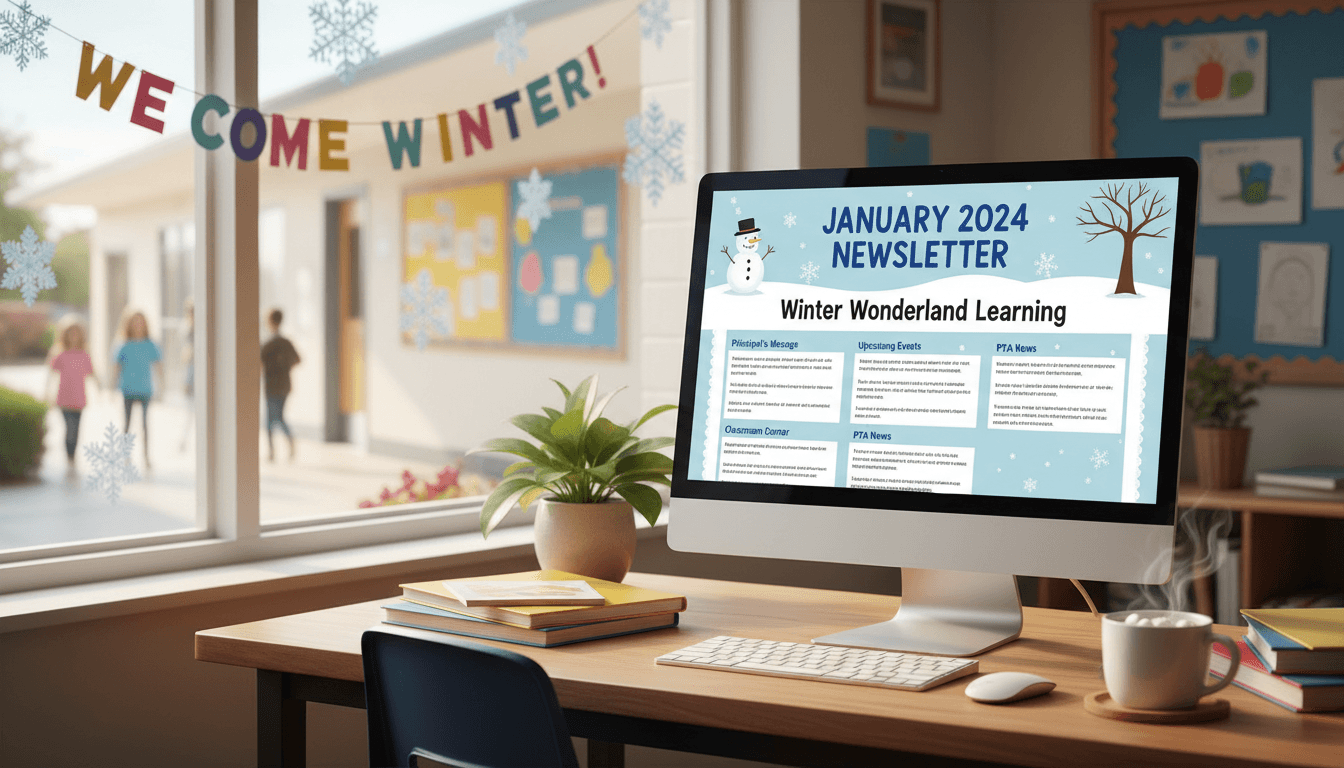
January Newsletter Template for Elementary School Parents
January is the newsletter that gets skipped most often. The holidays just ended, families are still finding their rhythm, and teachers are buried in grade reporting. But January is actually the month when a good newsletter matters most. Expectations reset, assessments begin, and families who stay informed in January are the ones who show up prepared for spring conferences.
This template gives you a complete January newsletter you can adapt in under an hour. Use it as-is, swap in your own details, and send it before the second week of January wraps up.
Opening: Welcome Back and What Changed
Start by acknowledging the transition. Parents have spent two weeks out of school mode. A short welcome-back paragraph sets the tone and gives families a reason to keep reading. Mention one thing that is different in the second half of the year. Maybe your reading groups reorganized. Maybe you shifted from addition to multiplication. Maybe a new student joined the class. Specific details signal that this newsletter is worth reading, not just a forwarded template.
Sample opening: "Welcome back to Room 14. We had a great first day on January 6th and students jumped right back into our routines. This semester we are moving into multiplication in math and starting our informational writing unit. A few things to know for January are listed below."
Curriculum Snapshot: What We Are Working On This Month
Give a two or three sentence summary of what students are learning in each core subject. Families do not need deep lesson detail, but they should be able to ask their child one informed question at dinner. For reading, mention the current genre or skill focus. For math, state the unit. For science or social studies, name the topic.
January curriculum snapshot example: "Reading: We are working on identifying main idea and supporting details in nonfiction texts. Math: We began our multiplication unit starting with equal groups and arrays. Science: We are finishing our weather unit with a focus on how air pressure causes wind."
Winter Assessments: What Parents Need to Know
January is mid-year benchmark season for most elementary schools. The DIBELS, iReady, Fountas and Pinnell, or MAP assessments that run in late January and early February are often the most important data point of the year because they determine intervention groupings for the second half.
In your newsletter, explain what you are assessing, when it happens, and what you will do with the results. Keep it factual. Something like: "We will complete our mid-year reading fluency benchmark the week of January 20th. Results will be shared at our February conferences and will help me finalize small group assignments." That framing removes anxiety and tells families what to expect next.
Attendance: Why January Matters
Cold and flu season peaks in January and February. This is also when chronic absenteeism starts compounding. A student who was moderately absent in September and October is now sitting on 12 or 15 missed days, and another stretch in January can push them into high-risk territory for third-grade reading benchmarks.
Your newsletter does not need to lecture families. A short, factual note works: "January assessments are happening the week of January 20th. Students who are present that week will have the best picture of where they are and what support they need. If your child will be out for a planned trip, please let me know in advance so we can arrange make-up work." That is the whole message families need.
Goal-Setting Section: A Prompt for Home Conversations
One of the most effective things a January newsletter can do is give families a single conversation prompt. You do not need a full goal-setting framework. One question does the work.
Try this: "This week, ask your child: what is one thing you want to get better at before spring break? Write it down together and put it somewhere visible. We did this activity in class too, and I would love to hear what your child chose." That prompt connects what happened in school to what happens at home, which is exactly what parent newsletters are for.
Indoor Recess and Cold Weather Policies
January is also the month when parents start asking about outdoor recess rules. Clarify your school policy in one sentence so families know when to send coats, snow boots, or snow pants. For example: "We go outside for recess when the temperature is above 20 degrees Fahrenheit. Please send your child with a coat, hat, and gloves on cold days. If your child cannot go outside due to illness, send a note so we can make indoor arrangements."
This avoids the string of daily emails you would otherwise get in February.
Upcoming Events and Dates
Keep this section tight. List four to six dates with short labels. January typically includes: the return from winter break, an early release day, MLK Day, mid-year benchmark testing, and the start of report card preparation. If your school has a winter spirit week, science fair kickoff, or parent information night this month, include those too.
January events to consider listing: January 6 (first day back), January 20 (MLK Day, no school), January 20-24 (benchmark testing week), January 31 (early release, report cards distributed). Always confirm your dates with the school calendar before sending.
Closing: How to Reach You
End every January newsletter with your contact information and preferred communication channel. If families should email you, say so. If they should use the school's messaging app, say that instead. January is when new families sometimes join the class or families from the fall reconnect after the holiday, so a clear closing removes any barrier to getting in touch.
A simple close: "Questions? Reach me at room14@lincolnelementary.org. I check email daily before 4pm. Looking forward to a strong second semester with your children."
Get one newsletter idea every week.
Free. For teachers. No spam.
Frequently asked questions
What should an elementary school January newsletter include?
A January newsletter should address the reset that comes with a new semester: updated behavior expectations, any curriculum shifts, indoor recess policies for cold weather, and the first round of winter assessments. Parents are often surprised when grades dip in January because teachers are measuring skills mid-year rather than reviewing material. A brief explanation in the newsletter helps families understand what their child will be working toward in the coming weeks.
How do I address winter attendance issues in my January newsletter?
Be direct. State your attendance policy, then explain why consistent attendance matters in January specifically. Winter assessments often happen in late January or early February, and students who miss four or five days during this window can fall behind on benchmarks used to assign interventions. Offer a clear contact process for planned absences and remind families what work is available on your class website or communication platform.
Should I include goal-setting activities in a January newsletter?
Yes, and parents appreciate specific suggestions rather than a general note to set goals. Share what goal your class is working on together as a group, then offer one or two prompts families can use at home. A sample prompt might be: ask your child what one reading skill they want to improve before spring break. That level of detail turns the newsletter into a conversation starter rather than a document families file away.
How do I communicate winter assessment schedules without stressing parents out?
Lead with purpose: explain what the assessment measures and how the data will be used. For example, if you administer a reading fluency check in late January, tell families the score informs your small group assignments for February and March, not their child's grade. Most parent anxiety around testing comes from not understanding what the results mean, so a plain-language explanation in the newsletter does most of the work.
What is the best newsletter tool for elementary schools sending January updates?
Daystage helps elementary schools build and send monthly newsletters that look polished without taking hours to put together. You set up your January template once, drop in your event dates and assessment reminders, and send directly to family email inboxes. The platform shows you open rates so you know which families are getting your updates and which might need a follow-up call instead.

Adi Ackerman
Author
Adi Ackerman is a former classroom teacher and curriculum writer with 8 years in K-8 schools. She writes about school communication, parent engagement, and what actually works in real classrooms.
More for Elementary
Ready to send your first newsletter?
3 newsletters free. No credit card. First one ready in under 5 minutes.
Get started free