
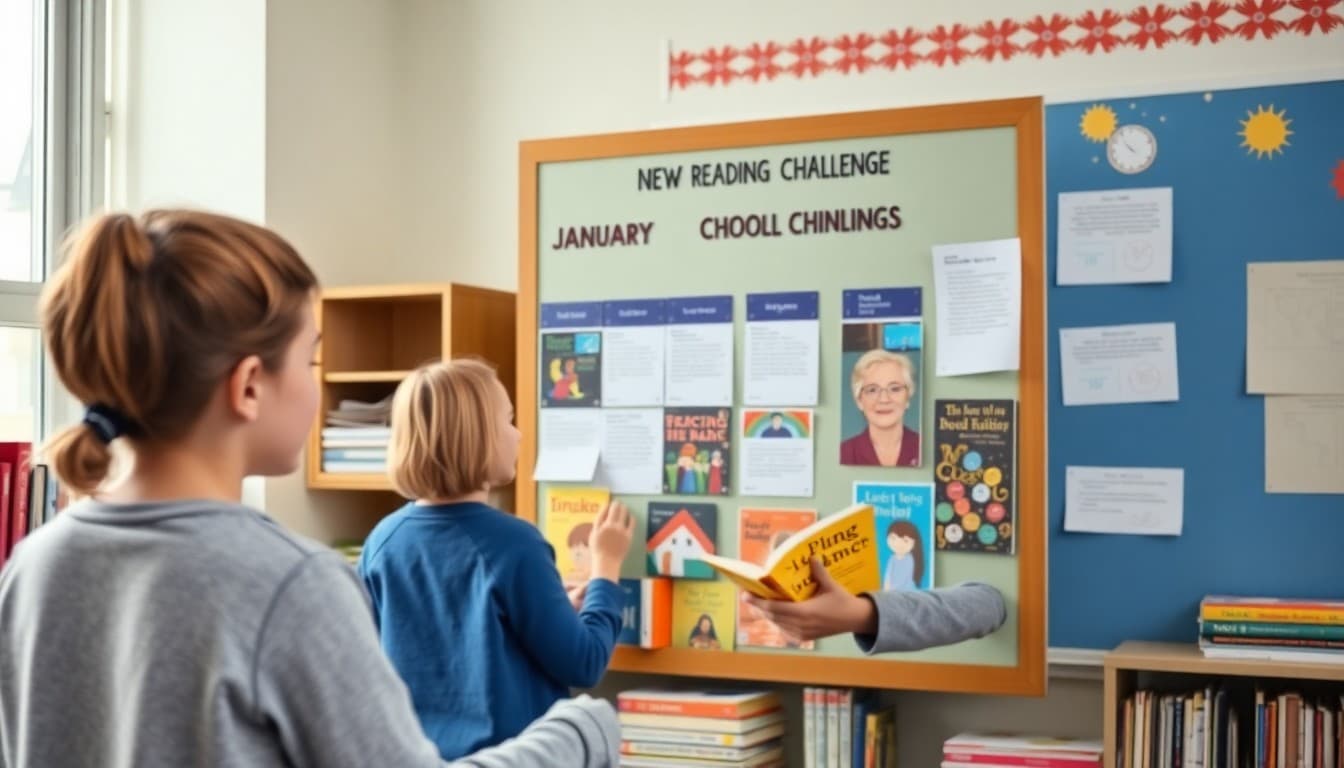
January School Librarian Newsletter to Launch New Semester Reading
January is one of the best months to launch or renew a reading initiative. Families are in fresh-start mode, students are back in the library routine, and the long winter months ahead give reading a natural edge over outdoor alternatives. Your January newsletter is the spark.
Launch or relaunch your reading challenge
If your school runs a semester-based or year-long reading challenge, January is the reset point. Announce the challenge with specifics that families can act on immediately: what students track, how they log reading time or books, what milestones earn recognition, and how families can participate at home. A reading challenge that parents understand doubles the home participation rate. One concrete example: "Our Spring Reading Challenge runs February 1 through May 15. Students track their reading minutes on a log sheet in their library folder. Students who reach 1,000 minutes get a recognition certificate and a special library activity. Families who read alongside their child can track time too."
Share January book recommendations
Winter reading needs books that are hard to put down. For January, focus on adventure, survival, and mystery series that create urgency. A few that work across age ranges: "I Survived" series for grades 2-4, "Hatchet" for grades 4-6, "Ranger's Apprentice" for grades 5-7. For picture book lovers, winter-themed read-alouds give the season a literary anchor. One recommendation per age group, with a honest one-line description, is better than an exhaustive list.
Address the new devices and screen balance conversation
Many students returned from winter break with new tablets, gaming systems, or phones. The reading habit can slip fast when a more stimulating alternative is available. A brief, practical note for families: "If your child got new devices over the holiday, now is the time to set a reading routine before the device routine solidifies. Try 20 minutes of reading before any screen time, once a day. It takes about two weeks to become automatic."
Remind families about digital library access
Students who discovered your library's digital platform over break are now library converts. Make sure all families know how to access ebooks and audiobooks from home. Include platform name, login URL, and credentials in three sentences. January is when this reminder gets the most use because families are fresh from break and in the mood for something to read.
Describe your January library class focus
Give families a brief window into what is happening in library classes this month. If you are teaching information literacy or research skills, connect it to what students are working on in class. "I am teaching 3rd and 4th graders how to evaluate whether a website is trustworthy this month. We use three questions: who made this, when was it updated, and why did they make it? Ask your child those questions the next time they research something at home."
Preview spring library events
If your school has a spring book fair, author visit, or reading event planned, give families an early preview with the date and one compelling detail. Early awareness drives better attendance than a reminder the week before.
Close with a reading tip families will remember
A January tip that works for most families: "Let your child see you choose a book over your phone at least once this week. Students who see adults choosing to read are more likely to choose it themselves." That is specific, actionable, and true. It is also the kind of insight that parents share with other parents.
Daystage makes your January library newsletter easy to send at the start of the new semester. Build your template with book picks, challenge details, and event previews, and reach every family in one step.
Get one newsletter idea every week.
Free. For teachers. No spam.
Frequently asked questions
What should a school librarian include in a January newsletter?
New reading challenge launch or continuation, January book recommendations that take advantage of winter themes and new year energy, a reading goal activity families can do at home, digital resource reminders now that students are back at school, and a preview of spring library events.
How do I launch a new reading challenge in January through a library newsletter?
Announce the challenge with specific details: what students track, how they log it, what the goal is, and what recognition they receive at milestones. Families who understand the program at the start support it. Families who get a vague 'we have a reading challenge' message do not.
What book recommendations work best for a January library newsletter?
January is a good time for book series that create urgency, adventure stories that are hard to put down in cold weather, and nonfiction books about topics students are studying in science and social studies. Graphic novels are also strong January recommends for reluctant readers who got new devices over the holidays.
How do I address students who got new devices over winter break in a January library newsletter?
Address it directly and without judgment. 'Many students got new devices over the holiday. This is a great time to talk as a family about balanced screen time and what a good reading habit looks like alongside device use.' Then give a specific strategy: 20 minutes of reading before screen time as a daily routine.
What newsletter tool works for school librarians?
Daystage is built for school communicators and works particularly well for librarians who want a clean, visually readable newsletter with embedded book information. You can build your template once and update the book picks and challenge information each month. No technical background required.

Adi Ackerman
Author
Adi Ackerman is a former classroom teacher and curriculum writer with 8 years in K-8 schools. She writes about school communication, parent engagement, and what actually works in real classrooms.
More for Elementary
Ready to send your first newsletter?
3 newsletters free. No credit card. First one ready in under 5 minutes.
Get started free