
Geometry Elementary Newsletter: Learning Updates for Parents

Geometry is the math topic students most often encounter in real life, and the one with the most natural opportunities for hands-on exploration at home. A geometry newsletter that connects classroom concepts to everyday shapes and structures gives families genuine ways to extend the learning without needing worksheets or special materials.
Name the Specific Concepts in Focus
Open with a clear statement of what students are studying. "This month, fourth graders are learning to classify angles as acute, right, or obtuse, and to identify parallel and perpendicular lines in shapes." That level of specificity helps parents recognize the vocabulary when their child uses it at home and know what to look for when checking homework. Vague statements like "we are doing geometry" do not give families enough to work with.
Explain the Vocabulary Students Are Using
Geometry introduces a lot of vocabulary quickly. A brief glossary section in your newsletter serves parents well: "Acute angle: less than 90 degrees. Right angle: exactly 90 degrees. Obtuse angle: more than 90 degrees but less than 180 degrees." If families know the vocabulary, they can have real conversations with their child about the work instead of nodding along without understanding.
Connect Concepts to the Built Environment
Geometry is embedded in buildings, furniture, road signs, and everyday objects. One paragraph showing this connection motivates families to look differently at the world around them: "Right angles appear in every corner of a room. Acute angles show up in roof peaks and slices of pizza. Obtuse angles appear in reclining chairs and the letter V. Asking your child to identify these angles on a walk home from school turns a 10-minute routine into a geometry lesson."
A Hands-On Activity Template
Here is a home activity section you can adapt for your geometry newsletter:
"This week, try an Angle Hunt at home with your child. Grab a piece of paper and write three columns: Acute, Right, Obtuse. Walk through one room of your house and find five angles in furniture, doorframes, or decorations. Categorize each one. Most rooms have all three types. The kitchen and living room tend to have the most variety. This 10-minute activity builds exactly the classification skills we are working on in class."
Adjust the specific concept to match your current unit.
Describe How Geometry is Assessed
Parents sometimes assume geometry tests look like arithmetic tests. Clarify what assessment actually looks like: "Students are assessed on geometry through a combination of identifying shapes and attributes in diagrams, explaining their reasoning in writing, and solving measurement-related problems. The ability to explain why a shape has certain attributes is as important as getting the right answer." This framing prepares parents for the kinds of questions their child will see.
Address Spatial Reasoning Differences
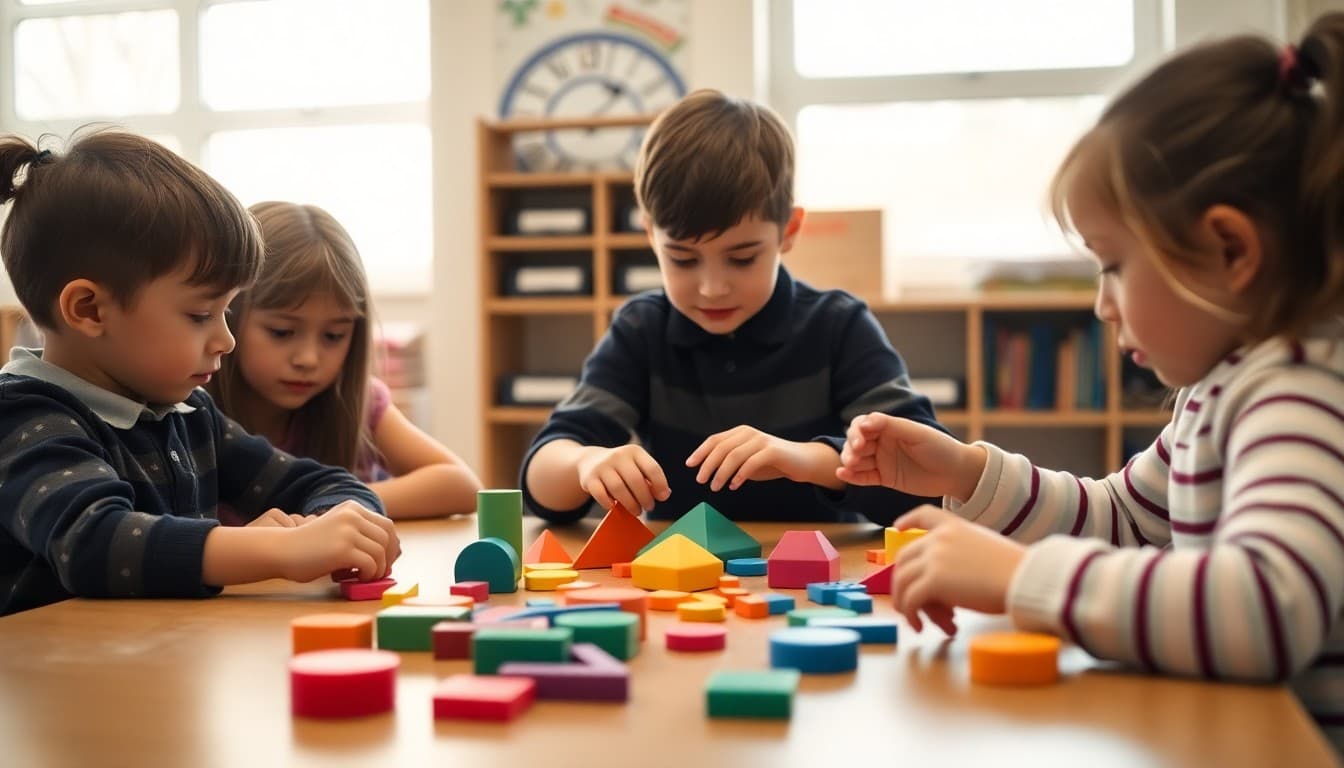
Some students who are strong in arithmetic find geometry challenging because it requires different cognitive skills. Address this directly: "Spatial reasoning, the ability to visualize and mentally manipulate shapes, develops at different rates. If your child finds geometry harder than arithmetic, building with blocks, completing puzzles, or doing origami are excellent ways to develop spatial skills. These are not just toys. They are geometry practice."
Mention Real-World Careers That Use Geometry
A brief connection to careers adds motivation for older elementary students and gives parents a frame for the long-term value: "Architects, engineers, graphic designers, game developers, and surgeons all use geometry daily. The spatial reasoning students build in elementary school is foundational for every field that involves designing, building, or visualizing structures and objects." That context turns geometry from an abstract school subject into a genuinely useful capability.
Preview the Next Geometry Unit
Close with a brief look at what comes next: "After we finish with angles, we move into perimeter and area, where students apply their understanding of shapes to measurement problems. If your child is curious about getting a head start, asking them to measure the perimeter of their bedroom using a ruler or tape measure is a perfect preview activity." Preview activities keep motivated families engaged between newsletter cycles.
Get one newsletter idea every week.
Free. For teachers. No spam.
Frequently asked questions
What should an elementary geometry newsletter cover?
A geometry newsletter should explain the specific shapes or spatial concepts students are studying, how they fit into the grade-level progression, and activities families can do to spot geometry in everyday life. Geometry is one of the most visual and hands-on areas of elementary math, which makes it especially easy to connect to real-world examples that parents and students can explore together.
What geometry topics do elementary students typically study?
In kindergarten and first grade, students identify and sort basic 2D and 3D shapes. Second and third graders learn about attributes of shapes like sides and angles. Fourth graders work with lines, rays, angles, and symmetry. Fifth graders explore coordinate planes and volume of rectangular prisms. A newsletter that names the specific topic in focus and connects it to this progression helps parents understand where their child is in the sequence.
How can families support geometry learning at home?
Geometry is everywhere. Ask your child to find triangles in the kitchen, count the faces on a cereal box, or estimate whether a corner is a right angle, acute angle, or obtuse angle. Building with blocks, origami, and tangram puzzles all build spatial reasoning. The visual nature of geometry makes it one of the easiest subjects to explore informally at home.
Why do some students struggle with geometry even if they are strong at arithmetic?
Geometry requires a different kind of thinking: spatial reasoning rather than numerical computation. Some students who excel at arithmetic find geometry harder because it demands mental rotation, visualization, and classification of attributes. Hands-on activities with physical shapes and building activities help develop spatial reasoning in ways that worksheets alone cannot.
What is a good tool for sending geometry newsletters to elementary parents?
Daystage lets teachers send geometry newsletters with diagrams, activity instructions, and grade-level information in a clean format that families can read on their phone in two minutes. You can build a template for math subject newsletters and reuse it each unit by updating the topic and activities.

Adi Ackerman
Author
Adi Ackerman is a former classroom teacher and curriculum writer with 8 years in K-8 schools. She writes about school communication, parent engagement, and what actually works in real classrooms.
More for Elementary
Ready to send your first newsletter?
3 newsletters free. No credit card. First one ready in under 5 minutes.
Get started free