
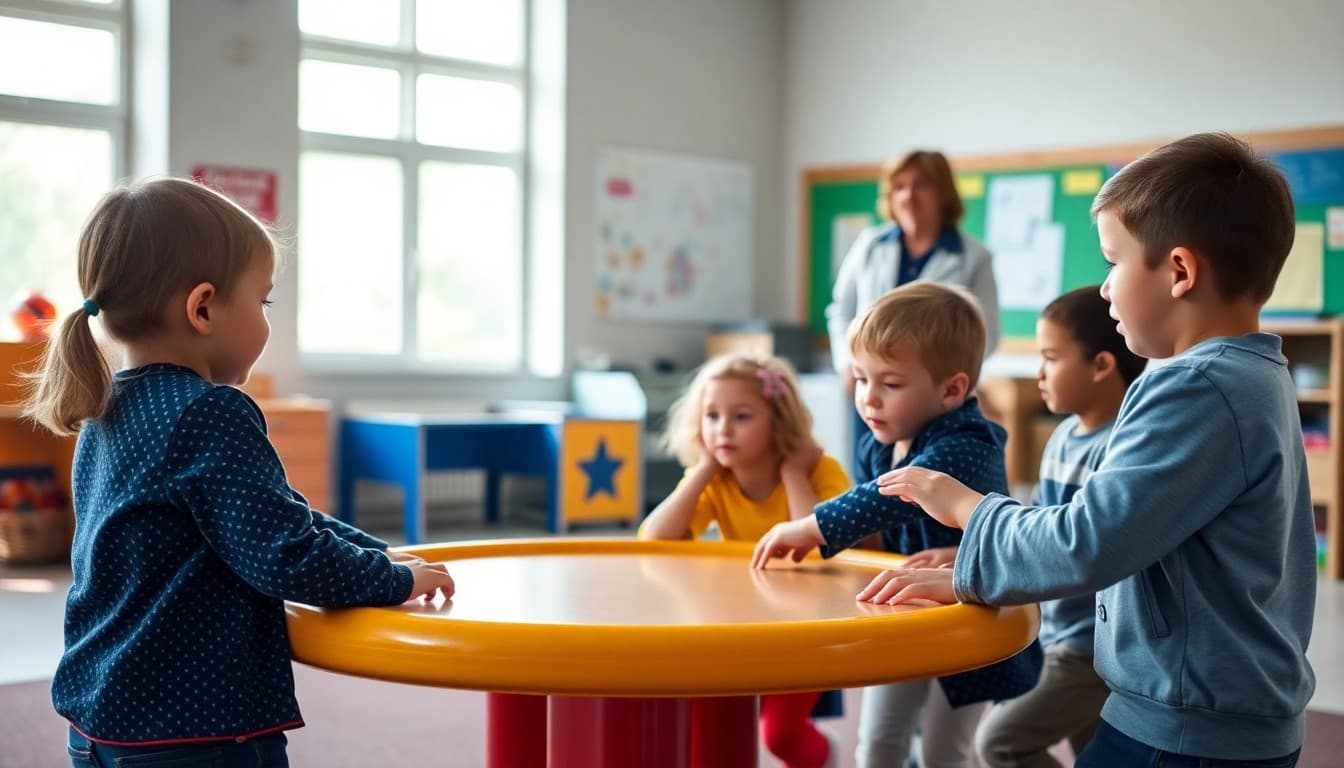
Elementary School Parent Newsletter: Social Skills Support At Home Tips
Social skills do not develop by accident. They develop through intentional practice, feedback, and reflection, and that practice has to happen both at school and at home. A social skills support newsletter bridges the gap between what teachers work on in the classroom and what families reinforce at home. When that bridge is well-built, children develop social competencies faster and maintain them more reliably than when school and home are operating in separate silos. Here is how to build that newsletter effectively.
Name the Social Skills the Class Is Currently Working On
A social skills newsletter that describes the specific competencies the class is currently practicing is far more useful than one that addresses social skills in the abstract. If the class has spent the past two weeks working on strategies for joining a group activity, tell families that. Give them the language the school uses: "entering a group," "making a bid to join," "noticing the social group before joining." When families use the same language and reinforce the same skills at home, children get consistent practice rather than conflicting messages about how to handle social situations.
Offer Specific Conversation Starters for After School
The drive home or the after school snack is one of the most valuable social skills coaching opportunities parents have, and most of them do not realize it. A newsletter that gives parents specific conversation starters for the day's social situations turns that daily check-in into intentional practice. "Ask your child: if someone was trying to join a game today and did not know how, what do you think they should have done?" That question invites the child to reflect on social situations from a perspective-taking standpoint, one of the core social cognition skills at the elementary level.
Normalize Common Social Challenges by Grade Level
Social challenges are not personal failures; they are predictable developmental experiences. Second graders famously struggle with exclusion and "best friend" conflicts. Third graders often experience peer group shifts and identity formation that disrupt previous friendships. Fourth and fifth graders navigate growing awareness of social hierarchy. A newsletter that names these common grade-level challenges, without alarm, helps families recognize what they are observing as normal and understand why the school is addressing it. "Many children in second grade are working through 'you can't come to my birthday party' type conflicts. Here is what we do about them in class, and here is what you can try at home."
A Template Social Skills Newsletter Section
Here is a template for a social skills newsletter section:
"Social skills this month: In class, we are practicing [SPECIFIC SKILL, e.g., entering a peer group without disrupting ongoing play]. To reinforce this at home, try asking: [SPECIFIC CONVERSATION STARTER]. Common social challenge at [GRADE] right now: [BRIEF DESCRIPTION]. One thing you can do at home: [SPECIFIC ACTIVITY OR ROLE PLAY SCENARIO]. If you are seeing social struggles at home that feel significant, please reach out at [CONTACT]. I can share what I am seeing in school and we can think through it together."
Include a Role Play or Practice Activity
Social skills newsletters are most effective when they include something families can actually do together. A brief role play scenario, two or three sentences describing a social situation and asking the child what they would do, gives families a low-effort activity that directly practices the skill the class is working on. "Pretend your sibling or a parent is trying to join your game. Practice saying: 'You can join! I'll show you the rules.'" That kind of at-home practice activity creates real skill development, not just awareness.
Address Conflict Resolution Specifically
Conflict is one of the social areas families most want support with, and most newsletters avoid it because it feels complicated. A newsletter that gives families a simple, three-step conflict resolution framework they can teach at home, matching the school's approach, equips children with a consistent tool rather than having to reinvent the process every time a conflict arises. "Our classroom conflict resolution approach: (1) calm down first, (2) each person states their perspective without interrupting, (3) brainstorm a solution you can both live with. Practice this at home when sibling conflicts come up."
Connect Social Skills to Academic Performance
Many parents do not initially see the connection between social skills and academic outcomes, but the research is clear: children with stronger social skills have better academic engagement, better teacher-student relationships, and better learning outcomes. A newsletter that makes this connection, briefly and without overloading families with research citations, motivates engagement with the social skills content. "Children who can work collaboratively with peers, ask for help when needed, and manage frustration in the classroom spend more of their day actually learning. These social skills directly support everything else we do academically."
Build This Into a Regular Communication Rhythm
Social skills development is not a one-time topic. A monthly social skills section in your newsletter, connected to what the class is practicing that month, builds a year-long home-school partnership around social-emotional development. Daystage makes it practical to include this kind of regular SEL content in your newsletter without it adding significantly to your communication workload each month.
Get one newsletter idea every week.
Free. For teachers. No spam.
Frequently asked questions
What should an elementary school newsletter about social skills support include?
A social skills newsletter should describe the specific social competencies the school is working on, give families concrete at-home conversation starters and activities that reinforce those skills, explain what the school's social-emotional learning program involves, and address common social challenges at the current grade level. The more connected the newsletter is to what the class is actually practicing, the more families can extend and reinforce that learning at home.
How can elementary parents support social skills development at home?
Parents support social skills development most effectively through conversation, role play, and real social practice. Talking through social situations after they happen, asking how the child thinks their friend felt, practicing common social scripts for situations like joining a game or resolving a disagreement, and arranging low-pressure social opportunities like playdates or community activities are all evidence-based approaches. A newsletter that offers specific conversation starters and one or two activities is more useful than general advice to socialize more.
What social skills are most important for elementary school students?
The core social skills at the elementary level include: taking turns in conversation and games, resolving minor conflicts without adult intervention, expressing feelings in words rather than actions, reading basic nonverbal social cues, joining existing social groups appropriately, and offering and receiving help. Different grade levels prioritize different skills, but these fundamentals underlie positive social functioning across the K-5 years. A newsletter that names the specific skills the class is working on gives families a target rather than a vague directive.
How do you communicate about social struggles without stigmatizing individual children?
Newsletters should address common social challenges at the grade level rather than mentioning specific children or situations. Using language like 'many children at this age struggle with...' or 'a common social challenge in second grade is...' normalizes the difficulty without singling anyone out. Families whose children are struggling recognize the description and feel less alone. Families whose children are not struggling learn what to watch for. Everyone benefits from the communication without anyone being identified.
What tool do elementary teachers use to send social skills support newsletters to families?
Daystage is used by K-5 teachers to send polished social-emotional learning newsletters to families quickly and professionally. Teachers can combine a description of the SEL skills the class is working on, specific at-home activities, and age-appropriate conversation starters in one clean newsletter that families can use immediately. The platform makes this kind of thoughtful family communication achievable consistently rather than only when there is extra time in the week.

Adi Ackerman
Author
Adi Ackerman is a former classroom teacher and curriculum writer with 8 years in K-8 schools. She writes about school communication, parent engagement, and what actually works in real classrooms.
More for Elementary
Ready to send your first newsletter?
3 newsletters free. No credit card. First one ready in under 5 minutes.
Get started free