
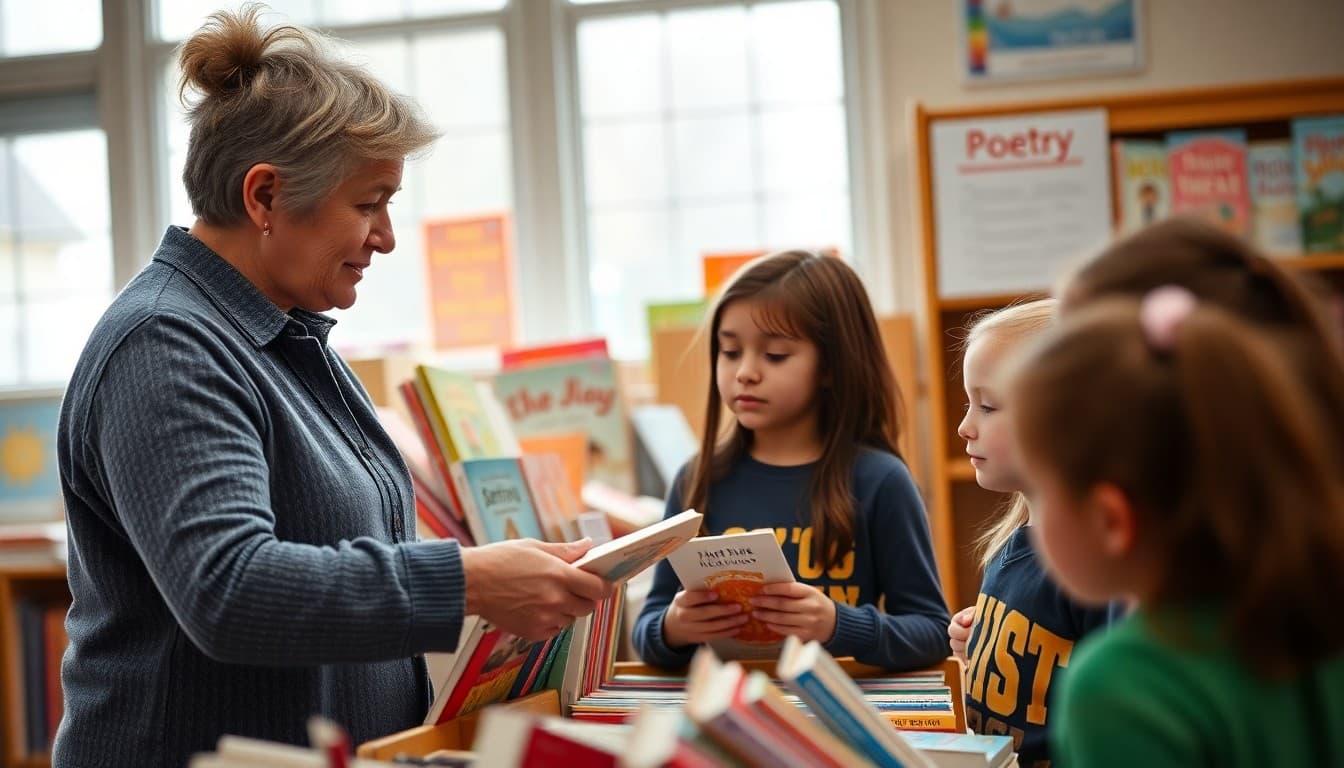
April School Librarian Newsletter: Book Fair, Poetry Month, and Spring Reads
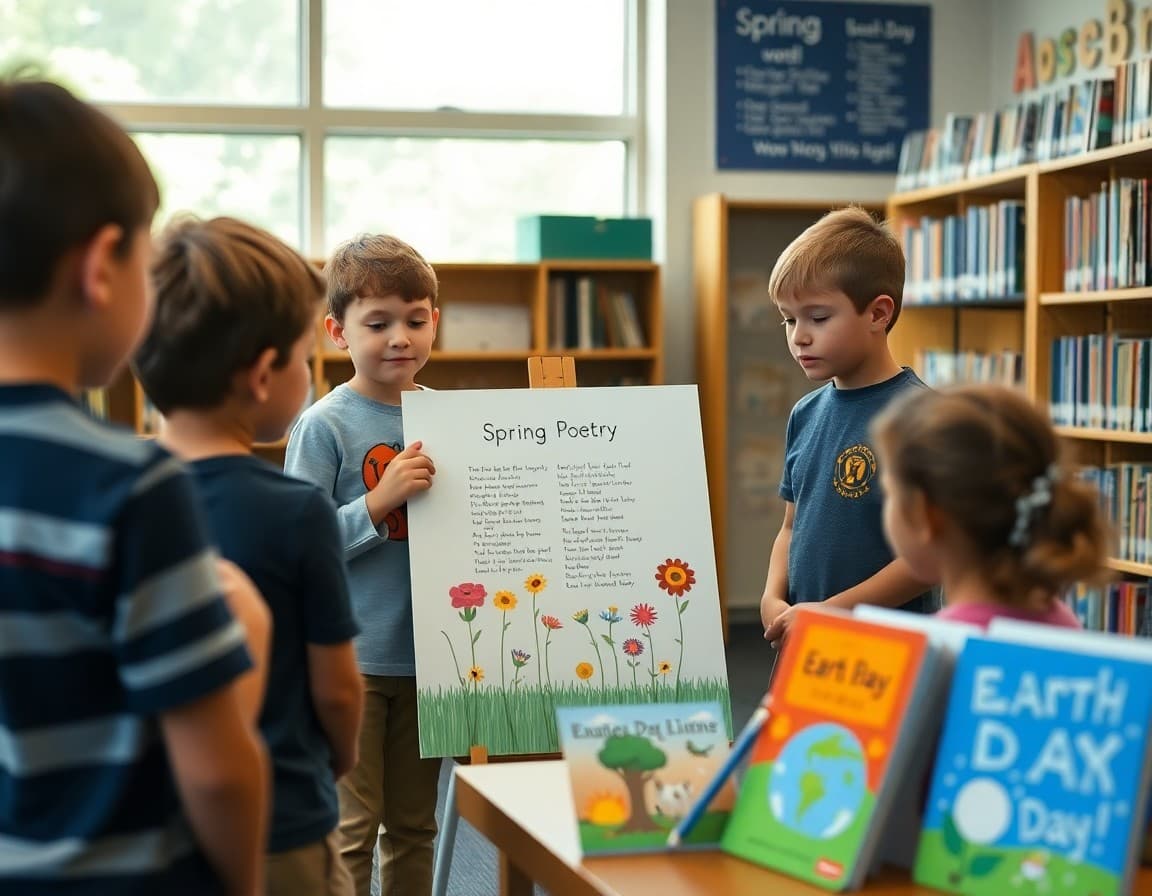
April is one of the richest months in the library calendar. National Poetry Month, Earth Day, spring book fair season, and the final push of the reading year all land in the same four weeks. Your April newsletter uses that density to give families something genuinely useful and something genuinely beautiful.
Celebrate National Poetry Month with a specific poem
Do not describe Poetry Month in general terms. Share a poem. Choose one that your students have responded to enthusiastically this month and quote a few lines or describe what happened when you read it aloud. "Third graders have asked me to read 'Nothing Gold Can Stay' by Robert Frost three times in the past two weeks. Something about the shortness of it lands differently in spring. If you want to read it together at home tonight, it is eleven lines and will take two minutes. The conversation after might take longer." That kind of specific, personal recommendation is what families remember and act on.
Feature spring book fair details if applicable
If your school has a spring book fair, April is when your newsletter does the most promotional work. Give families complete information: dates, hours, payment methods, whether online purchasing is available, and what percentage of proceeds supports the library. A specific impact number from last year converts better than a general statement: "Last year's spring book fair raised $3,200 for the library. We used that money to purchase 180 new titles that students selected." That story motivates families to spend.
Share Earth Day reading picks
Earth Day is April 22. A short list of environmental and nature books by age group is a natural fit for your April newsletter and gives families a reading tie-in to the holiday. A few that work consistently: "A Walk in the Forest" or "The Lorax" for youngest readers. "Wangari's Trees of Peace" by Jeanette Winter for grades 2-4, a true story about a Kenyan woman who led a reforestation movement. "The Wild Robot" by Peter Brown for grades 4-6, which covers nature, survival, and community in a way that generates real conversation.
Make the final reading challenge push
If your reading challenge ends in May or at the school year's close, April is your final push window. Share the current school-wide total, the gap to the goal, and what reaching the goal means. Specific numbers and specific stakes motivate better than general encouragement. "We have read 16,400 minutes school-wide and our goal is 20,000. We need 3,600 more minutes in the next four weeks. That is about 12 minutes of reading per student." Breaking the gap into per-student terms makes it feel achievable.
Preview summer reading
April is when families start thinking about summer. A brief preview of your school's summer reading program, public library summer reading registration, or a recommended summer reading list gives families a plan before the year ends. Families who plan summer reading in April are more likely to follow through than families who think about it in July.
Share what is happening in library classes this month
A brief description of your April library curriculum builds appreciation for the program. If you are doing a poetry unit, research skills, or author study in April, connect it to what students are working on elsewhere.
Close with an April reading invitation
End with something specific and memorable. A poem recommendation, an Earth Day family reading activity, or a simple invitation to visit the library before the book fair ends. April is too good a month to close with a generic thank-you.
Daystage makes your April library newsletter easy to send with book fair details, poetry picks, and reading challenge updates all in one place. Your families will have their Earth Day reading list and book fair preview before the month is half over.
Get one newsletter idea every week.
Free. For teachers. No spam.
Frequently asked questions
What should a school librarian include in an April newsletter?
National Poetry Month celebration ideas and book recommendations, spring book fair details if applicable, Earth Day reading picks, reading challenge final push if the program ends in May, and summer reading preview so families can plan. April has strong content hooks that make it one of the best months for library newsletters.
How do I make National Poetry Month engaging in a library newsletter?
Share one specific poem your students have responded to enthusiastically. Read it aloud in your newsletter by quoting a short excerpt and explaining why it landed. Personal enthusiasm is contagious. A librarian who writes 'students in 3rd grade have been asking to hear this poem again every visit this month' is more compelling than a general poetry month acknowledgment.
What April book fair tips should appear in a library newsletter?
Tell families the dates, times, payment methods accepted, and how to preview titles before the fair. A brief note about how book fair proceeds benefit the library, with the specific dollar amount from last year if you have it, motivates families to spend. Families who know the impact give more.
What Earth Day books work for elementary students in April?
For K-2: 'The Lorax' by Dr. Seuss is classic but 'The Important Book' about nature by Margaret Wise Brown is less expected and equally good. For grades 3-5: 'Wangari's Trees of Peace' by Jeanette Winter is a true story about environmental activism that works for this age group. One specific recommendation per age group is more useful than a list.
What newsletter tool helps school librarians send monthly updates?
Daystage is a school newsletter platform that works well for librarians who want to share book picks, event details, and reading challenge updates in one clean communication each month. Build your template once and update it for April. The open-rate tracking shows you which families are engaged with library news.

Adi Ackerman
Author
Adi Ackerman is a former classroom teacher and curriculum writer with 8 years in K-8 schools. She writes about school communication, parent engagement, and what actually works in real classrooms.
More for Elementary
Ready to send your first newsletter?
3 newsletters free. No credit card. First one ready in under 5 minutes.
Get started free