
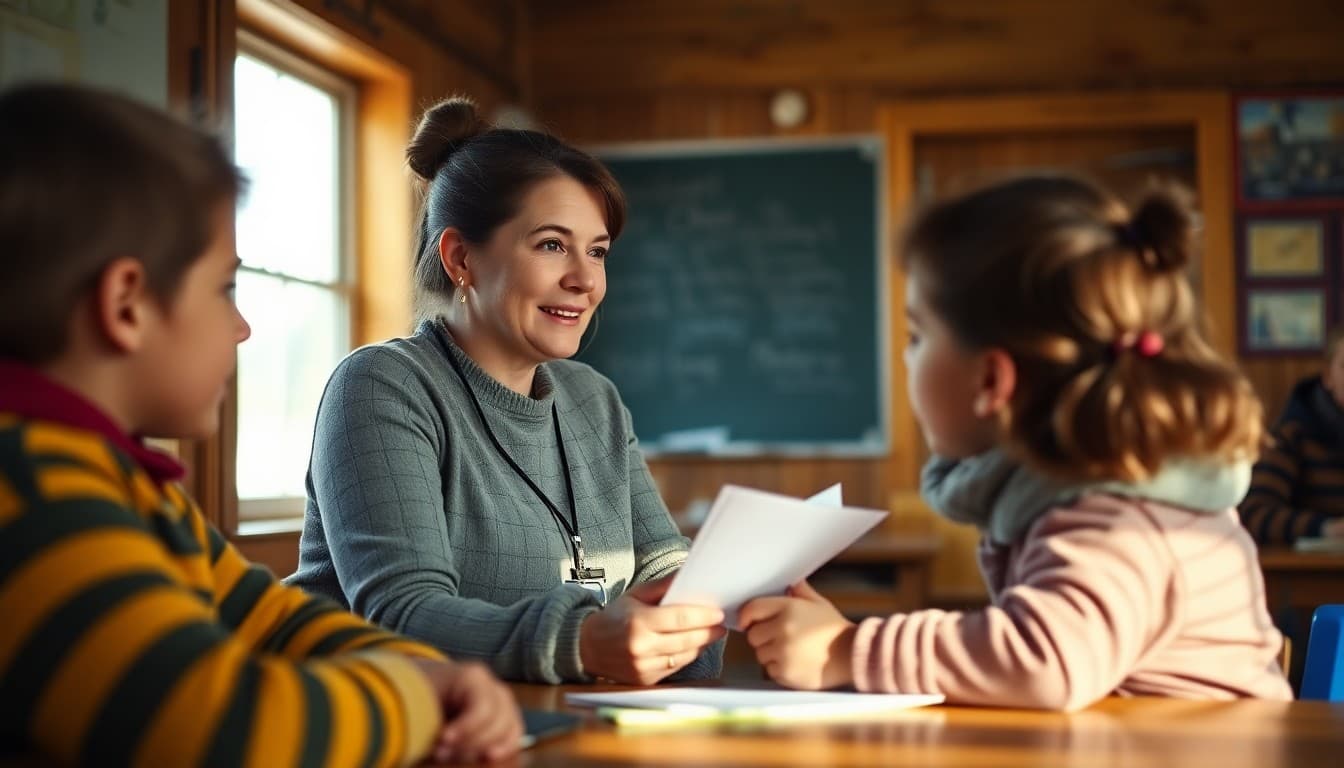
Alaska Elementary School Parent Communication Guide

Alaska elementary schools operate in conditions unlike any other state in the country. Geographic isolation, extreme climate, a rich Alaska Native cultural landscape, and connectivity gaps that can span hundreds of miles make parent communication both more challenging and more important than anywhere else in the US. This guide covers approaches that actually work across Alaska's enormously diverse school communities.
Know Your Community's Reality
Parent communication strategy in Alaska starts with geography and connectivity. An Anchorage elementary school teacher can rely on email, apps, and digital newsletters much like a teacher in any US city. A teacher in a village school in the YK Delta needs a fundamentally different approach: phone calls coordinated through the village council, community board posts, messages relayed through the local store, or announcements at the village gym. Before choosing a communication tool, understand honestly what actually reaches your families.
Respect Subsistence and Cultural Calendars
Alaska Native families structure much of their year around subsistence activities: salmon fishing in summer and fall, hunting in fall and winter, berry picking in late summer, and traditional ceremonies throughout the year. These are not absences from education. They are education of a different kind, and one with deep cultural significance. Elementary school newsletters that acknowledge subsistence seasons, avoid scheduling major events during them when possible, and affirm the value of traditional knowledge build the trust that makes all other communication more effective.
Prepare Families for Extreme Weather Closures
Alaska school closures for extreme cold are common and sometimes sudden. A clear communication protocol in the beginning-of-year newsletter prevents panic: what temperature threshold triggers closure, what radio station and website carries school closure announcements, how quickly families can expect notification, and what to do when notification does not reach them in time. Interior Alaska schools near Fairbanks and Tanana regularly see temperatures below -40 Fahrenheit, where frostbite exposure in minutes makes waiting at a bus stop dangerous.
A Template Suitable for Alaska Elementary Families
Here is a newsletter template designed to work across Alaska's diverse communities:
"Dear [CLASS/GRADE] families. Here is what is happening in school this week: [2-3 EVENTS]. In class, we are working on [ACADEMIC FOCUS]. Something to try at home: [ONE ACTIVITY CONNECTED TO LOCAL ENVIRONMENT OR CULTURE WHEN POSSIBLE]. Important dates: [DATES]. School closure information is available at [LOCAL RADIO STATION] and [SCHOOL WEBSITE]. Contact me at [PHONE AND EMAIL]."
The addition of the school closure information line is specific to Alaska and worth including in every newsletter from September through April.
Address the Alaska Measures of Progress Testing
The AMP (Alaska Measures of Progress) is administered in spring to students in grades 3 through 10. Elementary families benefit from advance notice about the testing window, what the tests cover, how scores are reported, and why attendance during testing matters. Schools should also address how results are used at the state level and what parents can do to support their child's preparation without adding pressure.
Communicate With Military Families at Alaska Posts
Alaska hosts significant military populations at Fort Wainwright in Fairbanks, Joint Base Elmendorf-Richardson in Anchorage, and Eielson Air Force Base near Fairbanks. Elementary schools near these installations serve families who experience frequent moves and deployments. Communication that is accessible and clearly organized helps military families who arrive mid-year get up to speed quickly, and regular newsletters ensure deployed parents stay connected to their child's school life from thousands of miles away.
Support Alaska Native Language Preservation
Alaska has 20 recognized Native languages, several of which have active elementary school immersion programs. For schools with Alaska Native language instruction, newsletters that acknowledge and celebrate language learning, even if written in English, validate the program's importance and encourage family participation. Schools in regions with Alaska Native Language Center-supported programs can reference those resources in family communications to connect home and school language environments.
Build Communication Redundancy
In Alaska, redundancy is not inefficiency. It is survival strategy. A message that goes out via email and text and is also posted on the school's Facebook page and available via a recorded phone message reaches a much higher percentage of Alaska families than any single channel. Village schools that also coordinate with community radio, the local tribe, or the village council are making the smartest possible use of the communication infrastructure they actually have. When Daystage handles digital delivery, the remaining channels become the safety net for families with less reliable connectivity.
Get one newsletter idea every week.
Free. For teachers. No spam.
Frequently asked questions
What makes parent communication in Alaska elementary schools unique?
Alaska has one of the most geographically diverse school populations in the country. Schools range from large urban schools in Anchorage and Fairbanks to remote village schools in the Bush with fewer than 20 students, accessible only by bush plane or snowmobile. Communication strategies must account for limited broadband in rural communities, Alaska Native cultural values around family and education, extreme weather events that cause school closures, and the significant multilingual population including Yup'ik, Inupiaq, Athabascan, and other Alaska Native language speakers.
How do Alaska elementary schools communicate with families in remote villages?
Village schools often rely on phone calls, community radio, local radio broadcasts, and in-person communication through village councils and community centers. Email works where internet access is available, but bandwidth in many rural Alaska communities is limited. Schools in the Yukon-Kuskokwim Delta and rural regions of the Aleutian Islands often coordinate communication through the village store, tribal office, or community health clinic, which serve as informal information hubs.
How should Alaska elementary newsletters address Alaska Native cultural values?
Effective communication with Alaska Native families acknowledges the central role of elders, the importance of subsistence activities like fishing, hunting, and gathering, and the value of place-based and community-based knowledge. Newsletters that reference subsistence seasons, cultural events like potlatches or traditional ceremonies, and the educational value of traditional knowledge show respect for families' lives outside the formal school calendar. Avoiding deficit framing around attendance during subsistence seasons is especially important.
What state-specific topics should Alaska elementary newsletters cover?
Alaska elementary newsletters should address school closure procedures for extreme cold (schools sometimes close below -40 degrees Fahrenheit), the Alaska Measures of Progress (AMP) testing schedule, the impact of subsistence seasons on attendance, state-specific cultural heritage months, and end-of-year events that align with the local community calendar. Northern schools should also cover the impact of continuous daylight or polar darkness on student routines.
What tool works for Alaska elementary schools sending newsletters to families?
Daystage works for Alaska elementary schools in urban and suburban areas with reliable internet access. For village schools with connectivity challenges, a combination of Daystage for digital-connected families and printed summaries or phone chains for others creates the most comprehensive reach. The platform's simplicity makes it practical even in schools where the teacher wears many hats.

Adi Ackerman
Author
Adi Ackerman is a former classroom teacher and curriculum writer with 8 years in K-8 schools. She writes about school communication, parent engagement, and what actually works in real classrooms.
More for Elementary
Ready to send your first newsletter?
3 newsletters free. No credit card. First one ready in under 5 minutes.
Get started free