
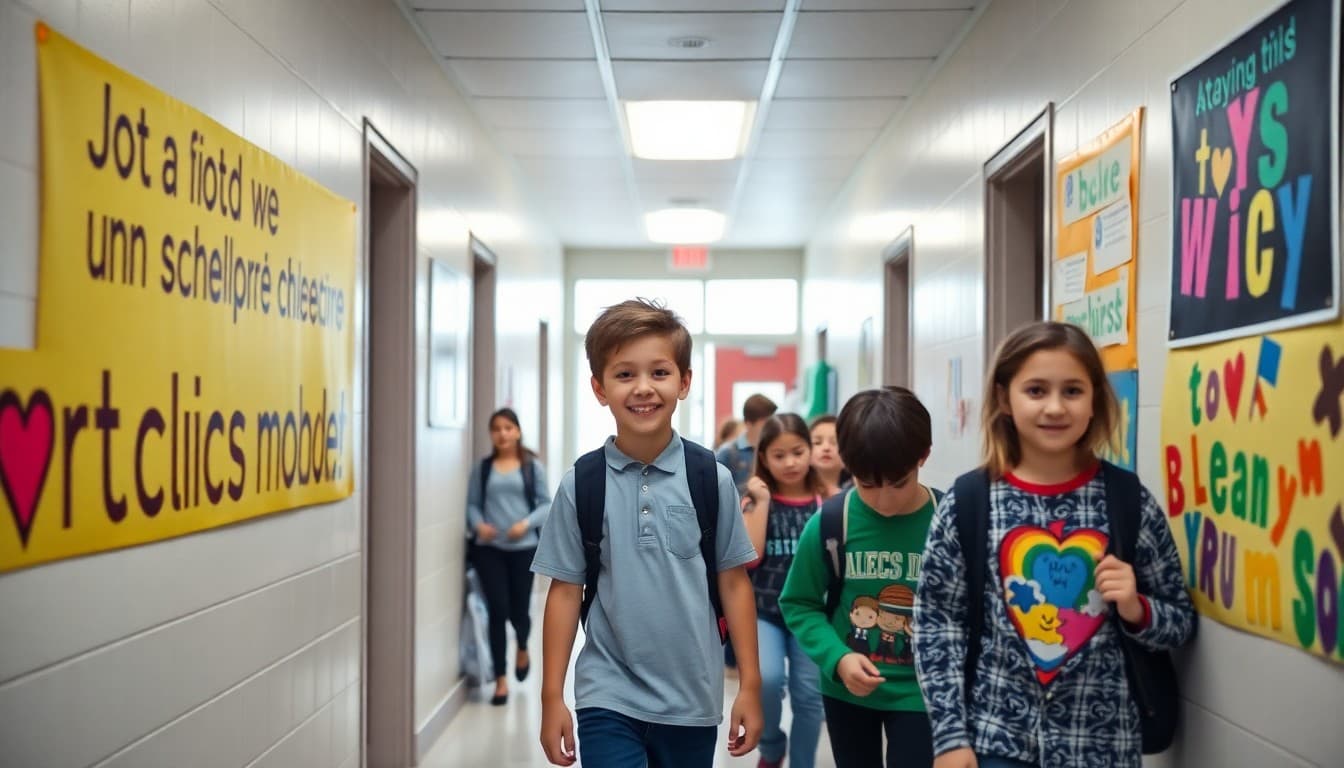
School Newsletter: Supporting LGBTQ Students and Building an Inclusive School

LGBTQ students are more likely to feel unsafe at school, more likely to experience bullying, and more likely to have their mental health affected by their school environment than their peers. Research is also clear about what helps: explicit, visible support from school adults and institutions. This newsletter covers how school communications can be part of that support.
Silence communicates too
A school newsletter that never mentions LGBTQ students or the school's commitment to their safety is not neutral. To an LGBTQ student reading it, it communicates that the school either does not know they exist or does not consider their safety worth mentioning. Explicit communication is not advocacy. It is information about whether this school is safe.
What to include in an LGBTQ inclusion newsletter
Concrete, specific information performs better than general statements. What is the school's GSA or Gender-Sexuality Alliance, and when does it meet? What is the school's policy on students using their preferred name and pronouns? What training have staff completed on LGBTQ issues? What does the anti-harassment policy say and how is it enforced?
A newsletter that answers these questions specifically is more useful to an LGBTQ student or an LGBTQ family than a general statement of welcome.
Language: use the right words
Use the terminology the community uses. LGBTQ+ is broadly accepted and understood. Avoid terms like "sexual preference," which implies choice, or "lifestyle," which trivializes identity. Use "parents and guardians" or "families" rather than "mothers and fathers" to include same-sex parent families.
When writing about a specific student who uses particular pronouns, use them. Deadnaming a transgender student in a newsletter, using their previous name, is a specific harm that can be avoided by having a policy of using the name a student uses at school.

Acknowledge LGBTQ+ Heritage Month and other observances
June is LGBTQ+ Pride Month. October is LGBTQ+ History Month. Spirit Day, in October, is a national awareness day for anti-LGBTQ+ bullying. Including these observances in the school newsletter communicates that the school recognizes LGBTQ+ students as part of the community rather than as a topic to avoid.
Communicate counseling resources specifically
List the specific counseling and mental health resources available at school and in the community that are affirming of LGBTQ+ identities. Include the Trevor Project, GLSEN, and any local resources. An LGBTQ+ student in crisis needs to know where to go, and the newsletter can make that information visible.
Respond directly when bias incidents occur
When an incident involving LGBTQ+ students happens at school, the newsletter is one of the appropriate places to respond. Acknowledge what happened, describe the response, and restate the school's commitment to safety. Silence after a bias incident is a second harm.
Get one newsletter idea every week.
Free. For teachers. No spam.
Frequently asked questions
Why is it important for schools to communicate explicitly about LGBTQ inclusion?
LGBTQ students experience higher rates of bullying, school avoidance, and mental health challenges than their non-LGBTQ peers, and research consistently shows that visible, explicit support from school adults and institutions is among the most protective factors. A school newsletter that communicates LGBTQ inclusion is not making a political statement. It is telling vulnerable students and their families that this school is a safer place than one that stays silent.
What specific programs should schools highlight in LGBTQ inclusion newsletters?
Gender-Sexuality Alliances or student support groups, pronoun and name use policies, staff training on LGBTQ issues, anti-harassment policies and their enforcement, and counseling resources specifically available to LGBTQ students. Communicating these programs in the newsletter tells LGBTQ students and families that the school has thought about their specific needs.
What language should schools use in newsletters when discussing LGBTQ inclusion?
Use the terminology the community uses. LGBTQ+ is broadly accepted. Avoid outdated terms like "sexual preference" or "lifestyle." When writing about individual students, use the names and pronouns they use. Include gender-neutral language options in communications directed at all families, such as "parents and guardians" rather than "mothers and fathers."
How should schools respond when a bias incident involving LGBTQ students occurs?
Communicate directly to the community about what happened, how it violated school values, and what action is being taken. Staying silent after a bias incident communicates to affected students that the school does not consider their safety a priority worth communicating about. Transparency builds trust even when the event itself was a failure.
How does Daystage help schools send LGBTQ inclusion communications to their communities?
Daystage lets schools send newsletters that are visible and specific about their inclusion commitments. A school that uses Daystage to send consistent, well-formatted newsletters about its LGBTQ inclusion programs, its GSA events, and its policies sends a more credible message of belonging than one whose commitments appear only in a values statement on the website.

Adi Ackerman
Author
Adi Ackerman is a former classroom teacher and curriculum writer with 8 years in K-8 schools. She writes about school communication, parent engagement, and what actually works in real classrooms.
More for Diversity & Equity
Ready to send your first newsletter?
3 newsletters free. No credit card. First one ready in under 5 minutes.
Get started free