
Kwanzaa School Newsletter: Celebrating African American Heritage
Kwanzaa is one of the most misunderstood cultural celebrations that schools try to include in December programming. Framed incorrectly, it becomes a decoration alongside Christmas and Hanukkah. Framed well, it offers a genuine opportunity to explore African American history, community values, and the power of cultural affirmation. Your newsletter sets the tone for how your school community will engage with it.
Get the Basic Facts Right
Kwanzaa runs December 26 through January 1. It was created in 1966 by Dr. Maulana Karenga, a professor and Black Studies scholar who wanted to give African Americans a cultural celebration that connected them to African traditions and affirmed their identity during the civil rights era. It is not a religious holiday. It does not replace Christmas or any other holiday. Many Black American families who celebrate Christmas also celebrate Kwanzaa. Stating these facts clearly in your newsletter prevents the most common misunderstandings.
The Seven Principles as the Curriculum Core
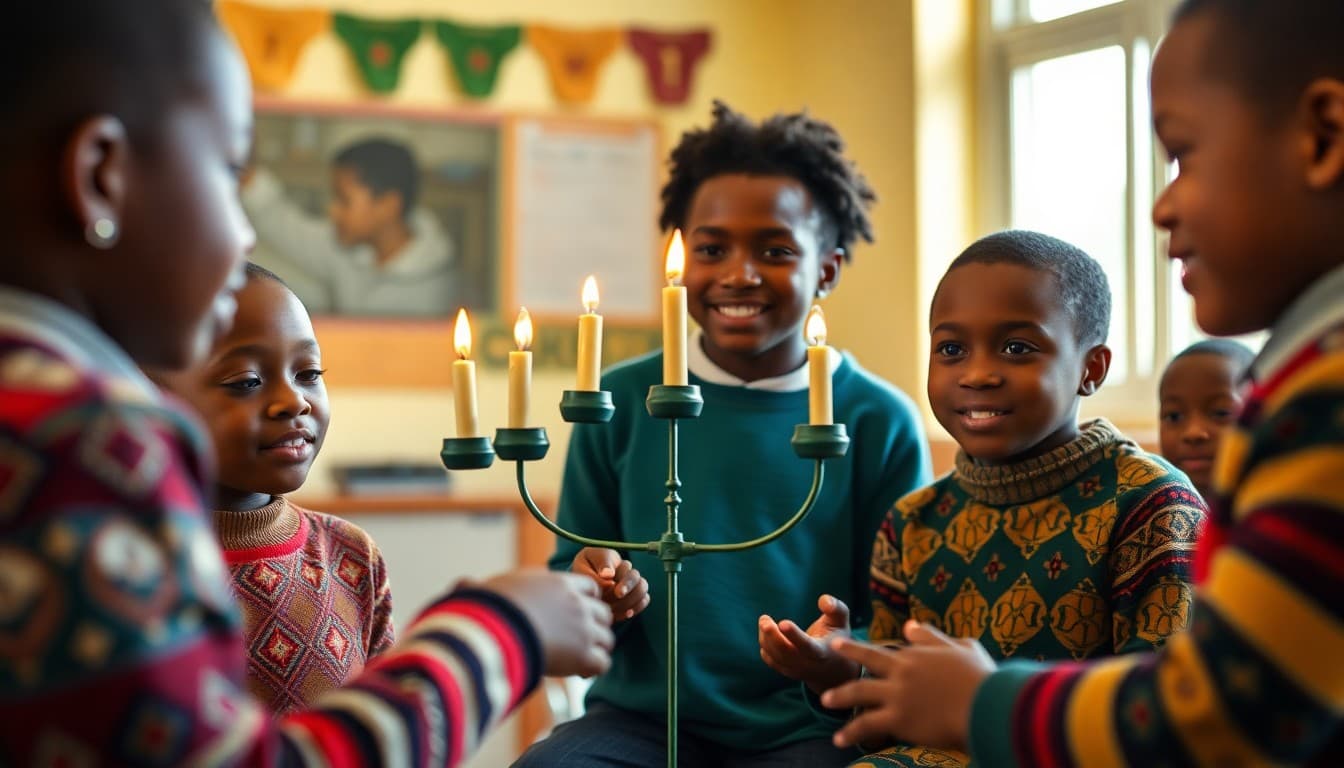
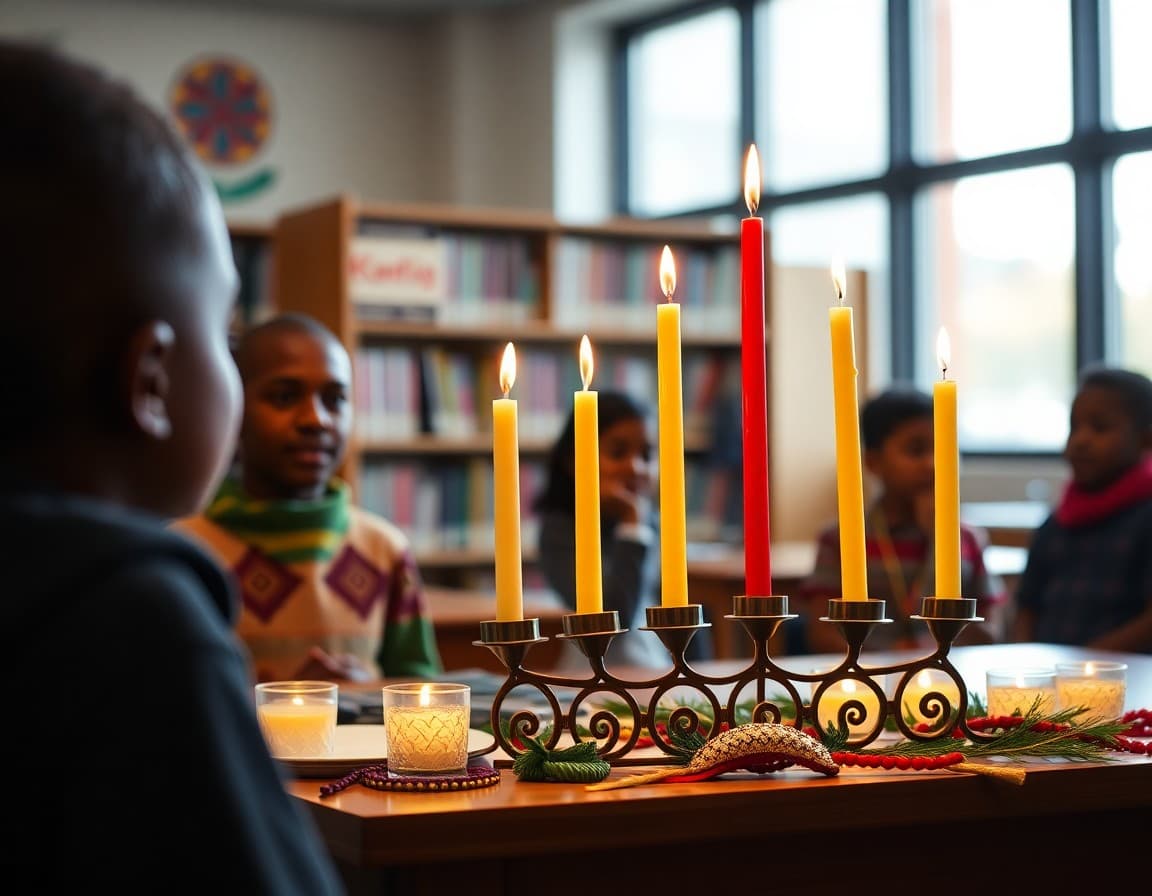
The heart of Kwanzaa is the Nguzo Saba, the seven principles. Each of the seven days of Kwanzaa focuses on one principle, represented by the lighting of a candle on the kinara. The kinara holds seven candles: three red on the left, three green on the right, and one black in the center. Each day, a family member, often the youngest child present, lights a candle and the family discusses that day's principle.
In your newsletter, list all seven with their Swahili names and English meanings. Then pick one or two that connect directly to something your school community is working on. If you are building community agreements, connect to Umoja (unity) and Ujima (collective work). If students are involved in a service project, connect to Nia (purpose). That application makes the principles feel alive rather than academic.
Connecting to African Heritage
Kwanzaa draws on traditional African harvest festivals, particularly the Zulu umkhosi, the Yoruba olojo, and other celebrations of community, gratitude, and abundance. The name Kwanzaa comes from the Swahili phrase "matunda ya kwanza," meaning "first fruits." The holiday intentionally roots African American cultural identity in African traditions, affirming a heritage that was severed by the violence of enslavement. Your newsletter can explain this history honestly and respectfully.
Classroom Activities Worth Describing
Tell families what students are actually doing. "This week students are learning about the seven principles of Kwanzaa and discussing how each principle applies to our classroom community. Students are creating unity cups (kikombe cha umoja) decorated with symbols of what unity means to them." That specificity shows families that the learning is real and connected to student experience.
If your school library has a Kwanzaa display, mention it. Books like Together We Drum, Our Hearts Sing by Pat Mora, Seven Spools of Thread by Angela Shelf Medearis, and K Is for Kwanzaa by Juwanda G. Ford are excellent additions at different grade levels.
Who Celebrates Kwanzaa
Approximately 2 to 3 million Americans celebrate Kwanzaa each year, primarily but not exclusively Black Americans. Some African, Caribbean, and South American diaspora communities have also adopted the celebration. Your newsletter should not assume that all Black students and families celebrate Kwanzaa, and it should not require Black students to be representatives of the holiday. The invitation to share is appropriate; the assumption of familiarity or connection is not.
Making the Invitation Open
If you invite family participation in Kwanzaa programming, make the invitation genuinely open. "We would welcome any family who celebrates Kwanzaa or who has a connection to African cultural traditions to share something with our community. Contact [staff name] if you are interested. Participation is entirely voluntary." That sentence is warm, specific, and appropriately low-pressure.
After the Celebration
A brief follow-up in early January, after the Kwanzaa week has ended, with photos from classroom activities and a reflection on what students learned closes the loop respectfully. Students who see their work acknowledged take it more seriously, and families who see evidence of genuine learning feel proud of the school's commitment to cultural education.
Get one newsletter idea every week.
Free. For teachers. No spam.
Frequently asked questions
What is Kwanzaa and how should a school newsletter describe it accurately?
Kwanzaa is a week-long celebration held December 26 through January 1, created in 1966 by Dr. Maulana Karenga to honor African American heritage and culture. It draws on African harvest traditions and centers on seven principles called the Nguzo Saba: unity, self-determination, collective work and responsibility, cooperative economics, purpose, creativity, and faith. Kwanzaa is not a religious holiday and is not a substitute for Christmas. It is a cultural celebration that affirms African American identity and community. Your newsletter should include this context rather than reducing the holiday to its visual symbols.
How do I explain the seven Kwanzaa principles in a newsletter?
Name each principle in both Swahili and English, and give a one-sentence description of what it means in practice. Umoja (Unity): We strive to maintain unity in family, community, nation, and race. Kujichagulia (Self-Determination): We define ourselves, name ourselves, create for ourselves, and speak for ourselves. Ujima (Collective Work and Responsibility): We build and maintain our community together. Ujamaa (Cooperative Economics): We build and maintain our own stores, shops, and other businesses. Nia (Purpose): We make it our collective mission to build and develop our community. Kuumba (Creativity): We do what we can to leave our community more beautiful than we inherited it. Imani (Faith): We believe in our people, our parents, our teachers, our leaders, and the righteousness of our struggle.
Is Kwanzaa appropriate to celebrate at a public school?
Yes. Kwanzaa is a cultural celebration, not a religious one. Teaching about it in the context of African American history and culture is appropriate in public schools. The celebration of Kwanzaa as a family religious or spiritual practice is a private matter, but learning about the history, principles, and cultural significance of Kwanzaa is educational content that belongs in a school setting.
How do I make a Kwanzaa newsletter feel meaningful rather than performative?
Connect the seven principles to classroom learning and real community values. If your school is working on community-building goals, connect them to ujima or umoja. If students are studying entrepreneurship, connect it to ujamaa. If your school has a maker space or arts program, connect it to kuumba. Newsletters that connect Kwanzaa to the actual work of the school feel substantive rather than decorative.
What newsletter platform works well for a Kwanzaa communication?
Daystage lets you format a newsletter with the visual richness that a cultural celebration deserves. The colors of Kwanzaa, red, black, and green, and images of the kinara (candle holder) and mkeka (mat) can be included as photos or design elements. A well-formatted newsletter communicates respect through its visual presentation as much as through its words.

Adi Ackerman
Author
Adi Ackerman is a former classroom teacher and curriculum writer with 8 years in K-8 schools. She writes about school communication, parent engagement, and what actually works in real classrooms.
More for Diversity & Equity
Inclusive Holiday Communication Newsletter: Writing School Holiday Messaging That Welcomes Every Family
Diversity & Equity · 6 min read
Juneteenth School Newsletter: Teaching Freedom and History
Diversity & Equity · 7 min read
DEI Coordinator Newsletter Guide: Communicating Equity Goals and Progress to the School Community
Diversity & Equity · 7 min read
Ready to send your first newsletter?
3 newsletters free. No credit card. First one ready in under 5 minutes.
Get started free