
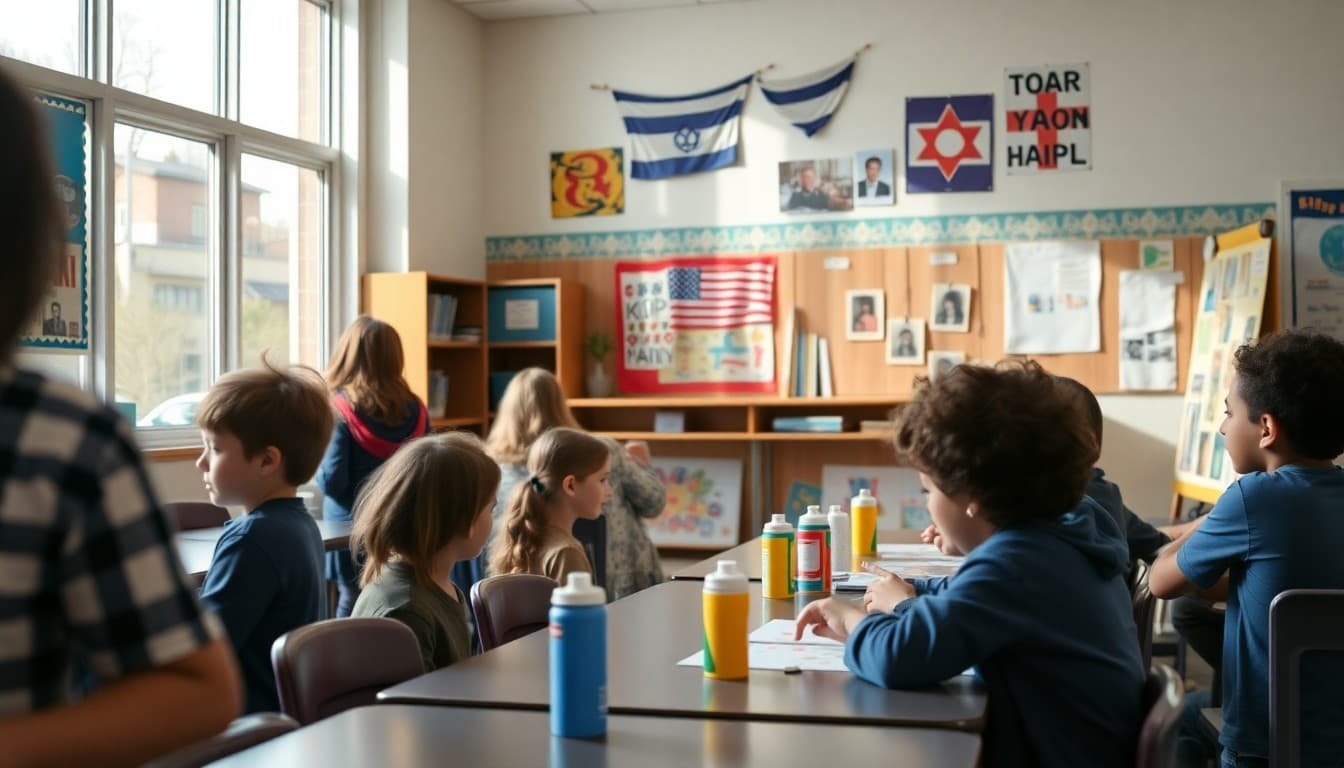
Jewish American Heritage Month School Newsletter Templates
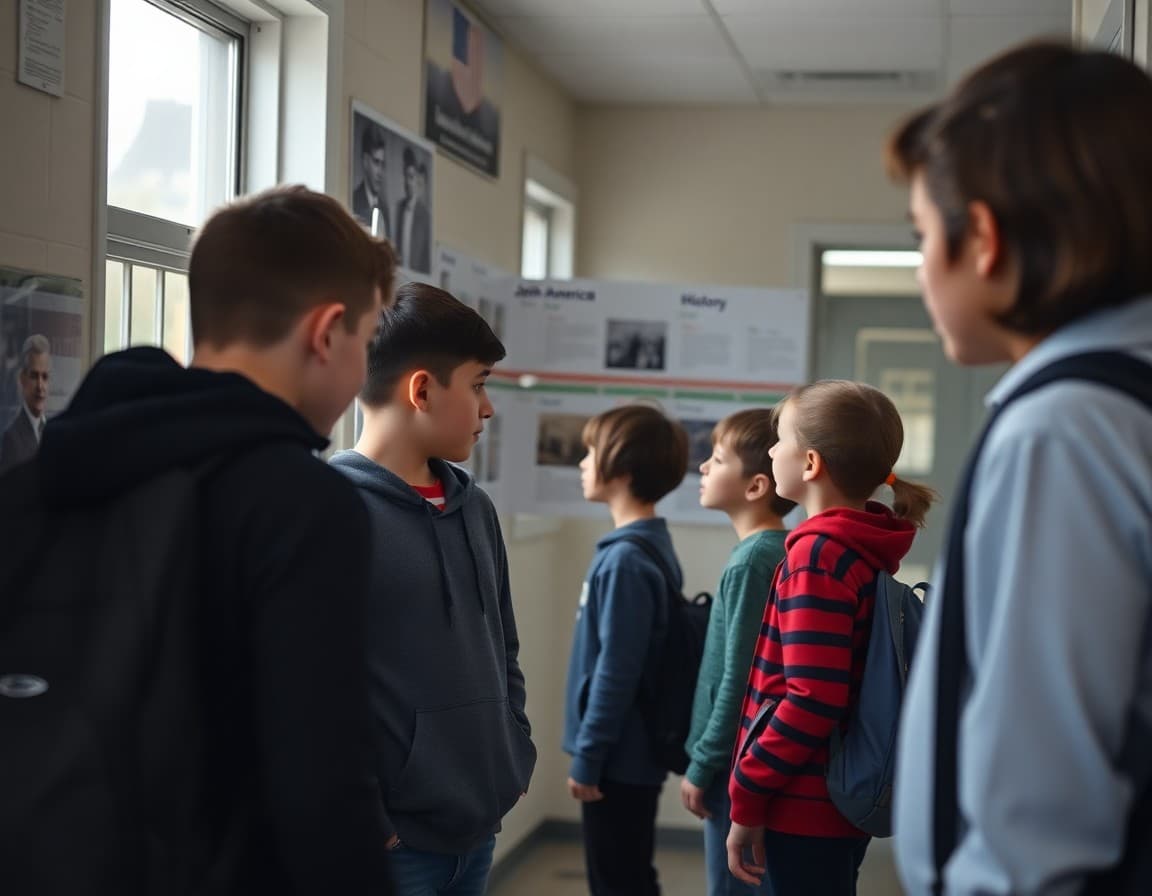
Jewish American Heritage Month offers schools an opportunity to connect curriculum to a rich, often underrepresented chapter of American history. The most effective school newsletters for this observance go beyond a general acknowledgment and connect specific contributions, stories, and classroom activities to what students are already learning. Here is how to write one that genuinely serves your community.
Anchor the Newsletter in Specific Contributions
The opening paragraph of a Jewish American Heritage Month newsletter should name specific people and contributions rather than speaking in generalities. "Jewish Americans have shaped American culture, science, law, literature, and civil rights in ways that appear throughout our curriculum. This month we are highlighting the work of Justice Ruth Bader Ginsburg in our government unit, the poetry of Emma Lazarus in our American literature study, and the civil rights activism of Rabbi Abraham Joshua Heschel in our history unit." That specificity shows families that the observance is connected to real learning, not a separate add-on.
Reflect the Diversity Within Jewish American Identity
Jewish American identity is not monolithic. Ashkenazi Jews from Eastern Europe, Sephardic Jews from Spain and the Mediterranean, Mizrahi Jews from the Middle East and North Africa, Ethiopian Jews, and many other communities all carry different cultural traditions, languages, and histories while sharing a common religious and ethnic heritage. Your newsletter should reflect this when possible. A sentence like "Jewish American heritage encompasses dozens of cultural traditions and languages, from Yiddish to Ladino to Judeo-Arabic" prevents the flattening that happens when any community is treated as a single story.
Classroom Activities Worth Sharing
Describe the specific classroom activities your school is running this month. "In our third-grade classrooms, students are reading books by Jewish American authors including Daniel Pinkwater and Tomie dePaola. In our middle school, students are researching Jewish American figures in their areas of interest, from baseball player Hank Greenberg to physicist Richard Feynman to fashion designer Ralph Lauren." Specific activities give families conversation starters and demonstrate that the celebration is substantive.
Acknowledging Antisemitism Honestly
Jewish Americans have faced and continue to face antisemitism in the United States. Your newsletter can acknowledge this directly and briefly. "Part of recognizing Jewish American heritage is understanding that Jewish Americans have faced discrimination, exclusion, and violence throughout American history, and that antisemitism remains a serious concern today. Our school is committed to being a place where every student, including our Jewish students and families, feels safe and respected." That statement is accurate, proportionate, and important.
Inviting Family Participation
If you have Jewish families in your community, consider inviting participation in ways that do not single out individuals or require them to represent their entire heritage. A classroom visit from a family member who wants to share a story, a recipe, or a cultural tradition is valuable when it is genuinely offered, not assumed. An open invitation in your newsletter, addressed to all families, avoids the pressure that direct asks can create.
Recommended Resources
Include two or three specific resources families can explore at home. The Library of Congress Jewish American Heritage Month collection is excellent. The National Museum of American Jewish History has online exhibits. For students, books like The Number Stars by Lois Lowry, Island of the Blue Dolphins (for its Chumash Jewish connection), or the stories of Harvey Milk offer accessible entry points. A short list with brief descriptions takes five minutes to include and extends the learning beyond the classroom.
School Events and Programs
If your school is hosting any events related to Jewish American Heritage Month, include the dates, times, and what families can expect. Even a simple classroom display or a library reading corner is worth mentioning. Families who know what is happening are more likely to extend the conversation at home, ask their students about it, and connect the school event to their own family's engagement with heritage and history.
Get one newsletter idea every week.
Free. For teachers. No spam.
Frequently asked questions
When is Jewish American Heritage Month and what should a school newsletter cover?
Jewish American Heritage Month is observed in May. A school newsletter should cover three areas: what the school is doing to recognize it, specific Jewish American figures or contributions connected to your curriculum, and any events or activities students and families can participate in. Newsletters that go beyond a general acknowledgment and name specific people, stories, and classroom activities are far more meaningful than those that only mention the observance.
How do I write about Jewish American Heritage Month respectfully if I am not Jewish?
Research before you write. Consult accurate resources, including the Library of Congress Jewish American Heritage Month materials, and when possible, ask Jewish staff, students, or community members to review your newsletter before sending. Avoid stereotypes, do not conflate Jewish identity with Israeli politics, and recognize that Jewish American identity is diverse across Ashkenazi, Sephardic, Mizrahi, Ethiopian, and many other communities. The more specific and accurate your newsletter is, the more respectful it will feel.
Should I address antisemitism in a Jewish American Heritage Month newsletter?
It is appropriate to acknowledge that Jewish Americans have faced and continue to face discrimination, without making that the sole focus of the newsletter. One paragraph that names antisemitism as a form of hate the school is committed to combating, alongside positive celebration of contributions and culture, strikes the right balance. Newsletters that only focus on persecution without celebrating achievement are incomplete, and newsletters that only celebrate without acknowledging historical reality are naive.
How do I make a heritage month newsletter inclusive for students who are Jewish?
Avoid requiring Jewish students to represent or speak for all Jewish people. Offer opportunities for participation without pressure. Check that your celebration does not inadvertently reduce Jewish identity to food, holidays, or stereotypes. Jewish American heritage includes scientific discovery, literature, civil rights activism, labor organizing, film and music, philosophy, and much more. Reflecting that breadth honors the community.
What platform works well for sending heritage month newsletters?
Daystage lets you embed photos, links to resources, and event details in a clean, formatted layout. A heritage month newsletter with an image of student artwork, a link to a recommended documentary, and a schedule of upcoming events reads as a complete, professional communication. Families are more likely to engage with it than with a text-only message.

Adi Ackerman
Author
Adi Ackerman is a former classroom teacher and curriculum writer with 8 years in K-8 schools. She writes about school communication, parent engagement, and what actually works in real classrooms.
More for Diversity & Equity
Inclusive Holiday Communication Newsletter: Writing School Holiday Messaging That Welcomes Every Family
Diversity & Equity · 6 min read
Culturally Responsive School Newsletter: Inclusive Communication
Diversity & Equity · 7 min read
DEI Coordinator Newsletter Guide: Communicating Equity Goals and Progress to the School Community
Diversity & Equity · 7 min read
Ready to send your first newsletter?
3 newsletters free. No credit card. First one ready in under 5 minutes.
Get started free