
June Budget Update Newsletter: Communicating the Adopted Budget, Per-Pupil Spending, and Fund Balance

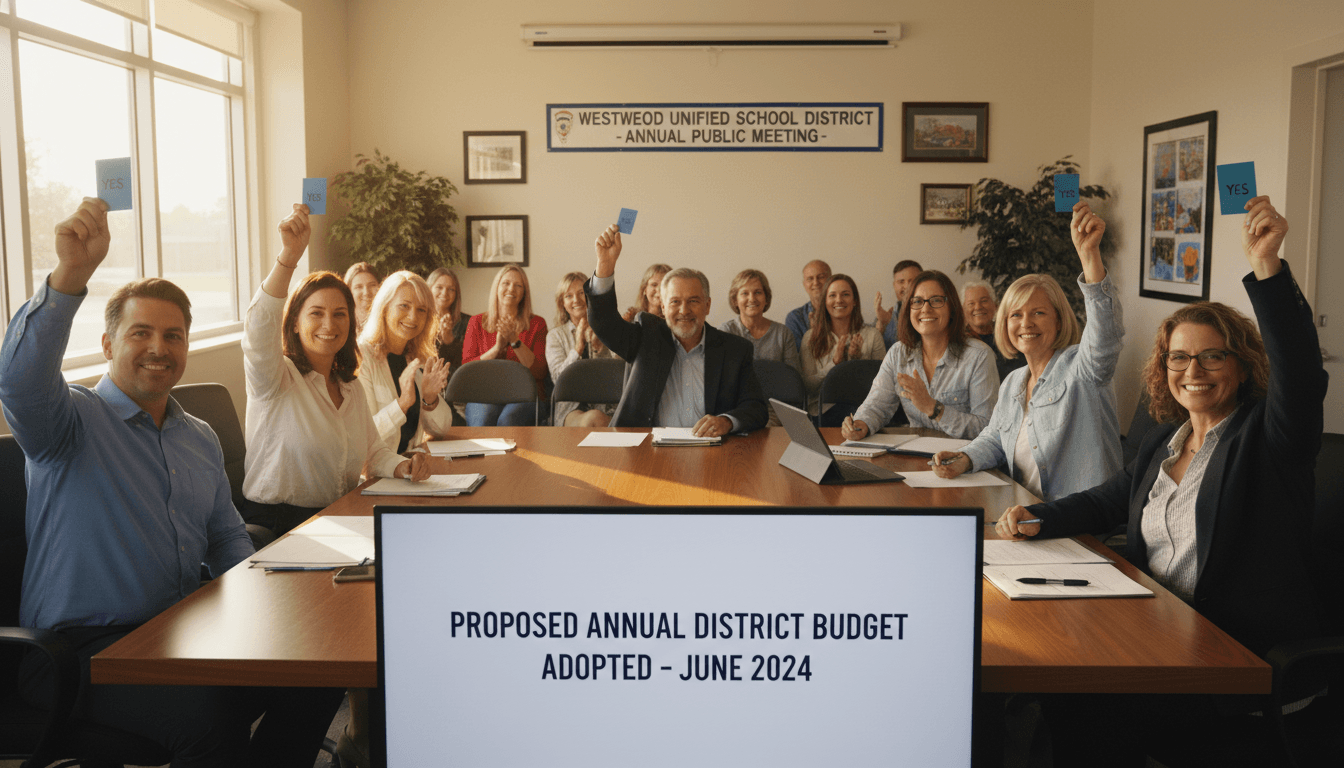
June is when the district's annual budget process reaches its formal conclusion. The board has voted to adopt the budget, the adopted figures are now official, and the district is transitioning from planning mode to implementation mode. A June budget update newsletter is the communication that marks that transition for families, reporting what was approved, what it means for the coming year, and how the district will manage finances through the summer months before the new fiscal year is fully operational.
This guide covers what to include after budget adoption, how to present per-pupil spending and fund balance clearly, how to explain summer spending authority, and how to make the adopted budget accessible to families who want to understand it.
Announcing the adopted budget
Start the June newsletter by reporting the board's adoption vote. Include the vote count, the date, and the total adopted budget figure. If the adopted budget differs from the proposed budget that families saw in May, explain the changes. A board-directed amendment, a final state funding revision, or a correction to an earlier figure all create differences between the proposed and adopted budgets that families deserve to understand.
Link to the full adopted budget document. Most families will not read every page, but many families want the option, and making the document genuinely accessible signals that the district's transparency commitment extends beyond summary newsletters to primary sources.
Per-pupil spending: the number that puts everything in context
Per-pupil expenditure is the single figure that makes the budget legible to most families. Calculate it, present it clearly, and provide the context families need to interpret it: the state average for comparable districts if available, the change from last year, and an explanation of what is included in the calculation.
Be direct about what per-pupil spending means for individual students. A per-pupil figure of $12,400 means the district is spending that amount on instruction, support services, administration, and other operating costs for every enrolled student. When families understand what that number includes, they are better equipped to evaluate it in relation to what they see in their child's school experience.
If the district's per-pupil spending is significantly different from neighboring districts, explain why. Property tax base differences, state aid formulas, special education population concentrations, and rural transportation costs all create real variation between districts that has nothing to do with management quality. Providing that context prevents the June newsletter from generating more questions than it answers.
Fund balance: what the district is carrying into the new year
Report the projected fund balance at the close of the current fiscal year. Explain the board's fund balance policy: what percentage of annual expenditure the policy requires the district to maintain as a reserve, why that target exists, and whether the district is meeting it, exceeding it, or working toward it.
Families sometimes view a fund balance as evidence that the district is hoarding money it should be spending on students. Addressing this directly prevents that misunderstanding from becoming a persistent complaint. A reserve fund is what allows the district to avoid mid-year staff cuts when state revenues come in below projection. It is what enables the district to replace a failed boiler or repair storm damage without issuing emergency debt. A June newsletter that explains the purpose of reserves makes future budget conversations more productive.
Summer spending authority
In most districts, the fiscal year begins July 1. But most of the district's summer operational work happens before that date: supply orders are placed, bus contracts are renewed, teachers are hired, and facility maintenance projects begin. Summer spending authority is the board's vote authorizing the administration to make financial commitments before the new year's budget is technically in force.
Include a brief explanation of this mechanism in the June newsletter. Most families have never heard of summer spending authority, and its absence from district communication leaves a gap in their understanding of how the district operates during the months when school is not in session. A single paragraph explaining what it is, what it covers, and what limits the board set on it is sufficient.
Program and service changes taking effect in the new year
The June newsletter is the right moment to confirm the program and service changes that families will experience when school starts in August. Which programs are being added? Which positions were filled? If a school received a new reading specialist, confirm that. If an elementary school saw class sizes increase due to enrollment growth and staffing constraints, say so directly. June is early enough that families can raise concerns and late enough that most decisions are firm.
Connecting budget adoption to visible outcomes in schools closes the loop on everything families were promised in the spring proposal presentations. It also sets up the fall communication cycle by ensuring families know what to expect before they walk in on the first day of school.
What budget communication will look like in the year ahead
Close the June newsletter by describing the budget communication families can expect through the coming school year. Will the district publish quarterly budget reports? Is there a mid-year budget review scheduled? When will the process for next year's budget begin?
Districts that promise consistent budget communication and deliver it build a fundamentally different level of community trust than districts that communicate only when required. The June adopted budget newsletter is the moment to make that commitment, while the budget process is fresh and families are paying attention.
Get one newsletter idea every week.
Free. For teachers. No spam.
Frequently asked questions
What should a June budget newsletter communicate that previous spring newsletters did not?
The June budget newsletter marks a shift from proposed to adopted. Previous newsletters described what the district was planning to do. The June newsletter reports what the board officially approved. This is the moment to share the final adopted total, the officially recorded per-pupil expenditure, the fund balance the district is carrying into the new fiscal year, and the summer spending authority the board granted to district administration. It is the closing document of the budget communication cycle for the year just completed.
How should districts explain per-pupil spending in the June newsletter?
Per-pupil expenditure is the most useful single figure for helping families understand how the district allocates resources. Report it clearly: total operating expenditure divided by total enrollment, compared to the state average if that figure is publicly available, and compared to the prior year. Explain what is and is not included in the per-pupil calculation. Transportation costs, special education services, and capital expenditures are sometimes included and sometimes excluded depending on how the district calculates the figure, and that context prevents misleading comparisons.
What is summer spending authority and why does it matter to families?
Summer spending authority is the board's formal authorization for the district administration to make financial commitments before the new fiscal year officially opens, typically on July 1. Without it, the district would be unable to place supply orders, execute contracts, or make hiring commitments during the summer months when most of that work happens. Families rarely know this mechanism exists, and a brief explanation in the June newsletter demystifies why the board votes on something at the June meeting that looks like a budget but applies to summer operations.
How should districts communicate about fund balance in the June newsletter?
Fund balance is the district's reserve, and its size relative to annual expenditure matters. Report the projected fund balance at year-end, what percentage of annual expenditure it represents, how that compares to the board's fund balance policy target, and what the district plans to do with any balance that exceeds that target. Families who understand that a healthy fund balance protects the district from mid-year cuts during revenue shortfalls are less likely to view reserves as money that should be spent on immediate programs.
How does Daystage help districts share the adopted budget with families?
Daystage lets districts send a June budget newsletter to all families across the district with direct links to the adopted budget document, the board meeting recording, and the per-pupil spending summary. Because Daystage is built for school communication, the newsletter reaches families in a format that works on any device. Districts that use Daystage for their June budget communication consistently hear from board members that families arrive at fall meetings with a stronger baseline understanding of district finances than in previous years.

Adi Ackerman
Author
Adi Ackerman is a former classroom teacher and curriculum writer with 8 years in K-8 schools. She writes about school communication, parent engagement, and what actually works in real classrooms.
More for District
May Budget Update Newsletter: What School Districts Should Communicate at Year-End
District · 6 min read
June Enrollment Report Newsletter: Year-End Summary, Demographic Shifts, and Open Enrollment Decisions
District · 6 min read
July Budget Update Newsletter: Fiscal Year Transition, Carry-Forward Items, and Reserve Fund Status
District · 6 min read
Ready to send your first newsletter?
3 newsletters free. No credit card. First one ready in under 5 minutes.
Get started free