
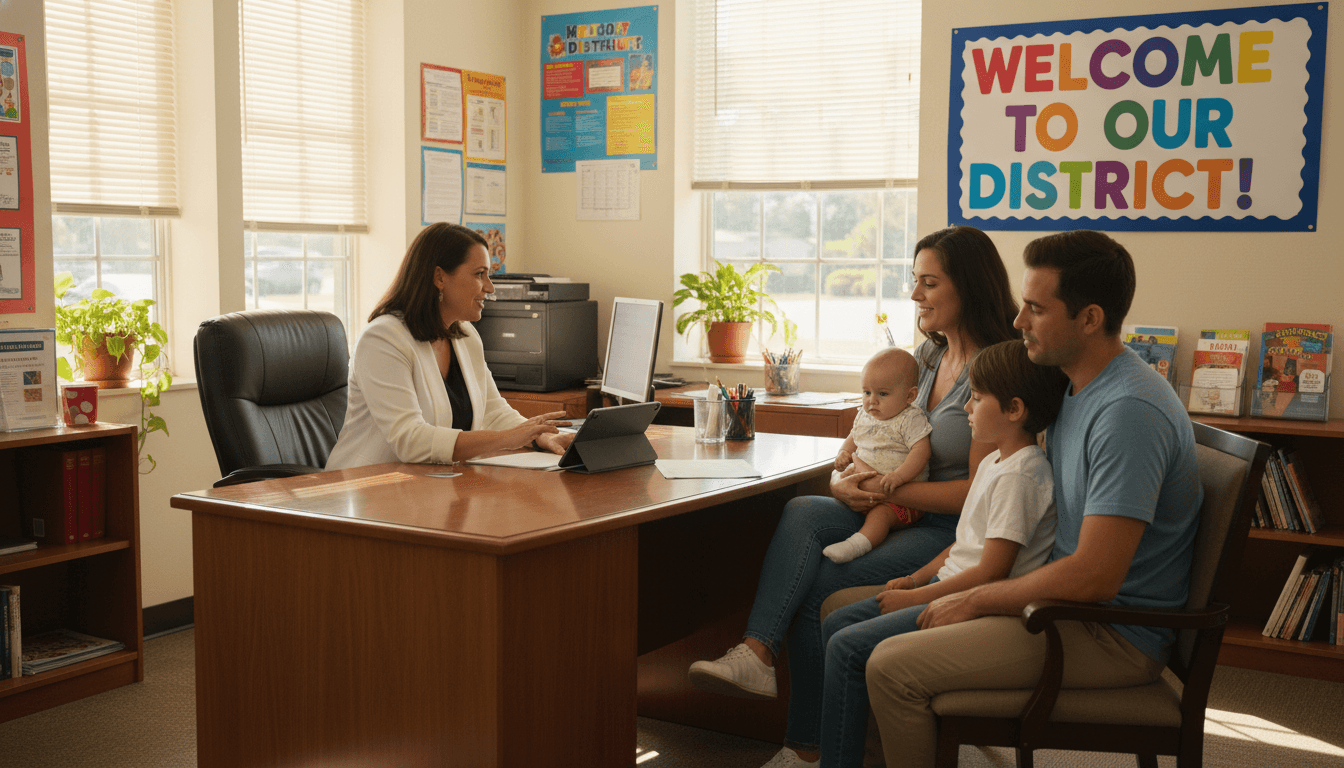
July Enrollment Report Newsletter: Summer Updates, New Family Registrations, and School Capacity Planning

Enrollment does not pause for summer. Families move, plans change, and new students arrive throughout July in every district. Summer school programs are running or wrapping up. Class configurations are being finalized based on current registration numbers. School capacity situations that looked manageable in June can shift significantly by the time August arrives. A July enrollment report newsletter keeps families connected to the district during this active period and ensures that no family reaches the first day of school without the information they need.
This guide covers what to include in a July enrollment update, how to communicate about new registrations, how to address capacity situations directly, and how to set families up for a smooth start in August.
Where enrollment stands in July
Start the July newsletter with a current enrollment snapshot. How many students are registered for the coming school year as of the newsletter date? How does that compare to where registration stood at the same point last summer? Which schools are filling quickly and which still have significant registration capacity?
Present this information at a district level and by school where practical. Families who know their child's school has 420 students registered against a target of 440 have very different information than families whose school has 465 registered against the same target. School-level data makes the newsletter actionable in a way that district-wide totals alone cannot.
New family registrations: welcoming summer arrivals
Summer is when many families with school-age children choose to move. Families who close on a house in June or July are often registering their children in the district for the first time in July. The July newsletter is an opportunity to welcome those families explicitly and describe the steps for completing enrollment.
Include the registration portal link or physical location, the documents required (proof of residency, immunization records, birth certificate, previous school records), and the timeline for receiving a school assignment after registration is complete. Make the process as concrete as possible: not "contact the district office to register" but "complete the online registration form at this link, bring your documents to the enrollment office at this address, and you will receive your school assignment within five business days."
School assignment notifications: when and how
Families who have already registered are waiting to hear which teacher and classroom their child will be in. The July newsletter should include a clear statement about when school assignment notifications will be sent. If assignments are going out in late July, confirm the date and the method: email, postal mail, or parent portal. If assignments are scheduled for early August, acknowledge that and explain why the timeline is what it is.
Families who do not know when to expect their child's assignment information often contact the district office repeatedly through July. A single clear statement in the July newsletter that answers the question proactively reduces that contact volume significantly and allows enrollment staff to focus on helping families who have actual issues to resolve.
School capacity: where the concerns are
Be direct about any school that is at or near enrollment capacity. If a school has reached its practical enrollment limit based on classroom count and teacher assignments, explain that and describe how the district is managing incoming registrations. Is there a waitlist? Is the district adding a section by hiring an additional teacher? Is an attendance boundary adjustment being considered?
Families who find out about overcrowding at their child's school on the first day of school feel blindsided and frustrated, even when the situation developed gradually over the summer. Communicating about capacity challenges in July, when there is still time to take action, converts a potential crisis communication into a routine operational update.
Summer school wrap-up and fall readiness
If summer school has concluded or is concluding in July, share a summary of the program. How many students attended? What grade levels and programs were offered? What academic gains did students demonstrate? If assessment data from summer school will inform fall placement or support services, describe how that process works so families know their child's summer work will be recognized when school begins.
Summer school families often feel disconnected from the district between the end of summer programming and the start of the regular school year. A July newsletter that acknowledges their child's participation and describes what comes next maintains that relationship through the transition.
What to expect in August from the district
Close the July enrollment newsletter with a clear preview of August communication. When will open house or back-to-school night be scheduled? When will families receive supply lists? When will the school day schedule be published? When will bus routes and transportation assignments be communicated?
Families who know what information is coming and when are less anxious and more prepared when school starts. A July enrollment newsletter that ends with a concrete August communication plan signals that the district has thought through the transition and is managing it intentionally, which is exactly the message families need to hear in the final weeks of summer.
Get one newsletter idea every week.
Free. For teachers. No spam.
Frequently asked questions
Why should districts send an enrollment newsletter in July when school is not in session?
July is one of the most active months for enrollment movement. New families move into the district over the summer. Families who received open enrollment decisions in June are confirming their placements. Summer school is completing and those rosters inform fall projections. Families who registered in late spring are finalizing their plans. A July newsletter gives the district an opportunity to share current enrollment status, remind families of any remaining registration steps, and communicate school assignment details before the August scramble begins.
What new family registration information belongs in a July enrollment newsletter?
Report the number of new family registrations received since the end of the school year and where those registrations are concentrated by school. Describe the registration process for any family that has not yet completed it, including required documents, the registration portal link, and the deadline for completing registration before school begins. Families who registered but have not yet received a school assignment confirmation should know when to expect it. Families who have moved into the district since June need to know the steps to enroll.
How should districts communicate about school capacity issues in July?
If a school is approaching or has exceeded capacity based on current registrations, July is the moment to communicate that directly. Families who are on a waitlist for a school should know their waitlist position and when they will hear a final decision. Families at schools that are over-enrolled should know whether the district is adding temporary classrooms, adjusting sections, or making boundary accommodations to manage the situation. Giving families this information in July rather than August provides more time for planning and reduces the first-week anxiety that over-enrollment creates.
What should districts say about summer school enrollment in a July update?
Report the final summer school enrollment and describe how the program is going. If summer school is still in session in early July, provide an update on attendance and programming. If summer school has concluded, share the total number of students who participated and a brief description of what they worked on. Connect summer school outcomes to fall readiness when the data supports it. Families whose children attended summer school often do not receive any information about how the program went unless the district actively shares it.
How does Daystage help districts stay connected to families during the summer enrollment period?
Daystage lets districts schedule and send summer enrollment newsletters automatically, maintaining consistent communication with families even when administrative staff are operating on reduced summer hours. Districts use Daystage to include school-specific capacity updates, registration portal links, and August schedule information in a single newsletter that reaches all families. Because Daystage is built for school communication, summer newsletters arrive in family inboxes with the same professional presentation as newsletters sent during the school year.

Adi Ackerman
Author
Adi Ackerman is a former classroom teacher and curriculum writer with 8 years in K-8 schools. She writes about school communication, parent engagement, and what actually works in real classrooms.
More for District
June Enrollment Report Newsletter: Year-End Summary, Demographic Shifts, and Open Enrollment Decisions
District · 6 min read
July Budget Update Newsletter: Fiscal Year Transition, Carry-Forward Items, and Reserve Fund Status
District · 6 min read
The August Enrollment Report Newsletter: Communicating Projected vs. Actual Enrollment to Families
District · 6 min read
Ready to send your first newsletter?
3 newsletters free. No credit card. First one ready in under 5 minutes.
Get started free