

District Newsletter: Our Districtwide STEM Initiative
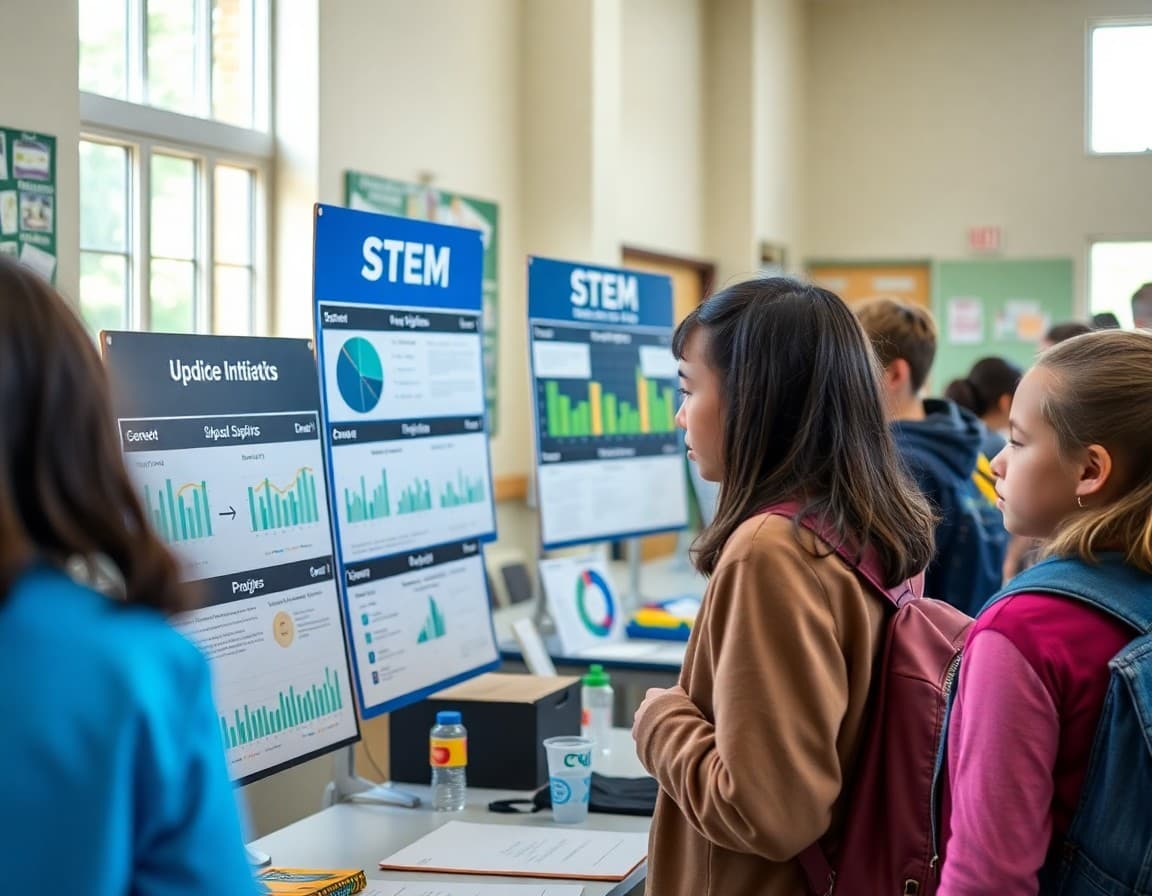
STEM education is increasingly understood as a foundation for success in nearly every career field, not just the ones traditionally labeled as science or technology jobs. When a district launches a coordinated STEM initiative, communicating it to families explains what is happening in schools, why the district is investing in it, and how every student will benefit regardless of their eventual career path.
Define What STEM Means in Your District
STEM means different things in different contexts. For some families, it calls to mind coding and robotics. For others, it brings to mind advanced calculus. Describe what STEM looks like across grade levels in your district. In elementary school, it may be engineering design challenges, project-based science, and early coding. In middle school, it may include dedicated lab courses, maker spaces, and data analysis projects. In high school, it may encompass advanced science and math, computer science, engineering courses, and CTE pathway programs.
Describe the Districtwide Framework
Explain what makes this a districtwide initiative rather than a collection of individual school programs. Is there a K-12 STEM scope and sequence? Shared curriculum? Maker space resources distributed across all schools? Professional development for teachers at all levels? A high school pathway that connects to middle school experiences? The districtwide framework is what ensures STEM access is an equity issue, not a school-of-choice issue.
Show What Students Are Actually Doing
Describe two or three specific STEM projects or experiences from across the district. An eighth grader who designed a water filtration device for a science fair. A third-grade class that built and tested bridge structures. A high school robotics team that competed at the regional level. A group of fourth graders who coded a simple game using Scratch. Concrete examples do more work than any framework description.
Report on Participation and Equity
Share who is participating in the initiative. What percentage of students across the district are engaged in STEM-specific courses or activities? Are participation rates equitable across schools and student groups? If there are gaps in advanced STEM course enrollment, name them and describe what the initiative is doing to address them. STEM equity, ensuring that every student has access to high-quality STEM learning regardless of their school, zip code, or identity, is often the most compelling part of the story.
A Sample Student Project Highlight
"Earlier this year, students in Ms. Torres' sixth-grade science class at Westfield Middle spent four weeks designing, building, and testing small-scale wind turbines made entirely from recycled materials. Each team had a budget constraint: all materials had to come from the school recycling bin. The challenge produced 23 different turbine designs. Students presented their findings to a panel of local engineers who provided real-world feedback. Three student designs are being featured in the district's STEM showcase next month."
Connect STEM to Career Pathways
Describe the career pathways that STEM education connects to in your district. Are there partnerships with local employers for job shadows, internships, or career speakers? Is the district offering dual enrollment in STEM courses through a community college? Are there CTE STEM pathway programs at the high school? Connecting STEM learning to real career options makes it feel relevant to families who may be asking "but what is this actually for?"
Highlight Competitions and External Recognition
Share results from STEM competitions: science fairs, robotics competitions, coding challenges, engineering design contests, and math olympiads. Competition participation is not the goal of STEM education, but it produces concrete achievements worth celebrating and signals to families that the district's STEM programs are competitive with programs elsewhere.
Describe What Is Coming Next
Close with a preview of upcoming STEM events and program expansions. A STEM showcase event, a new maker space opening, a new computer science course launching, or a community STEM night with family participation activities all belong here. Give families a reason to engage with the initiative, not just to read about it.
Get one newsletter idea every week.
Free. For teachers. No spam.
Frequently asked questions
What is a districtwide STEM initiative and how does it differ from individual school STEM programs?
A districtwide STEM initiative creates a coherent, K-12 framework for science, technology, engineering, and math education across all schools rather than leaving STEM enhancement to individual school decisions. It typically includes aligned curriculum, shared maker spaces or lab resources, consistent professional development, and intentional pathways from elementary exploration to high school specialization. The district-level coordination ensures that every student has access to STEM learning regardless of which school they attend.
What outcomes should a STEM initiative newsletter report on?
Report on math and science proficiency trends, participation rates in advanced STEM coursework, enrollment in computer science and engineering classes, competition participation and results, student projects and inventions, and post-secondary plans for STEM-interested students. Connect the initiative's investments to these measurable outcomes to show families that the program is producing results.
How do you communicate STEM to families who do not have STEM backgrounds?
Lead with what students are doing, not with abstract goals about STEM readiness. Describe a specific project, invention, or experiment from a recent school year. Explain what skills students developed and how those skills connect to the world outside school. STEM becomes concrete when it is described through actual student work rather than through workforce development language.
How do you address gender and racial equity in a STEM initiative newsletter?
Share data on who is participating in STEM programs and who is not. If girls or students from underrepresented groups are enrolled in STEM coursework at lower rates, name it and describe what the initiative is doing to address it. Programs specifically designed to increase STEM access for underrepresented groups, like Girls Who Code chapters or Black male achievement STEM programs, deserve specific mention.
What platform helps districts communicate STEM initiative updates to all families?
Daystage lets district teams build newsletters with embedded project photos, competition results, and career spotlight sections. You can send to all schools at once and include school-specific highlights alongside the district-wide initiative update.

Adi Ackerman
Author
Adi Ackerman is a former classroom teacher and curriculum writer with 8 years in K-8 schools. She writes about school communication, parent engagement, and what actually works in real classrooms.
More for District
How to Communicate Technology Programs and Policies to Families in the District Newsletter
District · 7 min read
District Newsletter: Our District College Access Program
District · 6 min read
CTE District Newsletter: How to Communicate Career Pathways, Certifications, and Work-Based Learning to Families
District · 7 min read
Ready to send your first newsletter?
3 newsletters free. No credit card. First one ready in under 5 minutes.
Get started free