

CTE District Newsletter: How to Communicate Career Pathways, Certifications, and Work-Based Learning to Families
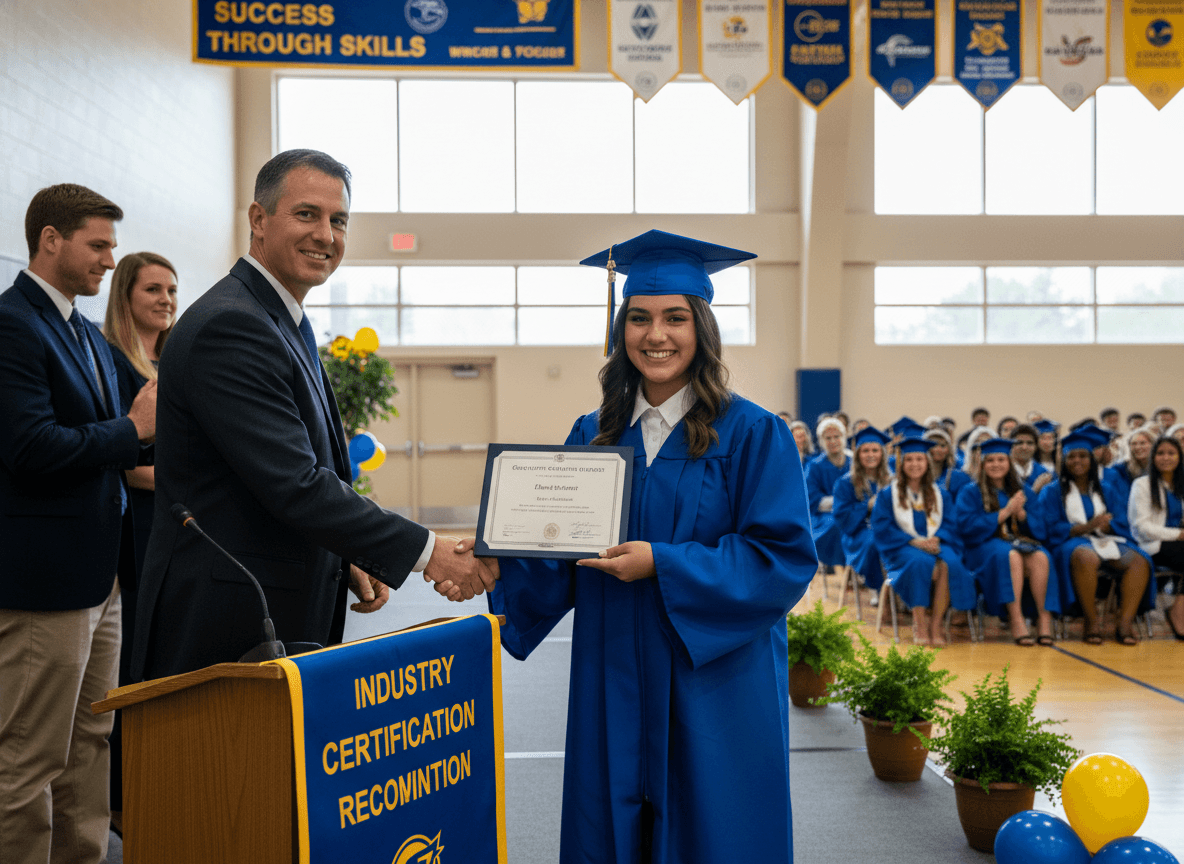
Career and Technical Education has a perception problem that district communication can help solve. Many families still think of CTE as the track for students who are not college-bound, a holdover from when vocational education meant shop class and auto mechanics for students who could not handle algebra. That image has not matched the reality of modern CTE for at least a decade, but the perception persists.
Today's CTE students earn industry certifications from major technology companies, complete clinical rotations in hospitals, design and fabricate engineering projects, and graduate with credentials that translate directly into jobs paying well above the median wage. Many also earn college credits. The district's job is to close the gap between what families imagine CTE to be and what it actually offers, before enrollment decisions are made based on outdated assumptions.
How to Frame CTE for Families
The most effective CTE communications lead with outcomes, not inputs. Rather than describing what courses students take, describe what they can do when they finish. "Students who complete the Health Sciences pathway can sit for the Certified Nursing Assistant examination and enter the workforce immediately after graduation, or apply to nursing programs with clinical experience already on their resume" communicates value far more effectively than "students take four health sciences courses over three years."
Frame CTE pathways as a both/and choice rather than an either/or. A student who completes the Information Technology pathway is not choosing CTE instead of college. They are building technical credentials that make them more competitive for both entry-level IT positions and technology-focused college programs. Most CTE students do pursue some form of post-secondary education. Communicating this clearly counteracts the assumption that CTE is for students who are not college-bound.
Describing Your District's Pathway Offerings
Families cannot choose CTE pathways they do not know exist. Your newsletter should describe every pathway available in the district, organized by career cluster or program area, with a brief description of each:
- What the pathway prepares students for
- Which school or schools offer the pathway
- What the course sequence is (which courses, in what order, starting in which grade)
- What credentials or certifications students can earn
- What work-based learning opportunities are connected to the pathway
- Where graduates of the pathway have gone (employment, post-secondary programs, apprenticeships)
For districts with multiple high schools, be specific about which pathways are available at which schools, and whether students can attend a different school for a pathway not available at their home campus. Many districts have magnet CTE programs or career academies that serve students from multiple attendance zones. Families need to know this is an option.
Industry Certifications: The Tangible Credential
Industry certifications are one of the most compelling CTE story points for families, because they are concrete and external. A certification is not just a grade on a transcript. It is a credential issued by an industry organization that employers recognize.
When communicating about certifications, name the specific credentials students can earn in each pathway. CompTIA A+, Google IT Support Certificate, CNA, Adobe Certified Professional, OSHA 10-Hour, AWS Cloud Practitioner, Pharmacy Technician Certification: these names mean something to employers and to families with experience in those industries. A family where a parent works in healthcare will immediately understand the significance of a student earning a CNA credential in high school. A family with no healthcare background may not, but a brief explanation of what the credential represents ("it qualifies graduates to apply for entry-level positions in hospitals, nursing homes, and home health agencies, typically starting at $18-22 per hour") makes it concrete.
Career Academies and Specialized CTE Schools
Many districts have organized CTE instruction into career academies, which are small learning communities within a high school organized around a career theme. Academy students take their academic core courses together and share CTE courses in a specific career area, building relationships with a smaller group of peers and connecting with industry partners in that field.
If your district has career academies, describe them as the distinct educational environments they are: the size of the academy cohort, the career focus, the industry partnerships, the advisory board, and the student outcomes. Families who understand that an academy is a structured, cohort-based experience with dedicated industry mentorship will evaluate it differently than families who assume it is just a cluster of elective courses.
Work-Based Learning: From Shadowing to Apprenticeship
Work-based learning is where CTE connects classroom instruction to the real world, and it is often the feature that most appeals to students and families once they understand it exists. Your newsletter should describe the spectrum of WBL opportunities available:
- Job shadowing and industry tours for students exploring a pathway
- Guest speaker and mentorship programs with industry professionals
- Simulated workplace experiences and capstone projects
- Internships and cooperative education placements (paid and unpaid)
- Registered apprenticeship programs that begin in high school and continue post-graduation
Be specific about which WBL opportunities are available in which pathways and at which grade levels. A student who hears that they could be working a paid internship in a hospital or engineering firm by their junior year has a concrete and compelling reason to consider that pathway at course selection time.
Communicating CTE for College-Bound Students
One of the most powerful shifts districts can make in CTE communication is explicitly addressing college-bound students and their families. The assumption that CTE is not for college-bound students excludes a large portion of the student population from considering pathways that would genuinely benefit them.
Highlight the college credit opportunities in CTE pathways: dual enrollment courses embedded in the pathway, articulation agreements with community colleges that grant credit for CTE coursework, and the competitive advantage of having industry credentials and work experience when applying to selective programs in engineering, health, business, or technology.
When and How to Send CTE Communications
Send a CTE overview newsletter to families of middle school students in the winter, timed to reach families before eighth-grade course selection for high school. This is the decision point where students and families are explicitly thinking about what high school courses to take, and a clear CTE pathway overview can influence those choices.
Follow up with a pathway-specific communication in early spring when high school course selection is finalized. Throughout the year, share CTE student success stories: certifications earned, internship placements completed, competitions won, and graduates who have entered the workforce or post-secondary programs through their CTE pathway. Stories shift perception more durably than descriptions.
Get one newsletter idea every week.
Free. For teachers. No spam.
Frequently asked questions
What is CTE and how is it different from vocational education?
Career and Technical Education (CTE) is the modern evolution of what used to be called vocational education. Today's CTE programs integrate technical skills with academic content and include pathways in fields like healthcare, information technology, engineering, business, and the arts, alongside the trades. CTE students earn industry-recognized credentials, college credits, and work experience. Many CTE courses also satisfy core academic graduation requirements. The distinction matters for family communication because the old perception of vocational education as a track for students who cannot handle academics no longer reflects what CTE programs offer.
What are CTE pathways and how should districts communicate them?
A CTE pathway is a sequence of related courses that prepares students for a specific career cluster or industry area. Common pathway structures include three or four courses taken over multiple years, beginning with an introductory course in ninth or tenth grade and culminating in a capstone course with work-based learning or an industry certification opportunity. Districts should communicate which pathways are available at each high school, what the course sequence looks like, what credentials students can earn, and where the pathway leads after graduation.
How do industry certifications work in CTE programs?
Industry certifications are credentials issued by industry organizations that validate a student's competency in a specific technical area. Examples include CompTIA certifications in IT, AWS cloud certifications, OSHA safety certifications, Certified Nursing Assistant credentials, Adobe certifications in design, and many others. These credentials are recognized by employers and, in some cases, by post-secondary institutions. Districts should communicate which certifications students can earn in each pathway, what the certification exam process looks like, and what the employer or college recognition for that credential is.
What is work-based learning and how does it benefit students?
Work-based learning (WBL) connects classroom instruction to real workplace experiences. It exists on a spectrum from job shadowing and industry tours at the light end to internships, apprenticeships, and cooperative education placements that may include paid employment. Work-based learning gives students the opportunity to apply technical skills in authentic settings, build professional networks, and explore careers before committing to a post-secondary path. Districts should communicate what WBL opportunities are available in each pathway and how students can access them.
How can Daystage help districts communicate CTE programs to families?
Daystage lets district teams send CTE pathway newsletters to families of students at specific grade levels, so rising ninth graders receive a CTE orientation in the summer before high school while eleventh graders receive a certification and work-based learning update. You can feature student success stories alongside pathway descriptions, which is one of the most effective formats for shifting family perception of CTE from a fallback option to a strategic choice.

Adi Ackerman
Author
Adi Ackerman is a former classroom teacher and curriculum writer with 8 years in K-8 schools. She writes about school communication, parent engagement, and what actually works in real classrooms.
More for District
Dual Enrollment District Newsletter: How to Communicate College Credit Opportunities and Eligibility to Families
District · 6 min read
Gifted Education District Newsletter: How to Communicate Identification, Programs, and Enrichment to Families
District · 6 min read
ESSA District Newsletter: How to Communicate Accountability Results and School Ratings to Families
District · 7 min read
Ready to send your first newsletter?
3 newsletters free. No credit card. First one ready in under 5 minutes.
Get started free