

Music Department Newsletter: Performances Programs and Practice
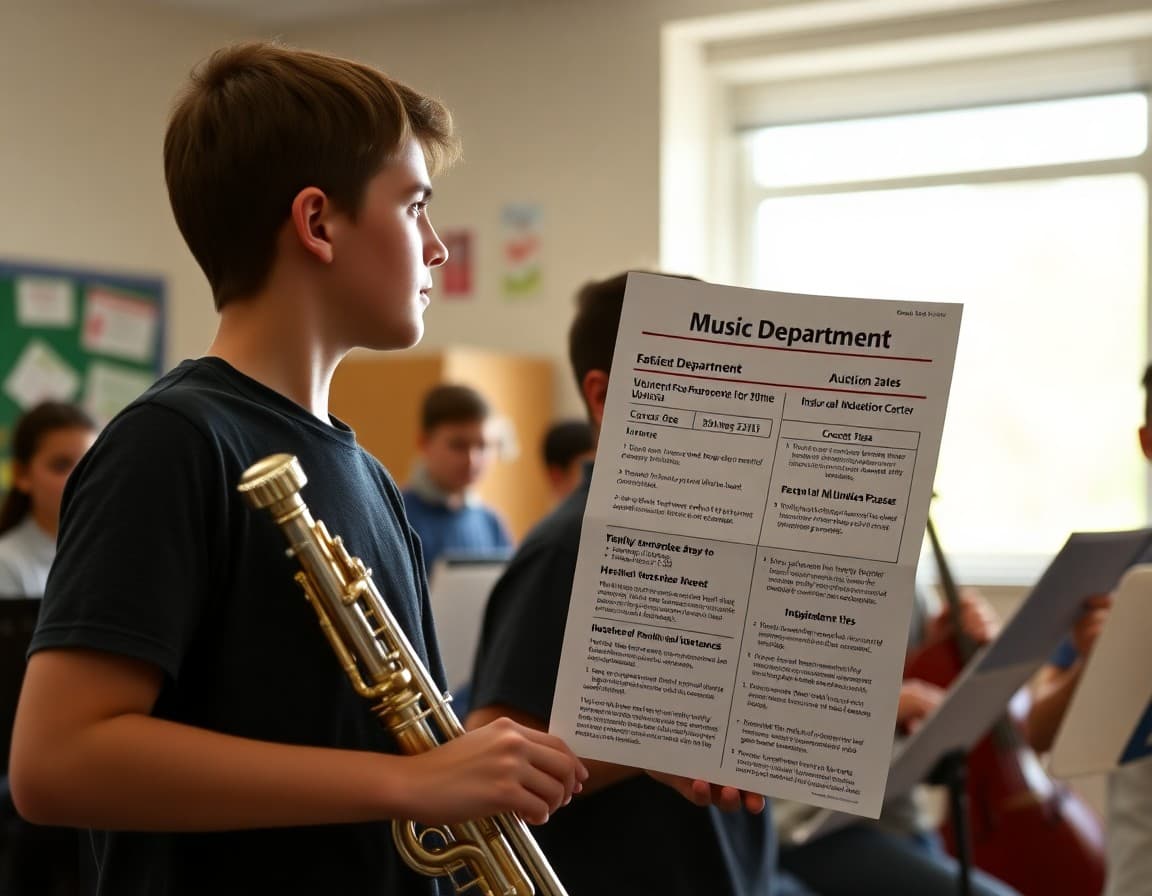
Music families have logistical complexity that other school families do not: instruments to transport, uniforms to maintain, concert schedules to plan around, and practice routines to sustain at home. A music department newsletter that communicates all of this clearly and early reduces the family stress that otherwise builds into complaints, no-shows on concert night, and students who drop out of the program because the logistics became unmanageable. The music director who communicates well keeps more students in the program longer.
Publish the Full Concert Calendar in September
The single most impactful thing a music newsletter can do is publish every concert date for the full school year in the first September communication. Families cannot plan around a concert they do not know about. For families where both parents work, childcare needs coordination. For families who travel, knowing December 10 is the winter concert means they do not book a flight that conflicts with it. "2025-26 Westlake Music Concerts: Fall Concert: November 20, 7 PM. Winter Concert: December 11, 7 PM. Spring Concert: May 7, 7 PM. Jazz Night: March 6, 7 PM. All concerts in the school gymnasium."
Explain Concert Attendance as a Course Requirement
In most music programs, concerts are part of the grade. Families who discover this the week before a concert when they have already made conflicting plans are angry. Families who read it in September have nine months to plan. State the policy plainly in the first newsletter: "School concerts are a required performance assessment for all music students. Missing a concert without an advance excused absence results in a grade reduction of [X]. Three excused absence criteria: documented illness, religious observance, emergency. Please contact Mr. Chen at least one week in advance for planned absences." That level of specificity prevents the most common conflict music departments face with families.
Instrument Rental and Maintenance Information
Families who are new to instrumental music programs need guidance on instrument acquisition, rental versus purchase decisions, and maintenance requirements. Your fall newsletter should address: what instruments the school has available to rent or borrow, what the recommended rental sources are for families who need to rent privately, what maintenance supplies students need (rosin, valve oil, reeds, cleaning cloths), and how to handle an instrument that is damaged or malfunctioning. Students who show up with a broken instrument they cannot fix miss out on critical practice and lesson time.
A Sample Music Department Newsletter Section
Here is a template for a fall semester newsletter:
"Concert Band Update, Fall Semester -- Fall Concert: Thursday, November 20, 7 PM, school gymnasium. Report time for students: 6:30 PM. Uniform: black concert dress, black dress shoes (no sneakers). Concert attendance is a required assessment. Notify Mr. Chen in advance if your student cannot attend. Practice expectations: 20 minutes daily, 5 days per week. Practice charts due Fridays. Instrument maintenance: reeds (clarinet/saxophone) replaced every 2-3 weeks. Contact Mr. Chen for a supply list. School instruments available: see the rental agreement form sent home in September. All-State auditions: December 5. Students must register by November 21 ($20 fee, scholarship available). Audition requirements: two contrasting excerpts plus scales. See Mr. Chen for audition repertoire. Marching band final competition: October 26, Riverside Stadium. Family transport needed: sign up at [link]."
Communicate About Honor Ensembles Early
All-District, All-Region, and All-State ensembles are significant opportunities for talented students, but many families never know about them. Your fall newsletter should introduce these programs: what they are, what the audition process involves, what participation costs, and what students gain from the experience. "All-State Orchestra is a three-day residential event where students from across the state are selected to perform together under a guest conductor. It is one of the most valuable musical experiences a high school student can have. Auditions are December 5. See Mr. Chen to discuss whether this is right for your student."
Connect Practice to Visible Progress
Families who understand why daily practice matters support it at home more consistently than those who see practice as arbitrary homework. Your newsletter can make the connection explicit: "Students who practiced an average of 25 minutes per day over the first month of school will hear a clear difference in their tone quality and technical facility by the November concert. Those who practiced less than 10 minutes per day will feel the gap in the first rehearsal of each week." That honesty about consequences makes practice feel purposeful rather than obligatory.
Recognize Musical Achievement Publicly
A music newsletter that regularly celebrates individual and ensemble achievements builds department pride. "Congratulations to Maya Torres, selected for the All-State Jazz Ensemble. She is the first student from our school to achieve this in 12 years." "Our concert band received a Superior rating at last month's festival, the highest possible score." Specific recognition inspires students who are working toward their own milestones and gives families pride in a program they are investing significant time and money to support.
Get one newsletter idea every week.
Free. For teachers. No spam.
Frequently asked questions
What should a music department newsletter include for band and orchestra families?
The full concert calendar for the year, practice expectations and how they are assessed, instrument maintenance and rental information, uniform requirements and fitting dates, audition schedules for ensemble placement, All-State or regional honor ensemble opportunities and deadlines, marching band schedules if applicable, and any special events like musical theater production participation. Families managing instrument transport, concert attire, and practice schedules need all of this information well in advance.
How does a music department communicate practice expectations to families?
Be specific about what is expected and how it will be assessed. 'Students are expected to practice 20-30 minutes daily. Practice is not directly graded, but students who practice consistently develop the skills that are reflected in their playing assessment grades.' For younger students, practice charts signed by parents serve as accountability tools and should be explained in the newsletter. For high school students, explain the connection between daily practice and audition results.
How should music departments communicate about concert mandatory attendance?
If concerts are a graded component of the music course, say so clearly in every fall newsletter, not just when a concert is approaching. 'All school concerts are a required component of the music program. Missing a concert without an excused absence affects the student's grade. Excused absences require advance notification to the director.' Families who understand this from September can plan around the concert calendar. Families who discover it in November feel blindsided.
How do music departments communicate about All-State or regional honor ensemble opportunities?
Include audition requirements, registration deadlines, costs, and what the experience involves. 'All-State Orchestra auditions require two prepared pieces plus scales. Registration closes November 15. Cost: $20. Students who are selected attend the All-State event in February, a weekend residential experience. Transportation and some costs may be subsidized; contact Mr. Patel for financial assistance information.' Many students who would qualify for these programs never audition because no one clearly explained the process.
Can Daystage help music departments send concert and program newsletters?
Yes. Daystage lets music directors build a semester newsletter with the full concert calendar, audition schedule, and uniform information and send it to all music families in one step. Pre-concert reminder emails can be scheduled in advance so the director is not manually sending reminders during the busy week before a performance.

Adi Ackerman
Author
Adi Ackerman is a former classroom teacher and curriculum writer with 8 years in K-8 schools. She writes about school communication, parent engagement, and what actually works in real classrooms.
More for Department Newsletters
Art Department Newsletter Guide: Sharing Student Work and Program Goals with Families
Department Newsletters · 5 min read
Drama Department Newsletter: Production and Performance Updates
Department Newsletters · 6 min read
Athletics Department Newsletter Guide: Communicating Sports Programs, Eligibility, and Events to Families
Department Newsletters · 5 min read
Ready to send your first newsletter?
3 newsletters free. No credit card. First one ready in under 5 minutes.
Get started free