

Library Department Newsletter: Books Resources and Programs
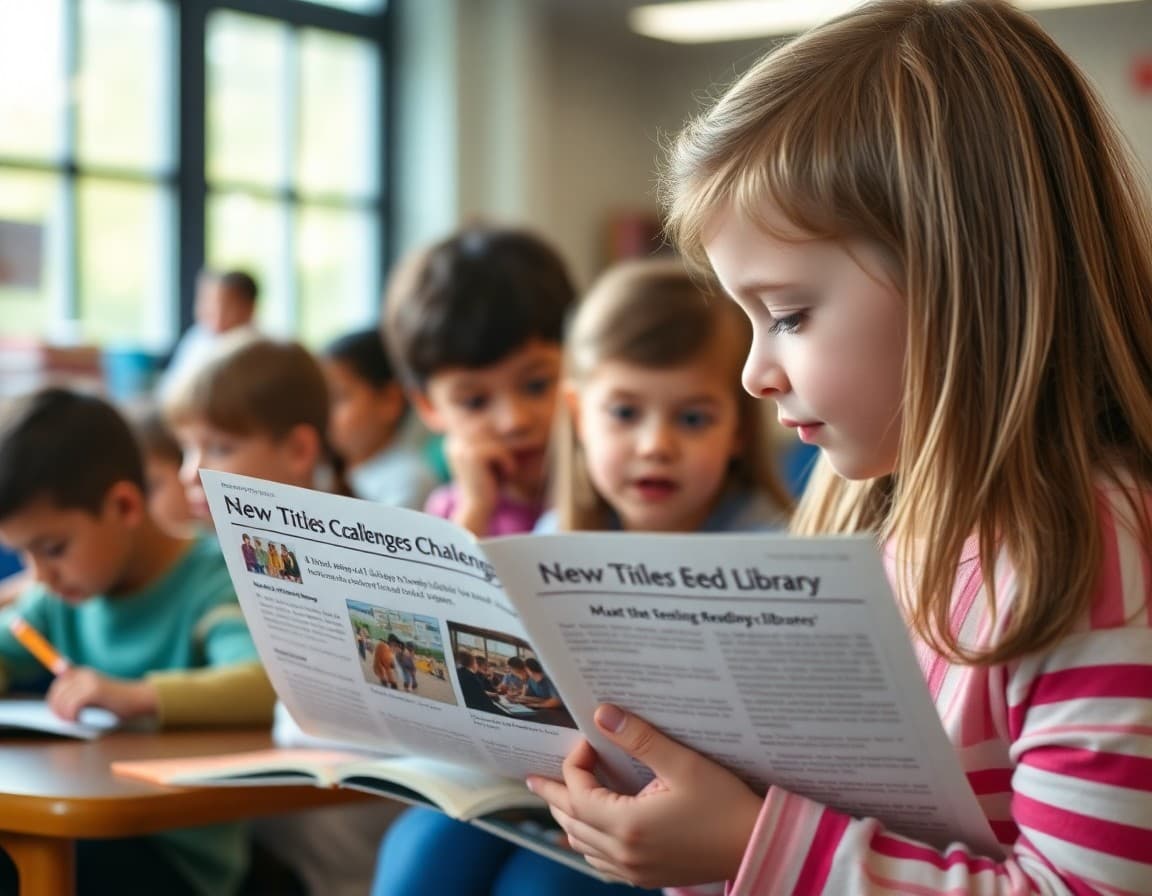
The school library is the most democratically valuable resource in any building: it provides equal access to books, research tools, and information regardless of family income. A library newsletter that communicates what is available and how to access it extends that value to every family. Many families do not know the library has databases students can use at home. Many students do not know about the reading programs the library runs. The newsletter is how the library reaches the families that the book spine displays and the in-school announcements do not.
New Arrivals Drive Engagement
A "just arrived" section in the library newsletter generates excitement that no reading list can match. Pick five to eight new arrivals per month and describe each in two sentences: title, author, and what makes it worth reading. Include a small image of the cover. "The 39-year-old Version of Me: A hilarious memoir about chasing a rap career while teaching. Perfect for music fans and anyone who has changed careers." "Ink Blood Sister Scribe: A fantasy novel about sisters who share a living book. One of the best genre titles we have received this year." Students who see specific recommendations are more likely to browse the library than those who receive a general "come check out our new books" invite.
Explain Remote Database Access Step by Step
School library databases are among the most underutilized resources in education because students and families do not know how to access them from home. Your newsletter should walk through the access process concretely: "To access Britannica School from home, go to school.edu/library and click 'Remote Access.' Log in with your student ID (your school email before the @) and password (your birthdate, format: MMDDYYYY). If you get a login error, contact the library at library@school.edu." That step-by-step guidance is more effective than a general "our databases are available remotely" statement that students then cannot follow through on.
Reading Challenges Build Habits Over Time
School reading challenges succeed when they are accessible to all reading levels and reward participation rather than volume or competition. A newsletter that explains the current challenge -- "read one book in each of five genres by December" -- with the tracking mechanism, the milestone rewards, and the final prize for completion, gets students enrolled. Monthly progress updates that say "87 students have completed at least two genres" create social momentum without embarrassing students who are reading more slowly.
A Sample Library Newsletter Section
Here is a template for a monthly library update:
"Library Update, October -- New Arrivals (highlights): Percy Jackson and the Olympians, new hardcover edition, all five books. The Maze Runner series, newly restocked. Stamped: Racism, Antiracism, and You (Kendi / Reynolds) -- recommended for grades 7+. How the World Really Works (Vaclav Smil) -- nonfiction for science and economics students. Full new arrivals list: school.edu/library/new. Reading Challenge: 54 students have completed at least 3 of 5 genres. 12 have finished all 5. Completion deadline: December 19. Prize: extended lunch pass and library display recognition. Remote access: all students can access our databases from home at school.edu/library (log in with your school email and ID). Best for research: Britannica School (general), Gale In Context (science, social studies). Overdue books: please check your account and return any overdue items. Books returned by October 31 have late fees waived. Questions: library@school.edu or stop by during lunch."
Align Recommendations to Classroom Units
The library is at its most useful when it directly supports what is happening in classrooms. Coordinate with department chairs to know what units are coming up, then feature relevant library resources in your newsletter. "History classes are studying the Civil Rights Movement in November. Our library has 22 titles on this topic, including primary source collections, memoirs, and narrative histories. See the full list at school.edu/library/civilrights." That alignment makes the newsletter a practical curriculum tool, not just a promotional document.
Author Visits Build Excitement for Reading
An author visit is one of the most memorable school library events a librarian can organize. Your newsletter should announce confirmed visits at least a month in advance with the author's name, the book they are presenting, the grade levels invited to attend, and how students can read the book before the visit. "Award-winning author Kwame Alexander will visit on November 14 for a presentation for grades 7 and 8. His book Crossover is available in the library now -- check it out before the visit for the full experience." That kind of pre-visit communication converts a nice event into a genuine reading motivation.
Create a Family Reading Connection
A library newsletter that extends beyond students to families builds a reading culture that goes home. Include a "family reads" section with book recommendations for adults, tips for discussing books with children at different ages, and any family reading programs the public library or community runs. Families who read at home alongside their children are the strongest natural allies for a school reading program, and the library newsletter is the bridge that connects school and home reading culture.
Get one newsletter idea every week.
Free. For teachers. No spam.
Frequently asked questions
What should a school library newsletter include?
New book arrivals organized by genre or grade level, current reading challenges or programs, library hours and how to access library resources remotely, overdue book reminders and fine policies, database access instructions for home use, upcoming author visits or special events, book recommendation features, and information about the library's role in research across subject areas. The library newsletter is also a natural place to highlight recommended titles aligned to current classroom units.
How does a library newsletter communicate about digital resources to families?
Explain the specific databases available and what each one is best for: Britannica for general research, JSTOR for academic articles, Destiny for the school catalog. Include login instructions for home access and the student credentials required. Many families do not know their student can access school databases from home. A newsletter that shows families exactly how to access these resources from outside school significantly extends the library's value.
How do school librarians use newsletters to promote reading challenges?
The most successful reading challenge newsletters explain the challenge rules simply, show the prize structure, create social proof ('last year, 140 students completed the fall reading challenge'), and make signing up easy with a clear link or form. Monthly updates showing how many students have completed each level of the challenge create excitement and competitive motivation without creating pressure.
How should a library newsletter communicate about book returns and fines?
Be direct and non-judgmental. 'Overdue books are the most common reason students cannot check out new titles. If your student has overdue items, they are listed in the library catalog under their account. Books returned by November 15 will have any late fees waived.' A specific waiver deadline for overdue books always generates a wave of returns. Fines that accumulate without clear communication generate resentment; waivers with deadlines generate compliance.
Can Daystage help a school librarian send library department newsletters?
Yes. Daystage lets the librarian build a newsletter with new book cover images, reading challenge updates, and database access instructions, then send it to all families or specific grade levels. A monthly library newsletter sent consistently becomes a resource families expect and consult when their student needs something to read next or a research tool for a class project.

Adi Ackerman
Author
Adi Ackerman is a former classroom teacher and curriculum writer with 8 years in K-8 schools. She writes about school communication, parent engagement, and what actually works in real classrooms.
More for Department Newsletters
Ready to send your first newsletter?
3 newsletters free. No credit card. First one ready in under 5 minutes.
Get started free