

History Department Newsletter: Exploring the Past Together
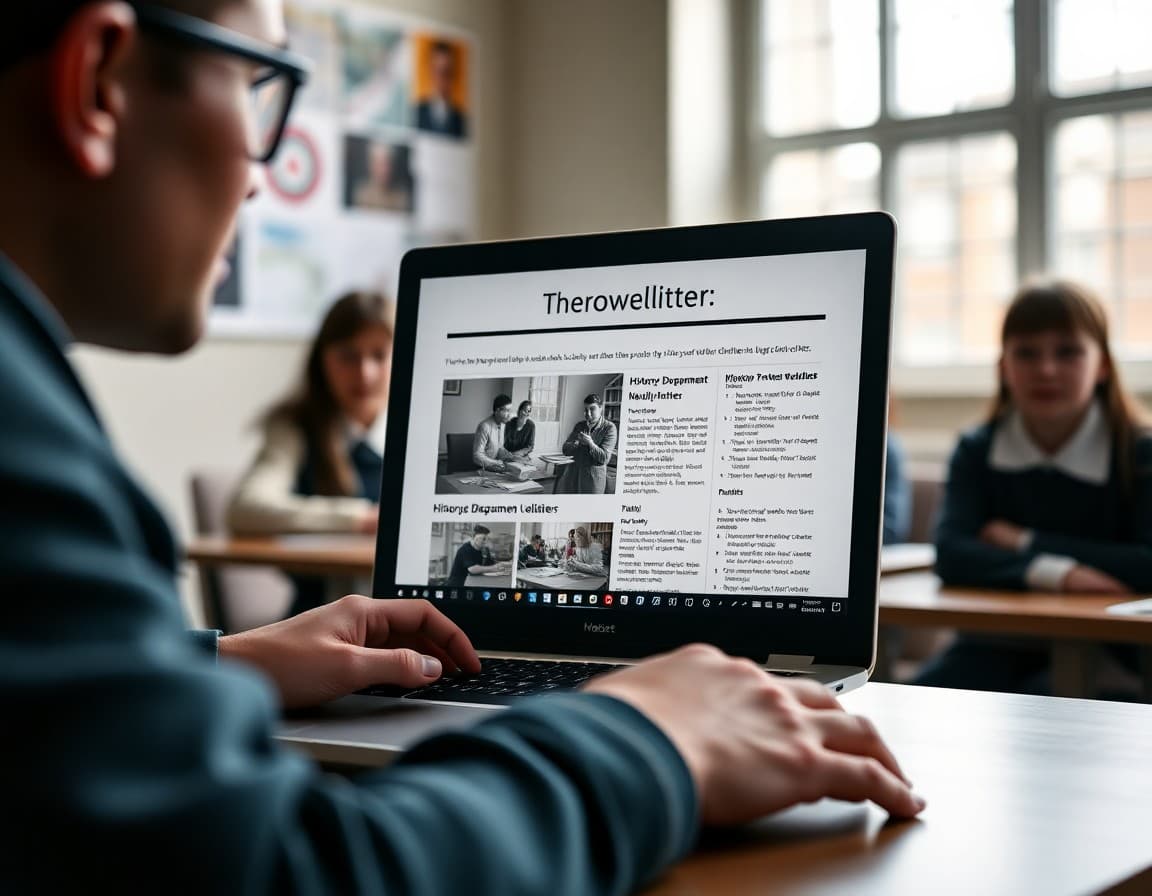
Most families have no idea what happens in a history classroom beyond textbooks and tests. A well-written history department newsletter changes that. It gives parents a reason to ask their kids about Reconstruction or the Cold War at dinner, and it positions your department as one that takes communication seriously.
Start with What Students Are Actually Studying
Skip the syllabus overview and go straight to the current unit. Name the time period, name the question students are wrestling with, and say what skills they're building. "Ninth graders are analyzing primary sources from the Progressive Era to practice argument writing" tells families far more than "students are studying 20th century American history." Be specific. Specificity builds trust.
Explain Your Teaching Methods Without the Jargon
Document-based questions, Socratic seminars, and historiography are meaningful to historians but confusing to most parents. Translate them. Instead of "we're completing a DBQ on World War I," write: "Students read five primary sources written by soldiers, politicians, and journalists during World War I, then wrote an argument about what caused the war." Parents immediately understand what their child did and why it matters.
Connect History to Current Events Thoughtfully
One of the strongest things a history department can do in a newsletter is draw a clear line from the past to the present without turning the newsletter into a political statement. Keep it grounded in the content. "As we study the Civil Rights Movement, students are examining how protest movements create lasting legal change" gives families a framework without putting you in political territory.
Include a Template Excerpt That Families Can Use
A short conversation starter gives parents a concrete way to engage. Here is an example you can drop into any newsletter:
"This week your student studied [topic]. You can ask them: What was the most surprising thing you learned? What evidence did historians use to figure that out? What would you have done if you were living at that time?"
These questions work for any unit and turn a newsletter into a dinner conversation tool.
Highlight Upcoming Events and Deadlines
A history department newsletter should always include a short calendar section. List the next major assignment due date, any documentaries being shown in class, and guest speakers or field trips coming up. Parents who know a Civil War reenactor is visiting on Thursday are more likely to talk with their kid about it that morning.
Feature a Student Question or Debate Moment
One of the best sections you can add costs nothing: quote a student question from class. Something like "During our discussion of the New Deal, one student asked whether government programs actually change poverty or just delay it. That led to a 20-minute debate." This shows families that your classroom produces real intellectual engagement, not just memorization.
Share Supplemental Resources
Point families toward a podcast episode, documentary clip, or museum website related to the current unit. The Smithsonian, Library of Congress, and Facing History all have free family-facing resources. You don't need to build anything new, just curate. Families who follow up at home reinforce what students learn in class.
Keep Your Format Consistent Month to Month
A consistent structure means families know what to expect. Use the same section order every issue: current unit, skills focus, upcoming events, conversation starter, and resource link. When the format is predictable, readers scan faster and retain more. Departments that change their layout every month train families to skim without reading.
Get one newsletter idea every week.
Free. For teachers. No spam.
Frequently asked questions
How often should a history department send a newsletter?
Monthly works well for most departments. You have enough material to fill a meaningful update without overwhelming families. If your department runs major projects or events, consider a mid-month note timed to those milestones. Quarterly newsletters tend to feel disconnected from daily learning.
What content belongs in a history department newsletter?
Lead with what students are currently studying and why it matters. Add context about the skills they're building, such as source analysis or argument writing. Include any documentaries, guest speakers, or field trips coming up. A short spotlight on a student question or debate topic gives families a window into real classroom discussion.
How do you explain document-based questions to parents who aren't familiar with them?
Keep it brief and concrete. Say something like: 'This week students read three primary sources about the civil rights movement and wrote an argument using evidence from the texts.' Most parents understand argument and evidence even if they don't know the term DBQ. Avoid jargon and lead with what students actually did.
How long should a history department newsletter be?
Aim for 300 to 400 words in the main body. Parents are busy. Hit the unit topic, one upcoming date, and one way to support learning at home. If you have more to share, put it in a 'Read More' link or a supplemental attachment rather than expanding the main body.
Can a platform like Daystage help history departments send consistent newsletters?
Yes. Daystage lets you build a template once, reuse it each month, and send it directly to families without copying email lists or reformatting each time. The history department chair can manage the newsletter independently without needing IT support, and families receive it in a readable format on any device.

Adi Ackerman
Author
Adi Ackerman is a former classroom teacher and curriculum writer with 8 years in K-8 schools. She writes about school communication, parent engagement, and what actually works in real classrooms.
More for Department Newsletters
Ready to send your first newsletter?
3 newsletters free. No credit card. First one ready in under 5 minutes.
Get started free