
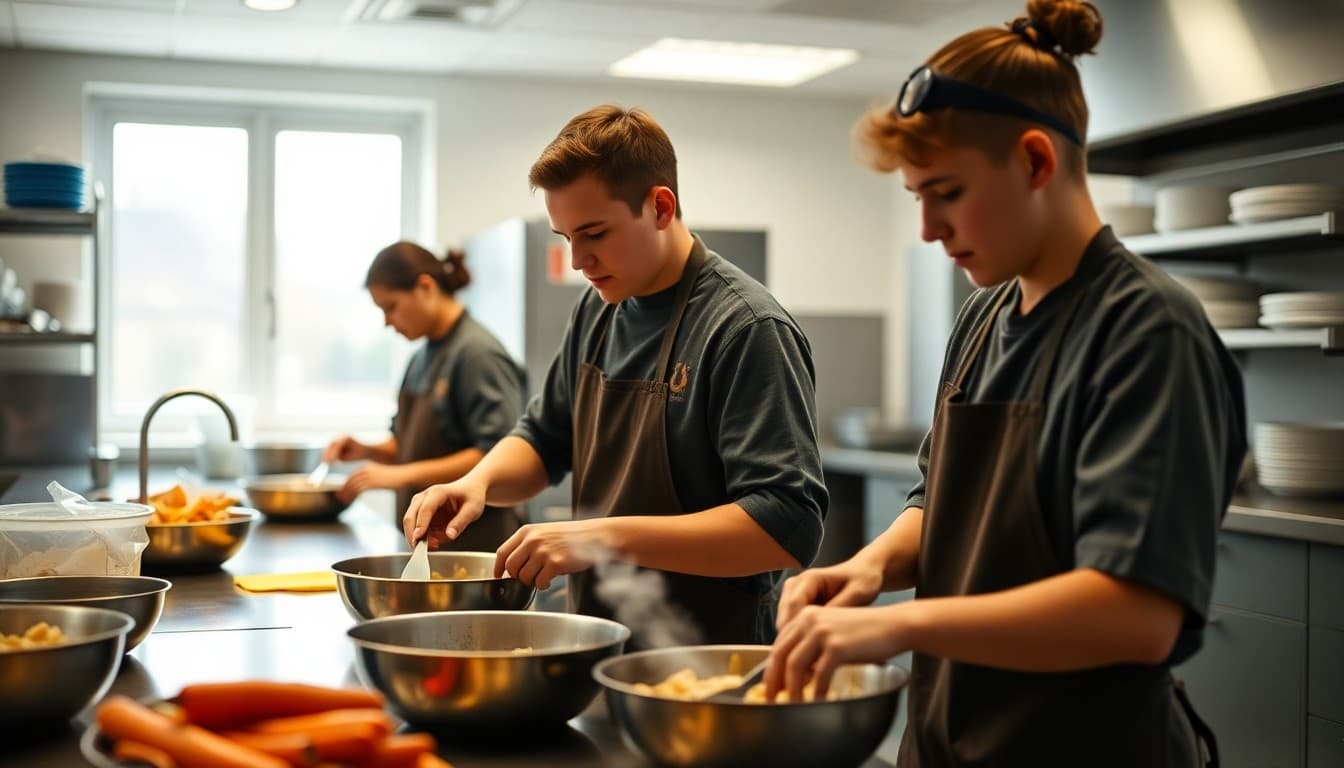
Culinary Arts Class Newsletter: Cooking and Kitchen Skills

Culinary arts is one of those classes that students come home talking about. They made something real. They ate it. A newsletter that captures that energy and connects it to genuine skill development gives families a window into one of the most engaging programs in the building.
Current Unit Overview
Each newsletter should briefly describe what unit the class is working on and why it matters in the broader culinary curriculum. Students and families don't always understand how a knife skills unit connects to everything that comes after. Providing that context makes the skill development legible: "This month we are in our Stocks and Sauces unit. Students are learning the French mother sauces: bechamel, veloute, espagnole, hollandaise, and sauce tomat. These five sauces form the foundation of classical European cooking. Every chef in a professional kitchen is expected to make all five correctly and efficiently. This unit is difficult, which is exactly why we do it in the first semester."
Featured Recipe of the Month
Including a recipe from the current unit is one of the most popular newsletter features in culinary arts programs. Students have already made it; sharing it at home reinforces the learning and families appreciate having professional-quality recipes:
Classic Chicken Stock - yields approximately 2 quarts
Ingredients: 3 lbs chicken bones (roasted), 2 carrots, 2 celery stalks, 1 onion, 1 bouquet garni (bay leaf, thyme, parsley stems). Method: Cover bones and vegetables with cold water. Bring slowly to a simmer over medium heat (do not boil). Skim foam for the first 30 minutes. Simmer uncovered 4 to 6 hours. Strain. Season after straining, not before. Refrigerate overnight, skim solidified fat from surface before using. This is the same recipe the class used on October 14.
Template Excerpt: Monthly Culinary Newsletter
Chef's Table Newsletter - October | Room 204
Month two of the program and students are already thinking like cooks. The biggest mindset shift I see every year in October is when students realize that mise en place, setting up your station completely before starting to cook, is not a suggestion. It is the difference between a smooth service and a chaotic one. This month's unit has hammered that lesson home.
What we cooked this month: Stocks (chicken, vegetable, and veal). Bechamel sauce and gratin dauphinois. A classic French onion soup from our house-made stock. Egg preparations: scrambled, fried, poached, omelette. Students who mastered the omelette will tell you it is harder than it looks.
Industry standard this month: All students received their food handler card after completing the county health department's online certification program. This is a real credential that makes them immediately hirable in any food service position.
Kitchen Safety Standards That Families Should Know
Some families worry about high school students working with commercial-grade knives and hot equipment. Address this proactively: "Students in the culinary program complete a 5-day kitchen safety orientation before they touch any sharp or hot equipment. This includes proper knife grip and storage, burn prevention protocols, fire suppression procedures, and the safe use of commercial ranges. These are the same safety standards used in professional kitchens. Students who do not demonstrate safe practices are not permitted to cook until they can." Specific information is more reassuring than generic assurances.
Career Pathway Information
Culinary arts students benefit from knowing what their skills can lead to. Include brief career pathway information periodically in the newsletter: culinary arts degrees and certificate programs, apprenticeship pathways through the American Culinary Federation, entry-level positions that welcome high school graduates with food handler certification, and local restaurants or catering companies that have hired graduates. A sentence connecting today's kitchen skills to real employment pathways keeps students motivated and helps families see the long-term value of the program.
Upcoming Culinary Events
The culinary classroom should be connected to the school and community beyond regular class periods. List any upcoming events: family tasting nights, community catering opportunities, culinary competitions the class is entering, or guest chef visits. "Our annual Thanksgiving Tasting Dinner is scheduled for November 20 at 6 PM. Students will prepare a full three-course meal for 40 guests. Tickets are $10 per person and go to the culinary arts supply fund. RSVP by November 10 - seats are limited."
Get one newsletter idea every week.
Free. For teachers. No spam.
Frequently asked questions
What should a culinary arts class newsletter cover?
Current curriculum unit and techniques being practiced, recent dishes students have made with photos if possible, kitchen safety and sanitation standards students are learning, ServSafe or food handler certification updates for students pursuing it, upcoming culinary events or competitions, and career pathway information relevant to the culinary field.
How do you connect culinary arts to academic content in a newsletter?
Culinary arts is naturally cross-curricular. Chemistry appears in baking (the Maillard reaction, emulsification, leavening). Math runs through every recipe (scaling, conversions, costing). History and culture show up in every cuisine unit. Calling out one academic connection per newsletter helps families and administrators see the academic depth in a career-technical program.
Should students have input into the culinary arts newsletter?
Yes. Student-written recipe summaries, technique reflections, or short reviews of dishes they made are popular content in culinary arts newsletters. Students who have created something are eager to share it. A student quote about what was hard about making hollandaise sauce is more compelling than a teacher summary of the lesson.
How do you invite families to culinary events in a newsletter?
Tasting events and culinary showcases should be announced clearly with the date, time, location, what food will be served, and whether families need to RSVP. Culinary events at schools often have limited seating for the tasting portion. A clear RSVP link or form in the newsletter prevents overcrowding and gives the culinary class an accurate headcount for preparation.
Can Daystage handle culinary arts newsletters with photos of student dishes?
Yes. A culinary arts newsletter lives or dies by its food photography. Daystage supports full-width hero images and multi-image galleries that let you showcase dishes students have prepared. A photo of a beautifully plated student dish in the newsletter header immediately communicates the standard the program is working toward.

Adi Ackerman
Author
Adi Ackerman is a former classroom teacher and curriculum writer with 8 years in K-8 schools. She writes about school communication, parent engagement, and what actually works in real classrooms.
More for Department Newsletters
Art Department Newsletter Guide: Sharing Student Work and Program Goals with Families
Department Newsletters · 5 min read
Math Department Newsletter Guide for K-12 Schools
Department Newsletters · 6 min read
Counseling Department Newsletter: What to Include and How to Write It
Department Newsletters · 6 min read
Ready to send your first newsletter?
3 newsletters free. No credit card. First one ready in under 5 minutes.
Get started free