

School Newsletter for St. Patrick's Day: Ideas and Template
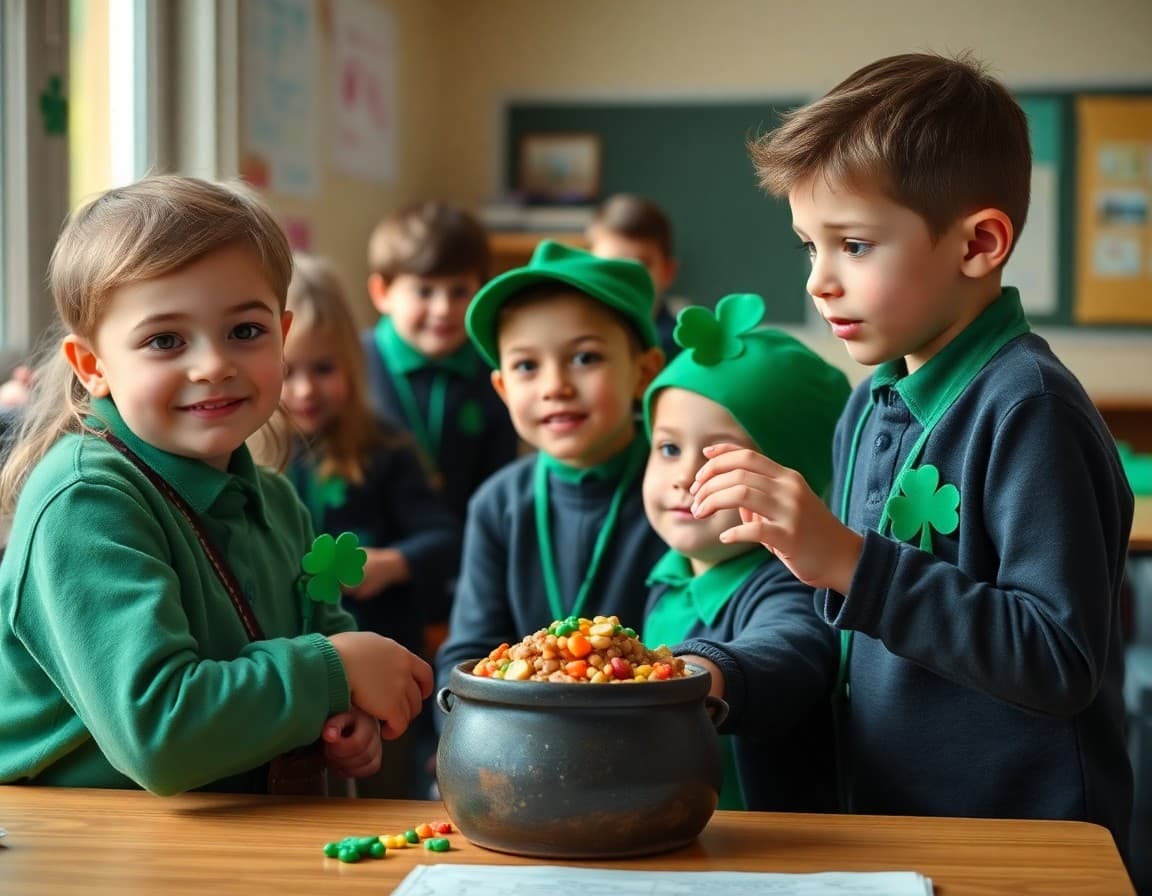
St. Patrick's Day on March 17 is one of the most widely observed cultural holidays in American schools, and also one of the most superficially treated. Green decorations, shamrock crafts, and leprechaun traps are fun -- but there is a genuine historical and cultural story behind the holiday that most students never encounter. A newsletter that connects the classroom's St. Patrick's Day activities to Irish and Irish American history adds educational substance to what might otherwise be a fun but thin occasion.
The History Behind the Holiday
St. Patrick was a fifth-century Romano-British Christian missionary who is credited with bringing Christianity to Ireland. He was born in Roman Britain, kidnapped by Irish pirates as a teenager, and enslaved in Ireland for six years before escaping. He returned to Ireland as a bishop and spent decades building churches and monasteries. March 17 commemorates his death in 461 AD. The holiday became a feast day in the Catholic calendar and was brought to North America by Irish immigrants. It grew into a major cultural celebration in the United States, particularly following the Great Famine of 1845-1852, which drove over a million Irish immigrants to American cities.
Irish Immigration and American History
The Great Famine is one of the most significant immigration events in American history. Between 1845 and 1852, a potato blight devastated Ireland's primary food crop, killing approximately one million people and forcing another million to emigrate, with many coming to New York, Boston, and Philadelphia. Irish immigrants faced significant discrimination in the United States -- "No Irish Need Apply" signs appeared in job advertisements, and Irish Catholic communities were viewed with suspicion by Protestant-majority communities. This history connects to social studies curriculum on immigration, prejudice, and the building of American identity.
What Students Are Learning in Class
Tell families how St. Patrick's Day connects to your current classroom work. For lower elementary, this might be a read-aloud about Irish folklore or a shamrock math activity. For upper elementary, it might be a brief research project on Irish immigration and the Famine. For middle and high school, connections to literature, history, and immigration policy are appropriate. The newsletter should tell families what their student actually explored in class so the dinner conversation has real content to draw on.
Template Section: Irish History in Class
Here is a classroom content section for a fifth-grade newsletter:
"This week we are connecting St. Patrick's Day to our immigration unit. Students are researching the Irish Great Famine of 1845-1852 -- what caused it, how many people died or emigrated, and what Irish immigrants experienced when they arrived in American cities. On Thursday, students will write a first-person journal entry from the perspective of an Irish immigrant arriving in New York in 1848. Ask your student what they found most surprising about Irish immigration history."
Irish Cultural Traditions Worth Sharing
For families who want to go deeper, the newsletter can include a few cultural notes: Irish traditional music uses instruments like the tin whistle, uilleann pipes, bodhrán (a frame drum), and fiddle -- these are distinct from the popular image of bagpipes, which are actually Scottish. Traditional Irish dancing emphasizes footwork with arms held rigidly at the sides -- a style formalized in the 19th century. Irish literature is one of the richest in the English language, producing Swift, Yeats, Beckett, Joyce, and Heaney, among others. These details give families something substantive to explore beyond green food coloring.
Family Activity Ideas
Three options at different effort levels: low -- wear green and tell your student one thing about Irish history. Medium -- watch a short documentary about Irish immigration and discuss it. Higher effort -- visit a local library to find a book about Irish American history, Irish folklore, or an Irish author. For families with Irish heritage, the holiday is an opportunity to share family stories about immigration or cultural traditions. For families without Irish connections, it is a window into a major thread of American immigration history that connects to broader themes about welcome and belonging.
Keeping the Celebration Grounded
Green decorations and leprechaun traps are fun -- there is no reason to strip them out entirely. But a newsletter that includes one paragraph of real history alongside the classroom party logistics gives the holiday depth that students remember. The combination of fun and substance is what good holiday education looks like: students enjoy the celebration and come away knowing something real about where it came from.
Get one newsletter idea every week.
Free. For teachers. No spam.
Frequently asked questions
When is St. Patrick's Day and when should I send the newsletter?
St. Patrick's Day is March 17. Send the newsletter the week before -- the second week of March -- so families have time to engage with any suggested activities. If March 17 falls on a weekend, adjust accordingly so the newsletter arrives before the school week that leads into the holiday.
How do I cover St. Patrick's Day educationally rather than just with green decorations?
Cover the actual history: St. Patrick was a fifth-century Christian missionary in Ireland; the holiday commemorates his death on March 17, 461 AD. The Irish diaspora brought St. Patrick's Day celebrations to the United States in the 19th century, where it became associated with Irish American identity and the Great Famine immigration wave. This context is relevant to social studies curriculum on immigration, religious history, and cultural identity.
What classroom activities connect to St. Patrick's Day?
Strong educational activities include researching the Great Famine of 1845-1852 and its impact on Irish immigration to the U.S., studying Irish mythology and folklore, reading Irish poetry by W.B. Yeats or Seamus Heaney for older students, exploring traditional Irish music and instruments like the tin whistle and bodhrán, and creating shamrock symmetry projects in math.
How do I handle St. Patrick's Day in a diverse school community?
Frame it as cultural and historical education rather than a mandatory celebration. Many families enjoy participating -- wearing green is low-stakes and fun for most students. For families that do not celebrate for religious or other reasons, note that the holiday has historical and cultural significance worth understanding regardless of personal observance.
What newsletter tool works for quick holiday newsletters like St. Patrick's Day?
Daystage makes holiday newsletters fast. A St. Patrick's Day edition with a cultural history section, classroom activity preview, and March calendar takes about 15 minutes to write and send using a saved template. Teachers use it to keep holiday newsletters consistent and professional without spending extra time on formatting.

Adi Ackerman
Author
Adi Ackerman is a former classroom teacher and curriculum writer with 8 years in K-8 schools. She writes about school communication, parent engagement, and what actually works in real classrooms.
More for School Culture
Ready to send your first newsletter?
3 newsletters free. No credit card. First one ready in under 5 minutes.
Get started free