
School Newsletter for New Year's: Ideas and Template

The New Year's school newsletter is one of the most underutilized tools in the school communication calendar. It arrives at a moment when families are genuinely receptive -- the break reset, the fresh start feeling, and the return to routine all create openness to information and planning. A well-timed New Year's newsletter that covers spring semester logistics, student goal-setting, and upcoming dates gets read at a higher rate than almost any other newsletter of the year.
The Return-to-School Logistics Every Family Needs
Start with the practical information. When does school resume? What time do doors open? Is there anything students need to bring back that they may have taken home at the end of the semester -- library books, permission slips, PE clothes? Are there any schedule changes in January? If your school has a delayed start, professional development day, or adjusted bell schedule in the first week back, state it explicitly. Families returning from break are operating on short notice -- the newsletter that arrives before school restarts is the one that prevents the "wait, what day is school?" text messages.
Spring Semester Preview
January is the right moment to give families a full spring semester overview. List the major academic milestones: state testing windows, end-of-unit projects, field trips, spring concerts, parent-teacher conference dates, and the last day of school. Families who receive this information in January can plan around it for the rest of the year. A single spring calendar section in the New Year's newsletter saves you from sending individual event reminders every two weeks for the next five months.
New Year Goal-Setting in the Classroom
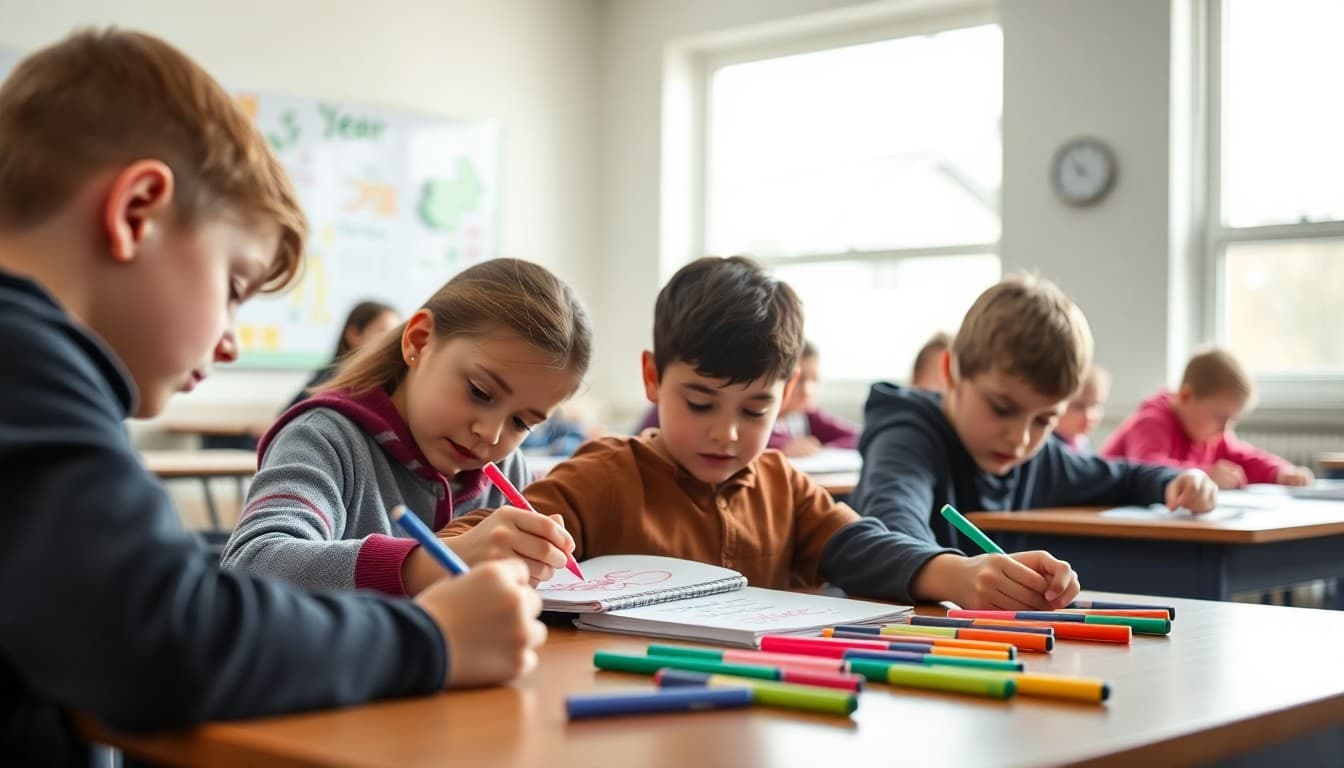
Goal-setting is a natural January classroom activity with strong connections to academic standards around self-regulation, growth mindset, and metacognition. The newsletter should tell families what the goal-setting activity looks like in class and invite them to do a parallel version at home. For elementary students, a one-goal focus works best. For middle and high school, academic, extracurricular, and personal goals can be set across three categories. Give families a simple prompt they can use at dinner: "What is one thing you want to get better at by spring break?"
Template Section: New Year Classroom Goals
Here is a newsletter section previewing a classroom goal-setting activity:
"This week we are starting our 'Best Second Semester' goal-setting activity. Each student will set one academic goal and one classroom community goal for the semester. Goals go on a card that students keep in their desk and review each Monday morning. At home, you can try the same thing: ask your student what one thing they want to accomplish before the last day of school. Write it down together and put it somewhere visible. We will check in on progress at our spring conference."
Acknowledging Different New Year Traditions
January 1 is the Gregorian calendar New Year, but many families in diverse school communities observe new year celebrations at other times. Chinese New Year, Vietnamese Tet, Korean Seollal, and the Ethiopian New Year all fall on different dates. A brief acknowledgment in the January newsletter -- "We know many families in our community celebrate new year at different times, and we welcome all of those traditions" -- takes one sentence and signals inclusivity that matters to families who feel overlooked by calendar-centric school communication.
Reconnecting After Break
Some students return from winter break in an unsettled state. Family stress, travel disruption, schedule changes, or simply the difficulty of returning to early wake times after two weeks of flexibility can make the first week back hard. A newsletter that acknowledges this reality -- "We know the first week back can be an adjustment -- here are three things that help" -- gives families practical advice and signals that the teacher understands student and family experience. Brief, specific suggestions like consistent bedtime, homework check-in at the same time each evening, and a conversation about what the student is looking forward to this semester are more useful than generic encouragement.
Keeping the Newsletter Brief in January
January newsletters should be shorter than usual. Families are returning from break with full inboxes and reduced reading bandwidth. A 250-word January newsletter with a clear date list, one goal-setting activity description, and a brief welcome back message is more effective than a 500-word newsletter covering everything you want families to know for the semester. Link out to the full spring calendar rather than including every event in the newsletter body. Brevity signals respect for the reader's time and increases the likelihood the newsletter actually gets read.
Get one newsletter idea every week.
Free. For teachers. No spam.
Frequently asked questions
When should I send a New Year's school newsletter?
Send it on the first day back from winter break, or one to two days before school resumes. A newsletter arriving the day before school restarts helps families transition back into routine -- students know what to bring, parents know the schedule, and everyone walks in on day one with the right expectations. A newsletter sent the first week back rather than before it is still useful but misses the transition opportunity.
What should a New Year's school newsletter focus on?
Focus on three things: the spring semester schedule and major upcoming dates, classroom goal-setting activities that help students reflect on the second half of the year, and a warm but energizing tone that signals a fresh start without being relentlessly cheerful. Families returning from break are often tired -- a newsletter that is practical and brief is more useful than one that is elaborate.
How do I make New Year's goal-setting relevant for elementary students?
Keep goals concrete and specific. 'Read 10 books by spring break' is a useful elementary goal. 'Be a better student' is too vague to act on. For K-2, help students set one academic goal and one classroom behavior goal using simple sentence stems. For grades 3-5, students can set goals across multiple subjects and track progress with a simple chart. The newsletter can preview the goal-setting activity and invite families to do a parallel version at home.
Are there cultural considerations for New Year's school newsletters?
New Year's is observed at different times across cultures -- the lunar new year is celebrated by Chinese, Vietnamese, Korean, and other communities in late January or February. A January newsletter that only covers January 1 misses an opportunity to acknowledge this. Consider including a brief note about upcoming lunar new year celebrations, particularly if your school community includes families who observe them.
What platform makes it easy to send a New Year's newsletter before break ends?
Daystage lets teachers schedule newsletters to send at a specific time, so you can write the New Year's newsletter before winter break begins and schedule it to arrive the day before school restarts. Teachers use this feature to set up all of January's newsletters in December and send them on autopilot while enjoying their own break.

Adi Ackerman
Author
Adi Ackerman is a former classroom teacher and curriculum writer with 8 years in K-8 schools. She writes about school communication, parent engagement, and what actually works in real classrooms.
More for School Culture
Ready to send your first newsletter?
3 newsletters free. No credit card. First one ready in under 5 minutes.
Get started free