
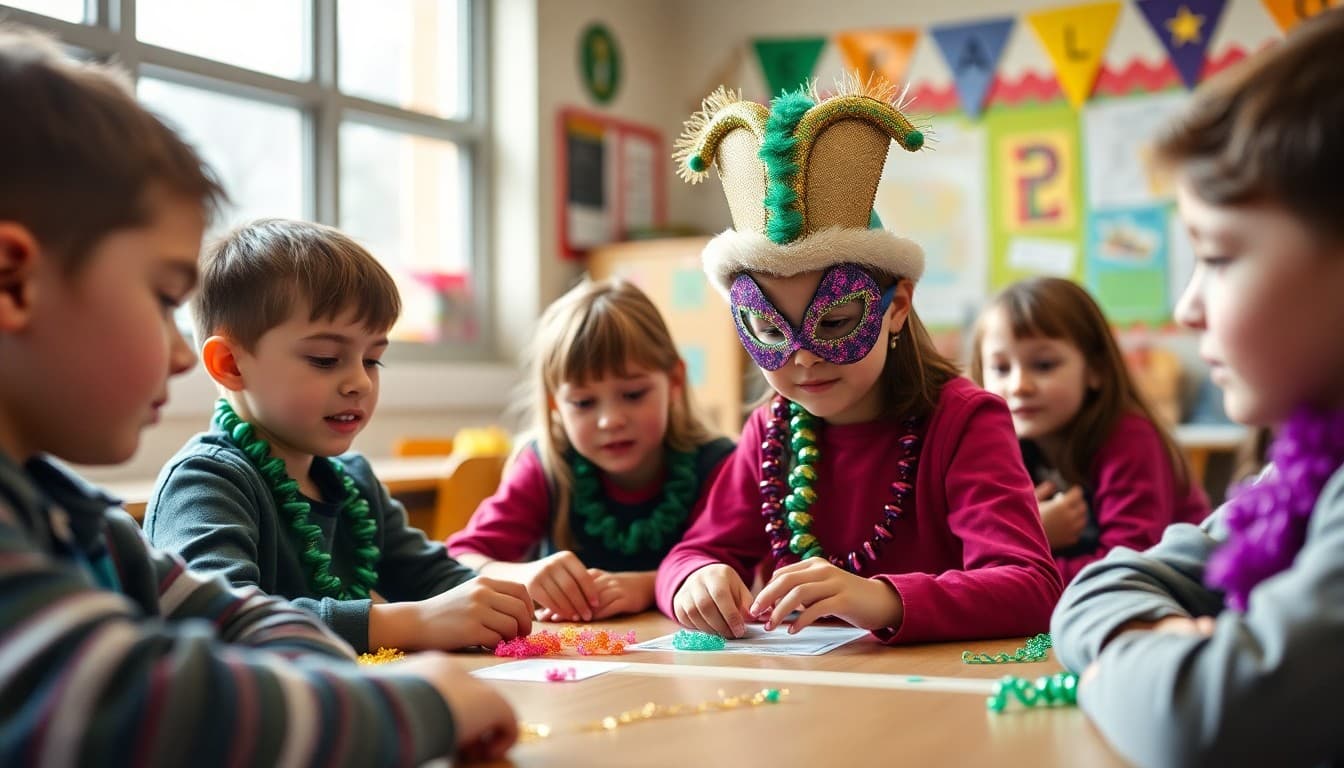
School Newsletter for Mardi Gras: Ideas and Template
Mardi Gras is one of the most misunderstood holidays in the school communication calendar. Outside Louisiana, most people associate it with Bourbon Street and beads -- a party for adults. But the holiday's actual cultural history is rich, geographically rooted, and genuinely interesting for students of any age. A school newsletter that presents Mardi Gras as cultural education rather than a party reference uses the holiday for what it actually offers: a window into French and Spanish colonial history, Creole culture, jazz, and community tradition.
What Mardi Gras Actually Is
Mardi Gras means "Fat Tuesday" in French -- the day before Ash Wednesday, the start of the Christian season of Lent. Traditionally, it was the last day to eat rich foods before the 40-day Lenten fast. In New Orleans, the celebration developed into a weeks-long carnival season with parades, music, masked balls, and community gatherings that reflect the city's French, Spanish, African, and Native American cultural heritage. The holiday is officially observed as a public holiday only in Louisiana, Alabama, and parts of Mississippi and Florida -- but its cultural reach extends nationally through music and food traditions.
The Colors and Their Meaning
Mardi Gras is associated with three colors: purple (symbolizing justice), gold (symbolizing power), and green (symbolizing faith). These were assigned in 1872 by the Rex parade organization and have been standard ever since. Including this detail in the newsletter gives students a concrete talking point and connects the holiday's visual traditions to meaning rather than decoration. The newsletter can also mention the significance of masks in Mardi Gras: originally worn to allow people of different social classes to interact anonymously, they became a central artistic tradition of the carnival.
Classroom Learning Connections
For social studies: Louisiana's colonial history under French and Spanish rule, and the development of Creole culture from the mixing of European, African, and Native American populations. For music: jazz as an art form originating in New Orleans, with figures like Louis Armstrong, Jelly Roll Morton, and Fats Domino. For art: traditional Mardi Gras mask design and parade float construction. For food: King Cake history and Louisiana cuisine. The newsletter can preview which of these connections the classroom is exploring and why.
Template Section: Mardi Gras Cultural Background
Here is a cultural context section for a social studies-linked newsletter:
"This week we are studying Mardi Gras as a window into Louisiana's history. Mardi Gras reflects centuries of French, Spanish, African, and Native American cultural mixing in New Orleans. The holiday's three colors -- purple for justice, gold for power, and green for faith -- were assigned in 1872. We are also listening to some New Orleans jazz from the early 1900s to understand how the music and the celebration developed together. Ask your student to name one musician or tradition they learned about this week."
King Cake: Food as Cultural History
King Cake is the iconic food of Mardi Gras season. A ring-shaped sweet bread decorated with purple, gold, and green icing, it contains a small plastic baby hidden inside -- whoever finds the baby is said to have good luck (or, depending on the tradition, is responsible for buying the next King Cake). The King Cake connects to European Epiphany cake traditions brought to Louisiana by French settlers. It is a concrete, sensory way to connect students to cultural history. The newsletter can mention the tradition and suggest families find a King Cake at a local bakery or make one at home with a simple recipe link.
Family Activity Ideas
Give families three options at different effort levels. Low effort: listen to a New Orleans jazz playlist on a streaming service and ask students what they notice about the instruments and rhythm. Medium effort: watch a 20-minute documentary about Mardi Gras history on YouTube. Higher effort: make paper Mardi Gras masks at home using a craft tutorial and the purple-gold-green color scheme. For Louisiana families, connecting the newsletter to a local Mardi Gras event or parade gives the content immediate community relevance. For families elsewhere, the cultural education lens works without any local connection.
Keeping It Age-Appropriate and Educational
The newsletter should focus entirely on the cultural and historical dimensions of Mardi Gras. Skip any references to the adult party aspects of the holiday, even in passing. For elementary students, the focus is food, music, and color traditions. For middle school, the historical and cultural depth is appropriate. For high school, the broader connections to colonialism, cultural mixing, and the African American roots of jazz provide substantial material. Stay in the educational lane and the holiday has plenty to offer at every grade level.
Get one newsletter idea every week.
Free. For teachers. No spam.
Frequently asked questions
When is Mardi Gras and when should I send the newsletter?
Mardi Gras, also called Fat Tuesday, falls 47 days before Easter, which places it anywhere from early February to early March. In 2027 it falls on February 16. Send the newsletter about a week before so families have time to explore the cultural connections and use any suggested activities.
Is Mardi Gras appropriate for a school newsletter?
Yes, when framed appropriately. The adult carnival associations of Mardi Gras are not relevant in a school context. The holiday's cultural history -- French and Spanish colonial heritage, Creole culture, New Orleans traditions, the significance of the colors purple, gold, and green -- is rich educational content. Focus on the cultural and historical dimensions, not the party aspects.
How does Mardi Gras connect to classroom curriculum?
Mardi Gras connects to social studies through Louisiana history, French and Spanish colonial America, and Creole and Cajun cultural heritage. It connects to music through jazz and second-line traditions. It connects to art through mask-making and parade float design. It connects to food culture through King Cake and Louisiana cuisine. Most of these connections have curriculum standards alignment at different grade levels.
What family activities connect to Mardi Gras?
Families can watch a documentary about New Orleans and Mardi Gras history, make a King Cake together at home using a simple recipe, listen to New Orleans jazz music and discuss its origins, or create paper Mardi Gras masks using a craft tutorial. For older students, reading about the history of Creole culture or the music of Louis Armstrong provides deeper context.
Can Daystage help send a Mardi Gras newsletter with a fun, colorful format?
Yes. Daystage supports custom color headers and formatting that can reflect the purple, gold, and green of Mardi Gras without requiring graphic design skills. Teachers in Louisiana and nationally use it to send culturally themed newsletters that feel festive and professional at the same time.

Adi Ackerman
Author
Adi Ackerman is a former classroom teacher and curriculum writer with 8 years in K-8 schools. She writes about school communication, parent engagement, and what actually works in real classrooms.
More for School Culture
Ready to send your first newsletter?
3 newsletters free. No credit card. First one ready in under 5 minutes.
Get started free