

School Newsletter for Fourth of July: Ideas and Template
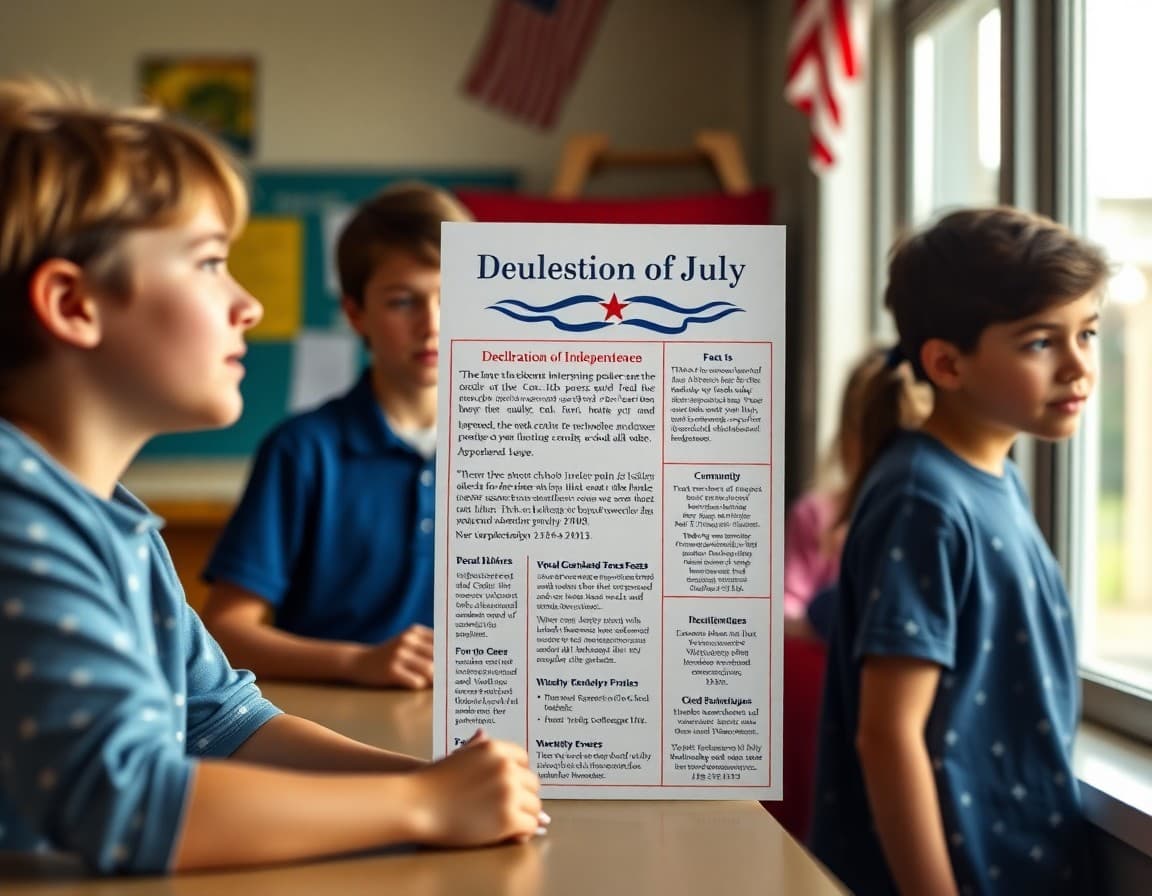
The Fourth of July is the most American of national holidays -- the celebration of the Declaration of Independence and the birth of a nation. For schools, it typically falls during summer break, which means it belongs to summer newsletter territory rather than the regular school-year communication calendar. But for schools with summer programs, or teachers who maintain family connection over the summer, the Fourth of July provides rich historical content and a natural hook for a July newsletter.
What Actually Happened on July 4, 1776
On July 4, 1776, the Continental Congress formally adopted the Declaration of Independence, drafted primarily by Thomas Jefferson. It is worth noting what July 4th is not: it is not the day the Revolutionary War began (fighting started in April 1775), nor the day it ended (the Treaty of Paris was signed in September 1783), nor even the day all delegates signed the Declaration (most signatures were collected on August 2). The Declaration was a statement of political philosophy and an act of profound legal risk -- the signers were committing what the British Crown considered treason. That context makes the holiday far more interesting than a simple "we were born as a nation" framing.
The Declaration's Ideals and Their Complex Legacy
The Declaration of Independence states that "all men are created equal" and are endowed with "unalienable rights" to "Life, Liberty, and the pursuit of Happiness." In 1776, these ideals were explicitly denied to enslaved African Americans, to Native Americans, and to women. The gap between the stated ideals and the lived reality of millions of Americans in 1776 is one of the central tensions in American history. Frederick Douglass addressed this directly in his 1852 speech "What to the Slave Is the Fourth of July?" -- one of the most powerful pieces of American political rhetoric ever written and appropriate for high school students. Including this complexity in the newsletter is what makes the history educational rather than merely ceremonial.
Template Section: Fourth of July History for Families
Here is a historical context section that is accurate and age-appropriate for most families:
"Fourth of July, 2027: On July 4, 1776, the Continental Congress adopted the Declaration of Independence, written primarily by Thomas Jefferson. The Declaration begins with one of the most famous lines in American history: 'We hold these truths to be self-evident, that all men are created equal.' The Revolutionary War had already been underway for more than a year at that point, and would continue for seven more. The ideals of the Declaration -- equal rights, self-governance, freedom from tyranny -- have driven American political life, in all its complexity, ever since."
Summer Reading Connection
If your school or library runs a summer reading program, the Fourth of July newsletter is an ideal vehicle for promoting it. Include the library's summer reading program name, how to sign up, any prizes or events associated with it, and a book recommendation list appropriate for your grade level. A summer reading program recommendation that arrives in July rather than May still catches many families who had not enrolled their student yet. Include a direct link to the library sign-up page so the action is a single click.
Community Events Worth Sharing
Most communities have Fourth of July parades, fireworks, and community celebrations. Including information about local events in the school newsletter is a community service that families appreciate. Keep it brief: the parade start time and location, the fireworks site and viewing tips, and any community programs happening at local parks or libraries during July. This kind of community content makes the school newsletter feel like a genuine community resource rather than just an academic communication tool.
Safety Reminders for the Long Weekend
For younger grades especially, a brief safety section is appropriate. Fireworks safety: only attend professional displays, never handle consumer fireworks, keep young children away from all fireworks including sparklers (which burn at 1,800 degrees). Outdoor heat and sun safety during July community events. Water safety for families using pools, lakes, or rivers over the long weekend. These reminders are brief, practical, and appreciated by parents who might not have thought them through. Keep it to three bullet points -- not a lecture.
Previewing August and Back-to-School
The July newsletter is also the natural moment for a back-to-school preview. Include the first day of school date, school supply lists if they are available, any school calendar changes for the coming year, and enrollment or registration deadlines for families new to the district. Families who receive this information in July can prepare over the summer rather than scrambling in August. The Fourth of July newsletter -- even if the primary content is patriotic -- can double as the back-to-school information release that sets families up for fall.
Get one newsletter idea every week.
Free. For teachers. No spam.
Frequently asked questions
Does it make sense to send a Fourth of July school newsletter if school is out for summer?
Yes, in two situations. First, if your school has summer programs -- camps, remediation, enrichment -- a newsletter connecting the summer program to Fourth of July content keeps families engaged. Second, many schools send a summer newsletter that covers community events, summer reading programs, and back-to-school preview; Fourth of July is a natural hook for that communication.
What historical content about the Fourth of July is worth including?
Cover what actually happened on July 4, 1776 -- the Continental Congress adopted the Declaration of Independence, not the date the Revolutionary War began or ended. The Declaration was signed by 56 delegates over the following weeks; John Hancock's famously large signature came in August. The Revolutionary War did not end until 1783 with the Treaty of Paris. These specific facts make the newsletter more interesting than a generic 'we declared independence today' statement.
How do I address the Fourth of July in an inclusive way for all families?
Acknowledge that Independence Day has different meanings for different communities -- for some families, particularly Black Americans and Indigenous families, the ideals of the Declaration of Independence were explicitly not extended to their ancestors in 1776. Frederick Douglass's 1852 speech 'What to the Slave Is the Fourth of July?' is one of the most powerful American addresses ever written and is appropriate reference material for middle and high school students.
What family activities connect to Fourth of July for a school newsletter?
Attending a community parade or fireworks display, visiting a local historical site connected to the Revolutionary War period, reading the Declaration of Independence as a family and discussing it, and researching a Founding Father from your state are all strong activities. Many public libraries have Fourth of July programming for children throughout the summer.
Can Daystage help send summer newsletters with Fourth of July content?
Yes. Daystage works for summer newsletters as well as regular school-year communications. Teachers who run summer programs or want to maintain connection with families during summer use Daystage to send monthly summer newsletters that cover events, reading goals, and community activities including Fourth of July.

Adi Ackerman
Author
Adi Ackerman is a former classroom teacher and curriculum writer with 8 years in K-8 schools. She writes about school communication, parent engagement, and what actually works in real classrooms.
More for School Culture
Ready to send your first newsletter?
3 newsletters free. No credit card. First one ready in under 5 minutes.
Get started free