
School Newsletter for Earth Day: Ideas and Template
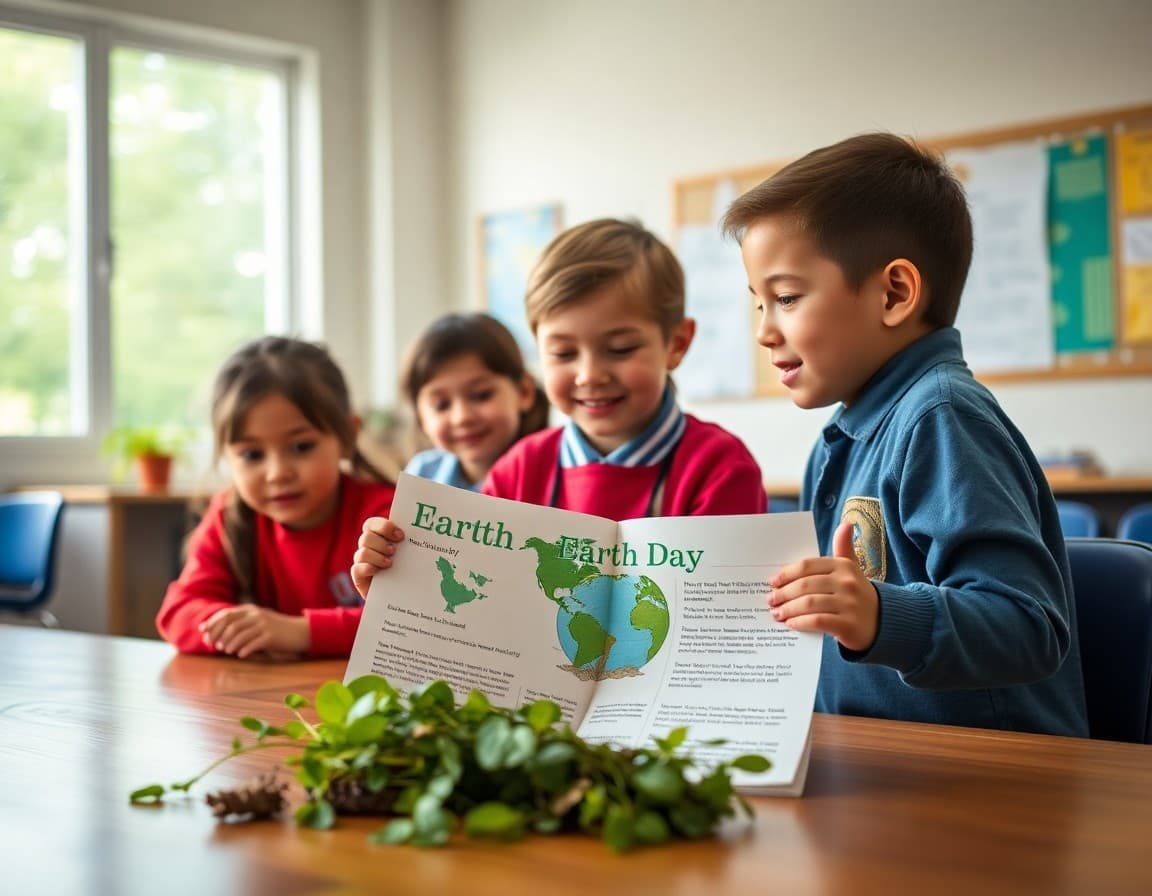
Earth Day on April 22 has been observed since 1970. It generates more classroom activity than almost any other spring occasion -- cleanups, garden projects, recycling drives, and science experiments. The newsletter is the right place to tell families what students are doing, why it connects to the curriculum, and what families can do alongside the school's efforts. But the most effective Earth Day newsletters skip the generic green messaging and go specific: one fact, one activity, one action families can actually take.
The History of Earth Day Is Worth Sharing
Earth Day was founded in 1970 by Senator Gaylord Nelson of Wisconsin, inspired by the 1969 Santa Barbara oil spill that released three million gallons of crude oil off the California coast. On the first Earth Day, 20 million Americans participated in demonstrations, rallies, and environmental events. Within a year, the U.S. government created the Environmental Protection Agency and passed the Clean Air Act. This origin story -- environmental action producing measurable policy change -- is genuinely interesting to students and connects to civics and history curriculum, not just science.
What Students Are Studying in Science Right Now
April science units in most schools cover ecosystems, plant life cycles, water systems, or weather. Earth Day is a natural anchor for whatever unit your class is in. Tell families specifically: "We are finishing our ecosystems unit and using Earth Day to discuss how ecosystems are disrupted by human activity -- and how they recover." That sentence takes five seconds to write and gives parents a hook for a conversation at home that is far more engaging than "We're doing Earth Day stuff."
School Earth Day Activities
If your school is doing an Earth Day campus cleanup, tree planting, or environmental project, the newsletter should give families all the details: date, time, location, whether families can participate, what to wear or bring. If families are invited, make the invitation explicit and include a sign-up link. If the activity is student-only, still describe it so families can ask their student about the experience. Earth Day activities that families know about in advance generate more at-home conversation than activities that students mention only vaguely as "we did something outside."
Template Section: Earth Day School Cleanup
Here is a school event section for Earth Day:
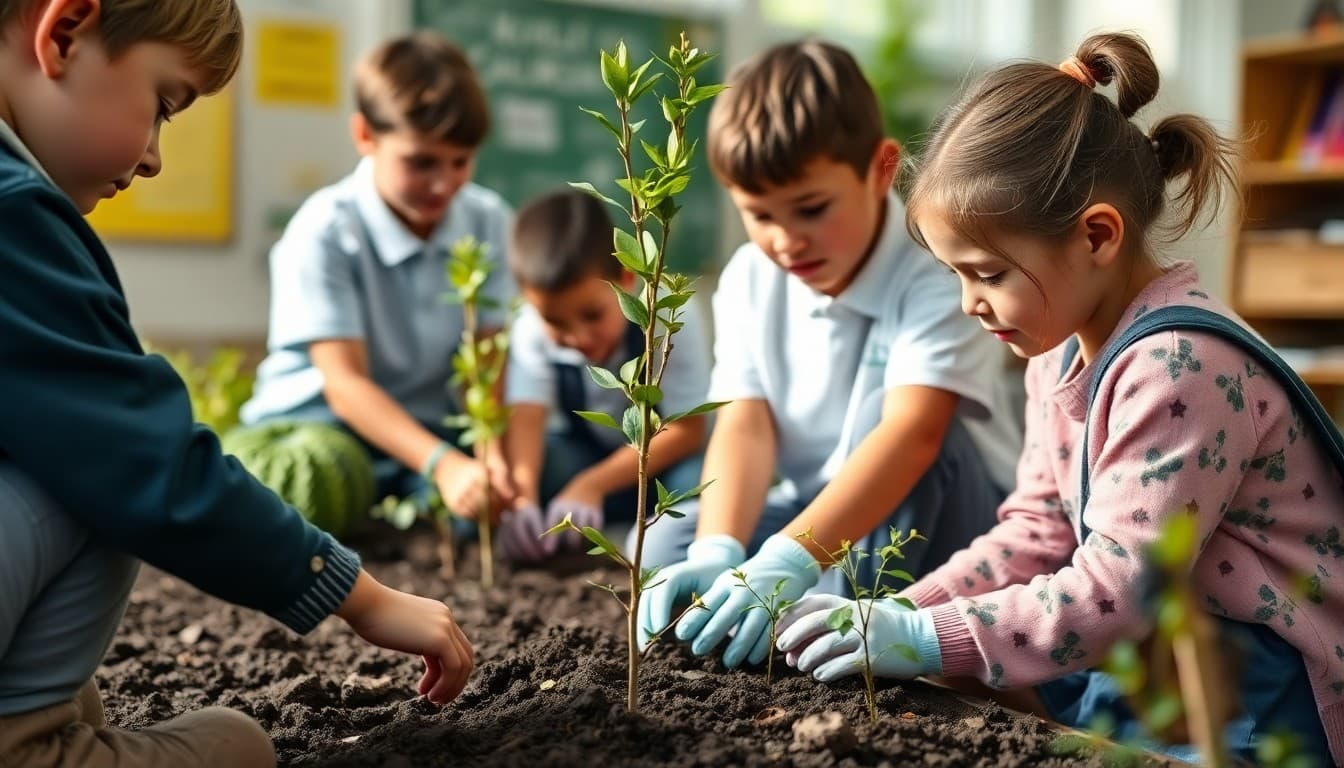
"Earth Day Campus Cleanup -- April 22, 1:00-2:30 PM: All students will participate in our annual Earth Day cleanup of the school grounds. Students will work in teams to collect litter, plant six new trees in the back field, and add fresh compost to the school garden. Families are welcome to join us starting at 1:30 PM -- wear clothes that can get dirty. We will document the project with photos and share results in the following newsletter. No school on April 23 -- see below for the spring break calendar."
One Concrete Action for Families
Give families one specific action they can take this week, not a list of ten things they feel guilty about not doing. Good options: plant one native plant or flower in a pot or yard. Do a 15-minute litter pickup in your neighborhood. Switch to reusable bags for one week and see how many plastic bags you avoid. Check your home's water meter and look for leaks. Visit a local nature preserve or park and keep a brief wildlife log. One concrete action, framed as an experiment rather than an obligation, is far more likely to happen than a long list of environmental commitments.
Connecting Environmental Issues to Local Context
The most effective Earth Day newsletter content is local, not global. "The air quality in our county has improved by 30 percent since 1990 thanks to the Clean Air Act" is more engaging for parents than "climate change is a global crisis." "The creek behind our school is home to three species of native fish that were gone in the 1970s due to pollution and have returned since cleanup efforts" is a fact families can point to on a walk. Local, specific, measurable environmental information builds connection in a way that global statistics often do not.
Environmental Justice: A Deeper Layer for Older Students
For middle and high school Earth Day content, the newsletter can reference environmental justice -- the fact that environmental hazards like polluting factories, landfills, and contaminated water sources are disproportionately located near low-income communities and communities of color. This is both historically documented and curriculum-relevant in social studies, science, and civics. A sentence connecting Earth Day to environmental justice adds depth that older students and their families can engage with substantively: "This year our class is exploring who bears the most environmental burden in our region and why that matters for equity."
Get one newsletter idea every week.
Free. For teachers. No spam.
Frequently asked questions
When is Earth Day and when should I send the newsletter?
Earth Day is April 22 every year. Send the newsletter the week before -- the third week of April -- so families have time to plan any Earth Day activities and understand what students are doing in school for the occasion. Many schools hold Earth Day events on or around April 22, and the newsletter should give families the event details early enough to participate.
How do I make an Earth Day newsletter more substantive than just recycling tips?
Connect the newsletter to specific environmental science topics students are studying. Cover the history of Earth Day -- it began in 1970 as a response to a massive oil spill in Santa Barbara, California, and mobilized 20 million Americans in the first year. Include one measurable fact about local or national environmental conditions rather than general statements about 'the planet.' Specific, grounded content is more useful than generic green messaging.
What classroom activities are worth highlighting in an Earth Day newsletter?
A school garden project, a campus cleanup, a letter-writing campaign to a local elected official about an environmental issue, a water usage audit of the school building, or a biodiversity walk cataloging plants and animals on school grounds are all strong Earth Day activities. Tell families which activity the class is doing and invite them to participate if the activity allows.
How do I keep Earth Day content from feeling preachy in the newsletter?
Focus on what students are doing and discovering rather than lecturing families about their choices. Share a specific fact the class learned this week. Invite families to try one concrete action, framed as a suggestion rather than an obligation. The newsletter is a window into classroom learning, not an environmental advocacy platform.
Can Daystage help send an Earth Day newsletter with links to action resources?
Yes. Daystage lets you embed links to Earth Day activities, local environmental volunteer opportunities, and science resources directly in the newsletter. Teachers use it to send Earth Day newsletters that connect families to specific actions rather than just general awareness messaging.

Adi Ackerman
Author
Adi Ackerman is a former classroom teacher and curriculum writer with 8 years in K-8 schools. She writes about school communication, parent engagement, and what actually works in real classrooms.
More for School Culture
Ready to send your first newsletter?
3 newsletters free. No credit card. First one ready in under 5 minutes.
Get started free