
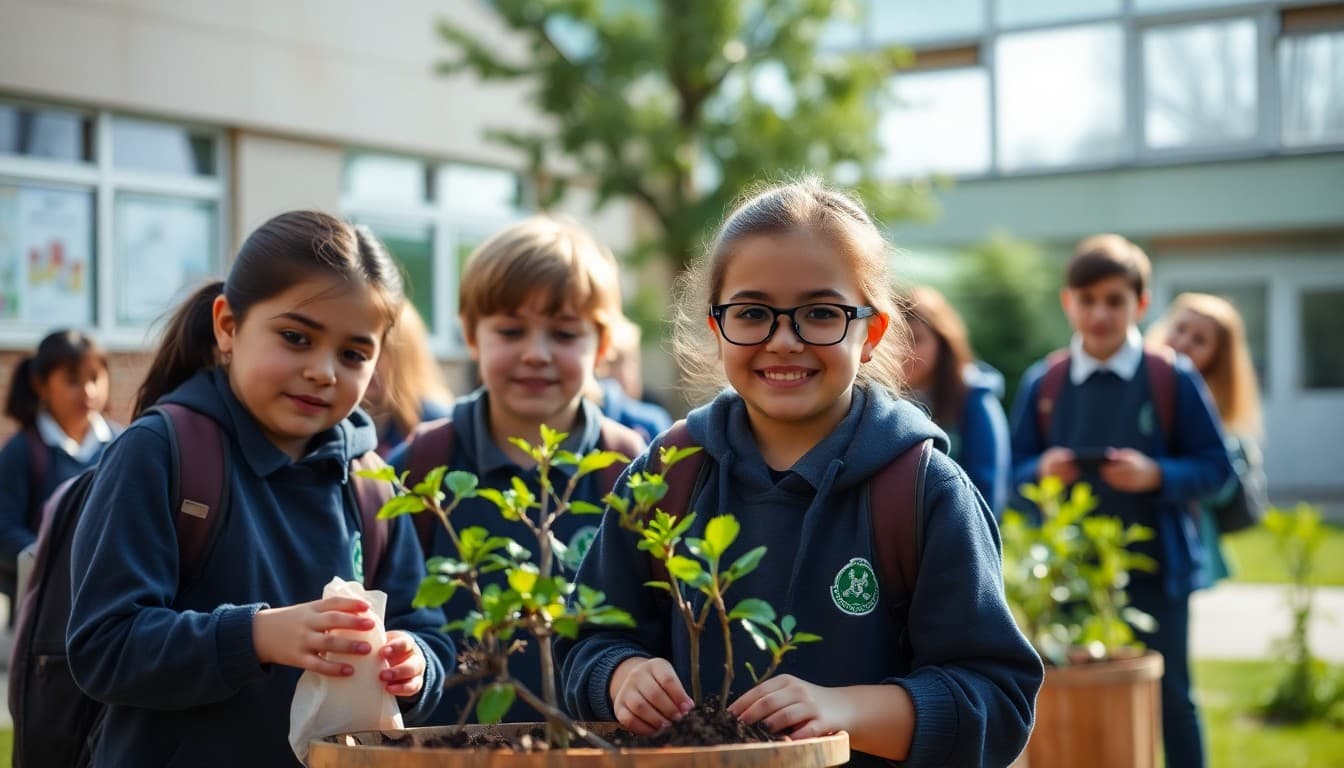
School Green Team Newsletter: Environmental Champions Update
A school green team gives students a vehicle for environmental action that goes beyond classroom learning. When the newsletter around the team is specific about what it is doing, honest about what it is accomplishing, and concrete about how families can participate, the team's work extends into the community rather than staying within the walls of the school.
Name the team and introduce its members
A green team newsletter that refers to "our environmental leaders" without naming them misses the recognition opportunity that motivates student involvement. Name the students on the team, their grade levels, and the faculty advisor. "This year's Jefferson Green Team includes 14 students from grades 4-7, led by faculty advisor Ms. Chen." That sentence makes the team real and specific.
Describe active projects with specific status
Tell the community what the green team is working on right now:
- Cafeteria composting program: currently running in the main cafeteria, expanding to the gym concession stand in March
- Energy audit: team completed a building walkthrough in January, identified 12 areas of energy waste, presenting recommendations to the principal in February
- Native plant garden: design complete, fundraising 60% of goal, planting day scheduled for April 15
- Waste-free lunch challenge: launching February 3 for one week, measuring single-use plastic reduction
Project status updates give the community something to follow and give team members visible accountability for their commitments.
Report impact data
Environmental impact numbers anchor the team's work in reality. "Since launching our composting program in September, the green team has diverted 2,340 pounds of food waste from landfill. Our recycling sort program has reduced contamination in the recycling stream from 34% to 11%, which means more of our recyclable materials are actually being recycled."
Connect those numbers to something families can visualize: "2,340 pounds is roughly the weight of a small car that would otherwise be decomposing in the county landfill and producing methane."
Give families a specific action to take
Every green team newsletter should include one specific, low-effort family action that aligns with the team's current focus: "This month the green team is focused on energy conservation. At home, try: turning off lights and devices in empty rooms, checking that your family's thermostat is programmed (not left on constant heat or AC), and unplugging devices that draw standby power. Track your electric bill for 30 days and see if there is a change."
Recruit new members with honest descriptions
"The Green Team is accepting applications for new members in grades 3-8. Members meet every Wednesday at lunch for 40 minutes. We are currently running three active projects. Members present to the school board in May. Skills you will develop: project management, environmental science, data collection, and public speaking. If this sounds interesting, fill out the application at [link] by March 15."
An honest, specific description of the commitment is more effective at recruiting committed members than a vague enthusiasm pitch.
Template: green team monthly update newsletter
"Jefferson Elementary Green Team Update - February 2026: We diverted 287 pounds of food waste from landfill in January. Our native plant garden fundraiser has reached $1,240 of our $1,800 goal. The energy audit report goes to the principal next week. New members welcome: applications open until March 15 at [link]. This month's family action: turn off one device you leave on standby and report back at [green team email]. Every action compounds."
Celebrate external recognition
If the green team receives recognition from a district program, a state environmental award, or an outside organization, share it in the newsletter. "Jefferson Elementary received a Green School designation from the state Department of Environmental Conservation this month. The green team's composting and energy audit work were cited specifically in the award."
External recognition validates the team's work in a way that internal celebration cannot. It also builds community pride in the program and motivates future participation.
Get one newsletter idea every week.
Free. For teachers. No spam.
Frequently asked questions
What should a school green team newsletter include?
Name the current green team members and faculty advisor. Describe the team's active projects and their status. Share any environmental impact data from the school's sustainability initiatives. Announce upcoming events or action opportunities for the school community. Describe how new members can join, whether students, families, or staff. Include one specific way families can take action at home that aligns with the school's current focus.
What environmental projects do effective school green teams run?
The most common and impactful green team projects include cafeteria composting programs, single-stream versus sorted recycling, energy audits of the school building, tree planting and native plant landscaping, school garden management, waste-free lunch campaigns, and school supply drives to keep items out of landfill. The newsletter should describe whichever projects the team is actively running, their status, and how families can support them.
How do you measure and report a green team's environmental impact?
Track pounds of materials diverted from landfill through composting and recycling, kilowatt-hours of energy saved through identified building improvements, gallons of water saved through garden irrigation changes, and number of trees or native plants added to the school grounds. Monthly or quarterly reporting in the newsletter makes the team's impact visible and keeps the community invested in the outcomes.
How do you recruit students to the green team through the newsletter?
Describe what being on the green team actually involves: meeting frequency, types of projects, how decisions are made, and what students learn. 'Green team members meet every Wednesday at lunch, run real environmental projects in the building and on the grounds, and present their work to the school board each spring. Students develop project management, public speaking, and environmental science skills.' That description is more compelling than 'join a fun club.'
How does Daystage support school sustainability program communication?
Daystage lets you build a green team newsletter series with monthly environmental impact updates, project announcements, and recruitment calls. A consistent visual identity in the newsletter, using the school's green team logo or imagery, builds program recognition in the community. Photo-rich updates from planting days and waste audits generate strong engagement from families who care about the school's environmental work.

Adi Ackerman
Author
Adi Ackerman is a former classroom teacher and curriculum writer with 8 years in K-8 schools. She writes about school communication, parent engagement, and what actually works in real classrooms.
More for School Culture
Ready to send your first newsletter?
3 newsletters free. No credit card. First one ready in under 5 minutes.
Get started free