
School Cell Phone Ban Newsletter: Our Policy Explained
Cell phone bans are now among the most widely implemented school policies in the country, and among the most controversial with family communities. The newsletter that announces a phone ban is the difference between a policy that families accept and support and one that generates sustained conflict. It needs to be clear about the policy, honest about the reasoning, and direct about the safety concern families will raise within five minutes of reading it.
State the policy exactly
Lead with specifics. Do not make families guess:
- When phones must be stored: during the entire school day from first bell to final bell, or during instructional periods only
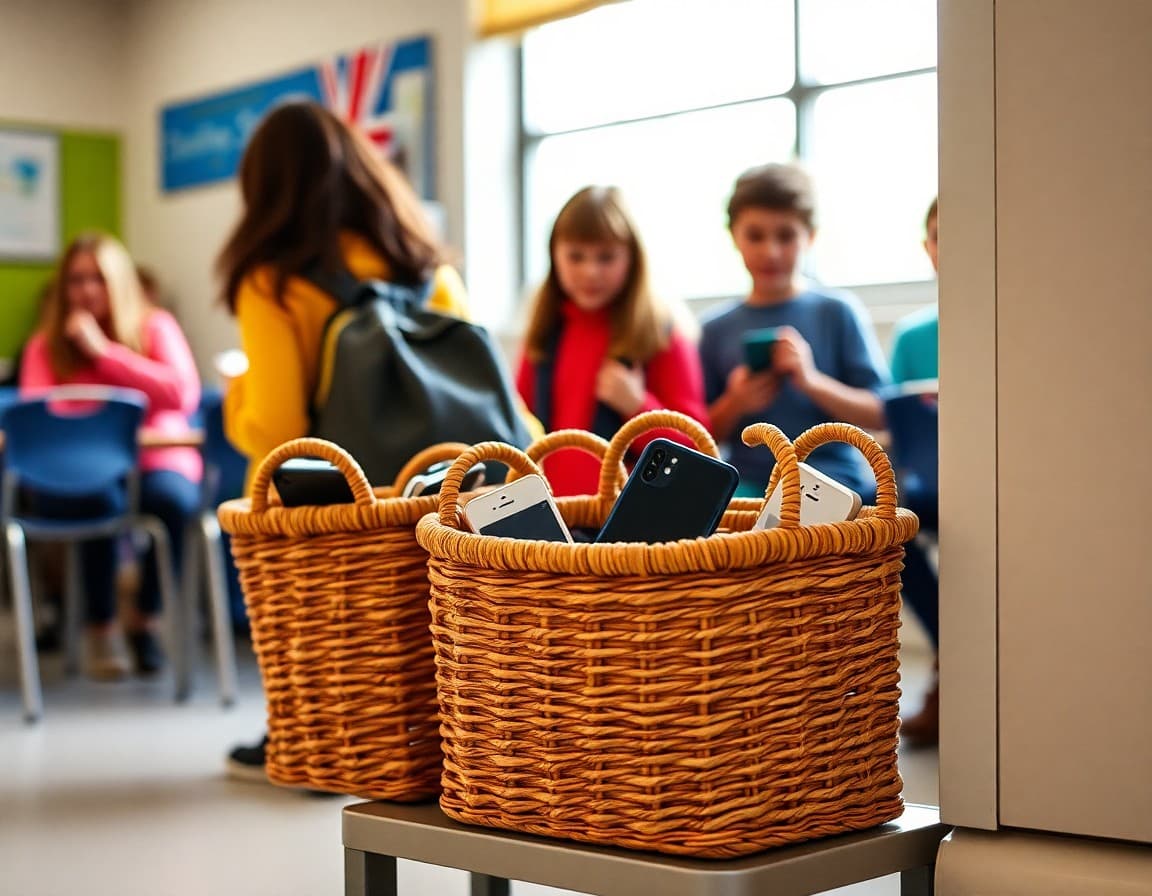
- Where phones are stored: Yondr pouches locked at the start of the day, in-classroom baskets, in lockers, in backpacks
- What happens when a student has a phone out: first violation, second violation, third violation consequences
- When phones are accessible: before school, after school, during lunch if applicable
A phone policy that families can describe accurately to their student is one that will be followed. A vague policy generates daily debates about what the policy actually says.
Address the safety question directly and early
"We know the first question families ask is: if there is an emergency, how do I reach my child? The answer is: call the main office at [number]. Office staff are available from 7:30 a.m. to 4:00 p.m. and will immediately pull your student from class in any urgent situation. This process is faster and more reliable than texting your student who may have their phone stored across the room during a class."
Do not minimize the concern. Address it with the actual process and the actual reliability record.
Cite the research on phone-free schools
"A 2023 UNESCO review of over 14,000 schools found that phone-free school policies consistently correlated with improved academic focus, reduced peer conflict, better in-person social interaction during lunch and breaks, and lower rates of cyberbullying during school hours. Multiple studies from the UK, France, and Australia where phone bans have been in place longer show sustained positive effects. We are implementing this policy based on evidence, not preference."
Acknowledge what is changing for families
"We understand this is a change. Many families have used their child's phone as a safety net for after-school logistics. We ask that you plan those logistics in advance and use the school office for urgent contact. We know the adjustment will take a few weeks and we appreciate your patience while students and families adapt."
Acknowledging the inconvenience without backing away from the policy is the tone that builds acceptance.
Explain medical and special needs exemptions
Address this before families with these situations need to ask: "Students with documented medical needs that require smartphone access, including diabetes management apps, ADHD management tools, or assistive technology, should contact Ms. Rivera in the counseling office by September 15. We will create an accommodation that serves the student's needs within the policy framework."
Template: cell phone ban announcement newsletter
"Starting September 8, Jefferson High School is implementing a phone-free school day. All phones will be stored in Yondr pouches at the start of each class period and returned at the end of each period. Before and after school and during lunch, phones are accessible. If you need to reach your student during the school day, call the main office at [number]. We have reviewed the research on phone-free schools and are confident this change will improve the learning environment. We know it is an adjustment. We will monitor the first two weeks and share what we observe."
Send a first-week update
A brief newsletter after the first week of implementation is worth sending: "Week one of our phone-free policy: teachers report noticeably more student attention during class. Lunch observation shows more student conversation and engagement. We had 23 policy reminders this week and no significant conflicts. We expected a transition period. We are in it and it is going well."
Families who see the school monitoring and reporting honestly on the policy's early effects trust the administration's judgment on this and future policy decisions.
Get one newsletter idea every week.
Free. For teachers. No spam.
Frequently asked questions
What should a school cell phone ban newsletter include?
State the policy exactly: when phones must be off or stored, where they are stored, what storage mechanism is used, and what happens when a student violates the policy. Address the safety concern directly by explaining how parents can reach their child and how the school handles emergencies. Cite the research on phone-free schools if you have it. Give families a timeline for when the policy takes effect and what the transition plan is.
How do you address the safety concern in a phone ban newsletter?
The most common family concern is: 'What if there is an emergency and I need to reach my child?' Address it directly: 'Parents can always reach their child by calling the main office. In an emergency, office staff will immediately pull the student from class. This process is faster and more reliable than texting a student who may or may not have their phone on them in class. We have handled every family emergency efficiently through the office for decades.'
What does the research say about phone-free schools?
Research from multiple countries shows that phone-free school policies correlate with improved academic focus, reduced cyberbullying, better peer interaction during unstructured time, and improved sleep (because students are not on phones during school hours when they might be checking social media). A 2023 UNESCO report reviewed data from over 14,000 schools and found consistent positive outcomes from phone restriction policies. The newsletter that cites this research is more persuasive than one that only asserts the benefit.
How do you handle students who need phones for medical reasons?
State the medical exemption process explicitly: 'Students who need to monitor medical devices, access medical management apps, or use assistive technology that functions via smartphone should contact the school nurse or 504 coordinator by [date]. We will work with families to create an appropriate accommodation.' Handling this proactively prevents the confrontation of a student with a legitimate medical need being asked to surrender their phone.
How does Daystage support policy communication for schools with new phone bans?
Daystage lets you send the initial policy announcement newsletter, a Q-and-A follow-up that addresses the family questions received after the announcement, and a first-week update on how the policy is going. Three-newsletter communication series for a major policy change builds family understanding more effectively than a single announcement.

Adi Ackerman
Author
Adi Ackerman is a former classroom teacher and curriculum writer with 8 years in K-8 schools. She writes about school communication, parent engagement, and what actually works in real classrooms.
More for School Culture
Ready to send your first newsletter?
3 newsletters free. No credit card. First one ready in under 5 minutes.
Get started free